MANU ROAD BUTTERFLY TOUR
- From
- USD 2550
Per person ?The price listed above is based on a minimum of 4 people in double occupancy. If you have any questions please refer to FAQ of send us a message.
- Activities
Photography, Easy hiking, Wildlife , Butterfly Tours
- Habitats to explore
Amazon lowlands, Cloud Forest, Puna Grassland, Intermountain valleys, Highland lakes
- Trip Outline
- Itinerary
- Trip Includes
- Gallery
- FAQ
Trip Outline
Andes to Amazon Butterfly Expedition
Wayqecha (2,950 m) • San Pedro (1,450 m) • Quitacalzon (1,050 m) • Villa Carmen (500–600 m)
TOUR OVERVIEW
From the high misty ridges of the Andes to the warm and lush foothills of the Amazon, the Manu Road is one of the richest butterfly gradients on Earth.
This 8-day private expedition is designed for butterfly lovers, nature photographers, and naturalists who want to explore a spectacular elevational transect where hundreds of species—Heliconius, Morphos, Owl Butterflies, Glasswings, “88s,” Riodinids, Satyrines—can be observed in their ideal habitats.
We travel from Cusco to Wayqecha Biological Station at nearly 3,000 meters, then descend through San Pedro and Quitacalzon, finishing in the tropical gardens and forests of Villa Carmen Biological Station. Each elevation zone reveals a distinct butterfly community shaped by temperature, humidity, and vegetation.
Daily activities focus on short hikes, roadside exploration, trail photography sessions, baiting sites, microhabitat searches, and natural history interpretation, making this one of the most complete butterfly-focused tours in Peru.
TARGET BUTTERFLIES BY REGION
High Andes – Wayqecha (2,600–3,000 m)
Cloud forest, elfin forest, sunny embankments
-
Hypanartia kefersteini
-
Lymanopoda albomaculata
-
Methona maxima nigerrima
-
Pedaliodes, Panyapedaliodes (Pronophilina)
-
High-elevation Satyrinae & Ithomiinae
Mid-Elevation Cloud Forest – San Pedro (1,300–1,550 m)
Humid roadcuts, waterfalls, bamboo thickets
-
Caligo superbus
-
Perisama canoma, P. calamis
-
Callicore lyca (“88s”)
-
Catonephele chromis
-
Udranomia eurus (Hesperiidae)
Foothill Transition – Quitacalzon (1,000–1,100 m)
Warm cloud forest fringe, Heliconius corridors
-
Diaethria clymena & D. neglecta
-
Heliconius melpomene, H. xanthocles, H. numata
-
Greta libethris (glasswing)
-
Catonephele salambria
Amazonian Foothills – Villa Carmen (500–600 m)
Bamboo stands, forest trails, riverbanks, fruit-bait stations
-
Heliconius doris, H. sara, H. wallacei, H. pardalinus
-
Mechanitis polymnia, Tithorea harmonia
-
Antirrhaea taygetina, A. watkinsi
-
Brassolis sophorae
-
Caeruleuptychia aegrota, C. helios
-
Calycopis centoripa, Sarota myrtea (Riodinidae)
-
Calospila emylius
Itinerary
Day 1
Cusco (3,400 m) → Wayqecha Biological Station (2,950 m)
Habitat: High-elevation cloud forest, elfin forest
Activities: Roadside stops, microhabitat scanning, afternoon light sessions
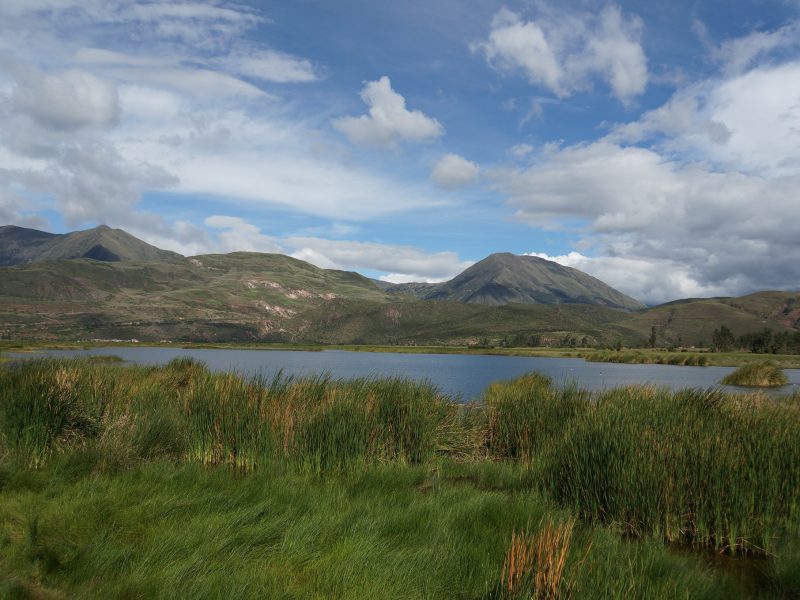
We leave Cusco early and drive across the Andes toward Acjanaco Pass (3,500 m), the official entrance to the Manu Biosphere Reserve. From here we descend into moist, mossy cloud forest, stopping frequently at sunny roadcuts, ravines, and embankments where high-Andean satyrines and nymphalids glide through filtered light.
Afternoon session around Wayqecha exploring forest edges, short trails, and the suspension bridge area—excellent for Hypanartia and Methona maxima.
Key species:
Hypanartia kefersteini · Lymanopoda albomaculata · Methona maxima · Pedaliodes spp.
Night: Wayqecha Biological Station (2,950 m)
Day
Butterflies of the High Cloud Forest (Wayqecha, 2,600–3,000 m)
Activities: Trail walks, ridge exploration, shady embankments, optional nocturnal moth sheet
A full day dedicated to upper cloud forest habitats. Morning temperatures are cool, ideal for locating basking satyrines along the road and forest openings. We cover the Scelfo Trail and ridge areas where Pronophilina are often active.
Afternoon light favors Methona, Hypanartia, and Ithomiinae along streams and clearings.
Target species:
Pronophilina (Pedaliodes complex) · Hypanartia · Methona maxima
Night: Wayqecha
Day 3
Wayqecha to San Pedro (1,450 m): The Great Elevational Descent
Elevation drop: 3,000 m → 1,450 m
Activities: Waterfalls, mineral patches, bamboo corridors, photography sessions
Today we descend slowly through one of the most biodiverse butterfly routes in South America. We stop at humid cliffs dripping with mineral-rich water, bamboo stands near Pillahuata (2,000 m), and lush mid-elevation bends approaching San Pedro.
This zone offers exceptional photographic opportunities with colorful nymphalids, “88s,” and owl butterflies.
Key species:
Caligo superbus · Perisama spp. · Callicore spp. · Catonephele chromis
Night: San Pedro (1,450 m)
Day 4
San Pedro (1,300–1,550 m): Mid-Elevation Butterfly Hotspot
Activities: Roadside exploration, fruit baits, river-edge patching, bamboo stands
San Pedro is among the richest butterfly areas along the Manu Road. Morning walks produce excellent results as species feed on wet soil and bask on sunny leaves. Caligo superbus is often seen along shaded road sections, while Perisama and Callicore provide outstanding photo opportunities.
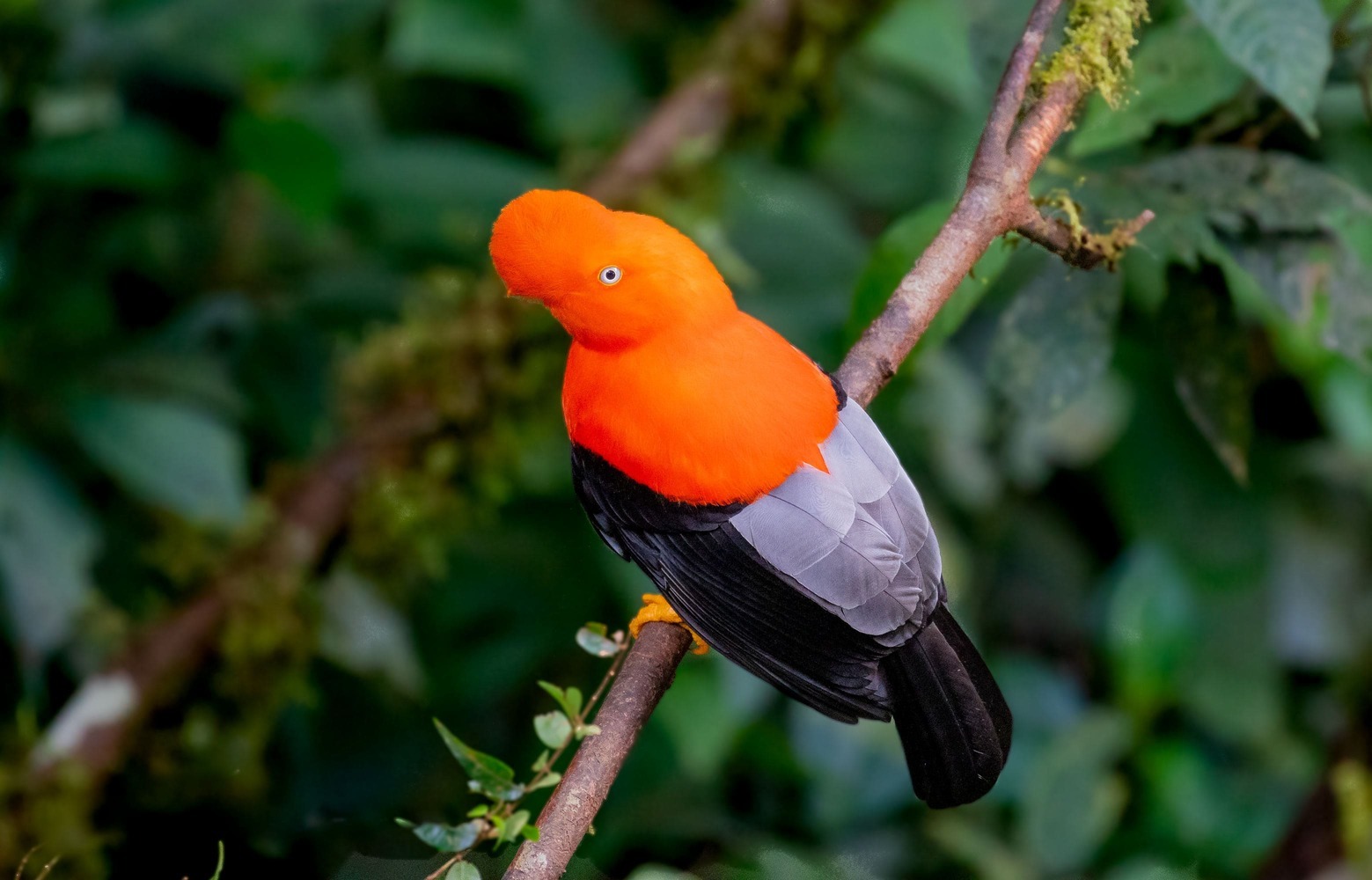
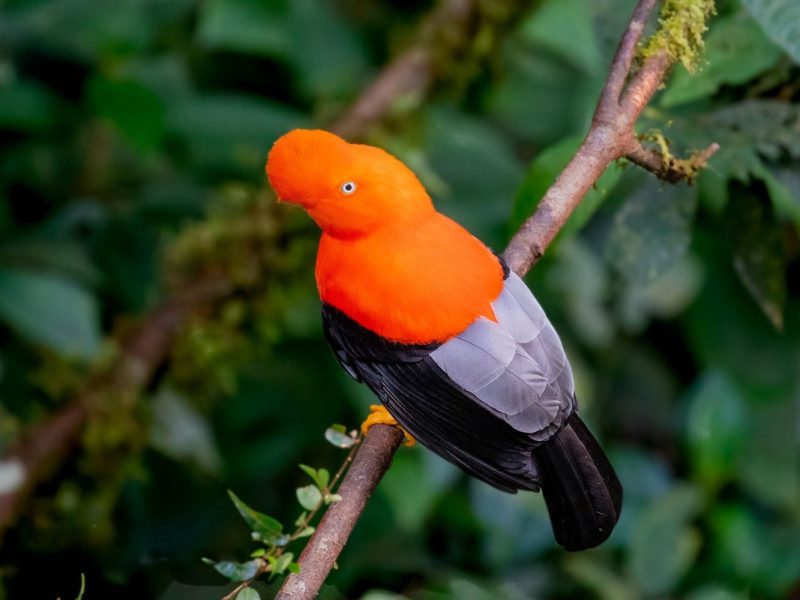
Afternoon sessions focus on the riverbank and forest trails around the Cock-of-the-Rock area.
Target species:
Caligo superbus · Perisama spp. · Callicore lyca · Catonephele chromis · Heliconius spp.
Night: San Pedro
Day 5
San Pedro → Quitacalzon (1,050 m) → Villa Carmen (500–600 m)
Activities: Heliconius corridors, “88s” concentration zones, warm forest edges
As we descend into the foothills, we reach Quitacalzon, a transitional hotspot where Andean and Amazonian species overlap. Heliconius, Ithomiinae, and several Diaethria species are common along vine tangles and bamboo edges.
In the afternoon we continue to Villa Carmen, stopping at river edges and forest gaps where butterflies congregate for minerals.
Highlight species:
Diaethria clymena · D. neglecta · Heliconius melpomene · Greta libethris
Night: Villa Carmen Biological Station
Day 6
Villa Carmen (500–600 m): Amazonian Foothill Diversity
Activities: Garden surveys, forest trails, bamboo patches, fruit-bait stations, riverbanks
We explore several microhabitats within Villa Carmen’s extensive trail system. Fruit-baiting often attracts spectacular nymphalids and riodinids, while Heliconius species glide along edge habitats. Bamboo stands host unique assemblages of small Lycaenidae and Riodinidae.
Target species:
Heliconius doris, H. sara, H. wallacei, H. pardalinus · Mechanitis & Tithorea
Antirrhaea spp. · Calycopis centoripa · Caeruleuptychia spp.
Night: Villa Carmen

Day 7
Villa Carmen → San Pedro → Wayqecha (2,950 m)
Elevation gain: 600 m → 3,000 m
Activities: Revisiting hotspots, gap searches, mid-elevation patching
Today we climb back up the Manu Road, stopping in Quitacalzon, Chontachaca, and several productive mid-elevation bends. This ascent allows us to revisit key microhabitats and photograph species missed earlier in the tour.
Late afternoon arrival at Wayqecha for a final misty-cloud-forest session.
Highlights:
Diaethria neglecta · Mechanitis & Greta spp. · Mid-elevation nymphalids
Day 8
Wayqecha → Acjanaco Pass → Paucartambo → Cusco
Activities: Final cloud-forest butterfly search, roadside microhabitats, transition-zone stops**
We begin with an early walk around Wayqecha (2,900–3,000 m) targeting high-Andean satyrines and Hypanartia species. After leaving the station, we stop at Acjanaco Pass (3,500 m) and at several warm transition-zone patches between Challabamba and Paucartambo.
These roadside stop-offs often reveal pierids, nymphalids, and lingering satyrines not seen earlier.
Arrival to Cusco in the afternoon.
End of services.
Possible species:
Pedaliodes spp. · Lymanopoda spp. · Hypanartia · Transition-zone pierids & nymphalids
Trip Includes
Includes
Birding/Cultural bilingual guide
Expert birding driver
Ground Transportation during the trip
Accommodations and Lodging based on double occupancy
Three meals per day (some will be taken at the field)
Snacks
Drinkable water during the trip
Entrance fees for all the described destinations
Transfer In
Transfer Out
Birding gear by use of the guide (Spotting Scope, Play back, Laser pointer, Light for owling, Field Guide)
First Aid Kit
Full time assistance in English or Spanish
Taxes of included expenses
Does not include
First breakfast and last dinner
Binoculars for personal use (available for rent)
Insurance of any kind
Personal expenses
International of Domestic flights (let us know if you require assistance)
Tips
Airport and luggage fees
Additional activities and lodging
Alcoholic drinks
FAQ
Frequently Asked Questions
Best TESTIMONIALS
Discover Peru’s Best Bird Watching Locations – Unforgettable Destinations for Bird Lovers
Publicado enVerificada Thank you, Manakin Expeditions. There were six of us in the van plus Danny and our driver Hilmar. We did the two week southern Peru birding and culture trip except we did not visit Machu Picchu. November is the start of the rainy season, and we had a bit of rain during the first few days. This trip was terrific. There was real mix of lodging situations but all were friendly with comfortable beds and lovely gardens. Danny’s expertise in birding (371 species for us!) Inca culture, and Peruvian history made him a terrific guide for our Peru trip. Hilmar’s driving was expert, too. He usually had to back up around curves with steep sides in order to get past a large truck. There can be nervous-making water crossings during rainy season, too. Hilmar was up to the very delicate task.Publicado enVerificada Awesome expedition to birding locations Manakin Expeditions is a wonderful company with an amazing 13 day tour of Northern Peru. Our small group of 4 adults had Danny Vargas as trip leader with his brother as assistant and a driver of the van. This was a great ratio of Guides to Tourists! We traveled from east to west and crossed a variety of habitats and were able to see many diverse birds and animals. The ecolodges were terrific to stay in and the food was great. I highly recommend this company and its staff.Publicado enVerificada Amazing birding adventure with guide from Manakin Expeditions We were whisked away from Cusco with Danny a few years back for an epic birding adventure prior to the formation of Manakin. I recall that he would hear a bird and identify it while driving, without even seeing the species. We spent time viewing the Cock of the Rock and then we spent almost a week in Manu, exploring the vast and magnificent untouched beauty. We were quite remote and we had the most wonderful time. Danny led a wildlife count each evening accompanied by photos, we played games, ate wonderful food, and basked in the wildness and remoteness of the area. We also stopped in many highland areas to view hummingbirds and ruins. We saw many species of monkeys, saki, tamarin, capuchin troops, spider, woolly monkey (left me breathless), sloth, tapir, caimans, hoatzin, and too many birds to mention. This was one of the most memorable trips I have been on, and I would book time with Danny again in an instant. I always felt safe and he is extremely knowledgeable about all creatures great and small.Publicado enVerificada Great Sights, Great Birds We met Danny Vargas at our beautiful hotel in Cuzco to embark on a trip to the Manu Wilderness Lodge. On the way, Danny had the driver stop several times to see rare birds and we saw a beautiful troop of wooly monkeys. I'm a serious birder and I studied my field guide, "Birds of Peru," for at least a year prior to the trip but Danny proved to be highly competent. I quit keeping notes when I discovered how good Danny was about putting together a list of sightings each evening from memory. We saw the much sought after Andean cock-of-the-rock and Vanessa, a mostly wild tapir. We soon came to share his love of what I call chicken restaurants where chickens come in until the owner chases them out. They're great places to have indigenous Peruvian food.I've had excellent birding guides all over the world and Danny was one of the greatest of the great. I got 176 life birds on my life list, due in no small part to Danny's competence as a birder.Publicado enVerificada Birding & cultural tour in Peru We went on a birding and cultural tour with Danny as our guide and leader in 2019, when he was working for a different company. Danny is so knowledgeable, engaging, caring, and patient. With Danny's guidance, my birding & photography skills improved. It was the trip of a lifetime. We got to experience diverse ecosystems and encounter rare species that are a part of the delicate web of life specific to each region. We also got to see historic cultural sites, meet artisans and craftspeople, and tour the salt spring and learn about the community. I highly recommend Danny as a guide and trip leader!Publicado enVerificada Great Day at Abra Malaga I spent an entire day with Danny from Manakin Expeditions. We went to Abra Malaga and had a great day of birding. We saw spectacular vistas and over 31 species. Food was provided which was a nice unexpected surprise.Danny is personable, reliable and knows where to go to find the birds.I wouldn't hesitate to use him again.Publicado enVerificada Professional, dedicated, and completely customizable! Danny and the team at Manakin Expeditions are professional and beyond comparison in terms of their ability to create customized tours to suit your individual interests. I took a 16-day tour with Danny that was specifically catered to tracking down an extensive list of target bird species throughout northern Peru, and he put together an amazing itinerary that allowed us to see nearly every bird on my list! His expertise in the field and knowledge on local spots is unparalleled, and his dedication and patience for tracking down even the most elusive birds for a client is impressive. I'm a fairly experienced birder that has had many bird guides around the world and Danny is among the best I've had. The drivers we had were also professional and very friendly. The accommodations and food were great and were picked based on my budget. If you are looking for someone who will go above and beyond to give you a customized experience rather than just a one-size-fits-all bird tour, this is absolutely the company to do it with.Publicado enVerificada Amazing experience! We had an incredible experience with Manakin Expeditions. We were staying in the Sacred Valley and wanted to see some cloud forest birds, so we took a day tour to Abra Malaga. Miguel, who helped us set up the tour, was incredibly helpful. Danny Vargas, our guide, was an expert ornithologist, a conservationist, and a source of knowledge about the Sacred Valley and its surrounds. The tour was both extremely professional and very personalized, and we learned about the birds (and even picked up some birding techniques), the history, and the biology of the area. Our box lunches were delicious, our driver was friendly and professional - just an amazing experience with an extremely professional operation. I would recommend Manakin Expeditions to anyone travelling to the Cusco area or beyond, for any reason, but particularly for those wanting to spot some of Peru's amazing birds.Carga más
Publicado enTrustindex verifica que la fuente original de la reseña sea Google. Danny Vargas and his crew hosted six of us for a 13-day trip devoted mainly to birding in the region around Cusco, including Huacarpay, Abra Malaga, Vilcabamba, and Urubamba in the high Andes but also down the Manu road to Manu biological station in the Amazon basin. The travel arrangements, lodging, and food were all excellent. Danny’s expert knowledge not only of the birds and other wildlife but also of the archaeology and history of the region contributed to making the entire trip an extremely entertaining, educational, and memorable experience. The group saw over 370 species of birds altogether, including 44 species of hummingbirds and nearly 30 species of tanagers; and as an aging birder with declining eyesight, I was especially grateful for Danny’s solicitous care in ensuring that every member of the group had a good chance of seeing every bird. In addition to the birding, Danny provided extremely interesting tours of several key Inca sites, including Sacsayhuamán near Cusco as well as Pisac, Ollantaytambo, and Vilcabamba. I unreservedly recommend Danny and Manakin Expeditions to anyone planning a similar trip.Publicado enTrustindex verifica que la fuente original de la reseña sea Google. I recently had the incredible opportunity to visit northern Peru thanks to the expert guidance of Manakin Expeditions. This trip was everything I had hoped for and more! I was able to check off so many lifers from my list, including some of the most sought-after species. Among the highlights were the stunning Marvelous Spatuletail, one of the most unique hummingbirds I’ve ever seen, and several other endemic species that made this trip truly unforgettable. If you're a serious birder looking to expand your list and experience Peru's rich ecosystems, I highly recommend booking with Dannny. They know their birds, and they certainly know how to deliver an exceptional birding adventure!Publicado enTrustindex verifica que la fuente original de la reseña sea Google. Amazing Birdwatching Tour at Machu Picchu! I recently went on a birdwatching tour at Machu Picchu with Manakin Expeditions, and it was an incredible experience! The organization was flawless, and the guides were extremely knowledgeable and enthusiastic about birdlife. We were able to spot a variety of bird species, including some rare and beautiful ones. The backdrop of Machu Picchu made the experience even more magical. The guides shared fascinating insights about the birds and the unique environment of this iconic location.Publicado enTrustindex verifica que la fuente original de la reseña sea Google. Our trip to Manu was unforgettable. From the moment we reached out, their responsiveness and attention to detail stood out. We spent five wonderful days in Cusco and then head to Manu, guided by Miguel and Danny. They were attentive to our interests and customized our itinerary, making sure we experienced everything to the fullest. Their dedication truly enhanced our visit.Publicado enTrustindex verifica que la fuente original de la reseña sea Google. Manakin Expeditions is an incredible operation. Miguel and Danny are knowledgeable and accommodating. Our tour with Danny was a revelation; he is a true birding expert and a conservationist. We learned so much and saw some incredible sights along the way. Anyone booking with Manakin will have an amazing experience.Carga más