Date: July 11, 2026
Trip type: Birding
Route: Ollantaytambo – Abra Malaga – Ollantaytambo
Tour description: BIRDING IN ABRA MALAGA
Introduction
Abra Málaga is one of the most rewarding birding areas in the Cusco region because an extraordinary range of habitats can be explored within a single day. From the Sacred Valley, the road rises rapidly toward the high Andes, eventually reaching the Abra Málaga Pass at approximately 4,300 metres, immediately below the glaciated peaks of the Vilcabamba range.
Around the pass, the landscape is dominated by open puna, rocky slopes, short grassland and high-Andean wetlands. From there, the eastern side of the mountains drops dramatically toward the Amazonian slope. As elevation decreases, the exposed puna gradually gives way to montane scrub and then to humid cloud forest at around 3,000 metres.
This tremendous altitudinal transition—from the edge of the glaciers to mossy cloud forest—allows completely different bird communities to be encountered over only a few hours. High-elevation specialists such as seedsnipes, cinclodes and sierra-finches are replaced downslope by endemic flycatchers, wrens, spinetails and mountain tanagers.
Our day was entirely focused on birding, beginning shortly after sunrise in the dry slopes above Ollantaytambo before climbing to the pass and then working slowly down the eastern slope of Abra Málaga.
Birding Abra Málaga
Las Peñas – Dry Andean Slopes
We began the morning near Tancac before driving toward Ollantaytambo and the rocky slopes of Las Peñas.
The first light around the valley already produced Sparkling Violetear, Giant Hummingbird, White-bellied Hummingbird and Chiguanco Thrush, but our first focused birding stop was among the steep, dry slopes around Las Peñas.
The setting here is particularly impressive. Above the Sacred Valley, the mountainsides are dry and rocky, with scattered shrubs and cliffs overlooking the valley floor. The area also contains the archaeological remains of Las Peñas, adding an unusual visual backdrop to the early-morning birding before we continued toward the much higher landscapes of Abra Málaga.
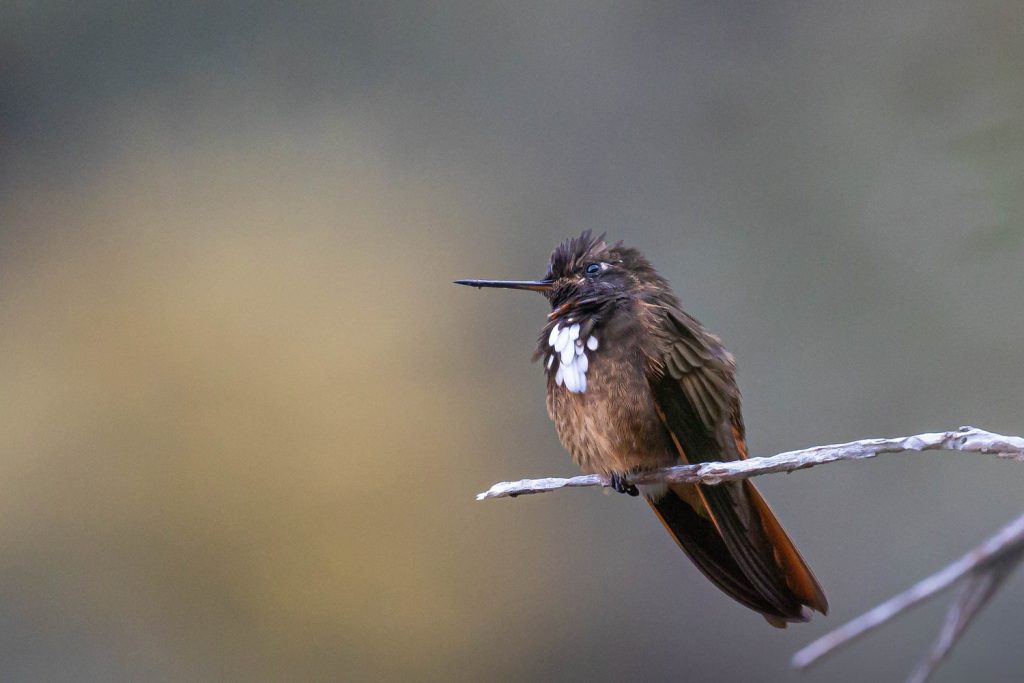
Our principal target here was White-tufted Sunbeam (E), and an adult male provided an excellent start to the day. This highly distinctive Peruvian endemic is strongly associated with the dry montane habitats of the Cusco region.
Nearby we also found Tyrian Metaltail and Andean Flicker, characteristic birds of these open Andean slopes.
From Las Peñas, we continued climbing steadily toward the pass. With every kilometre, vegetation became shorter and the surrounding peaks increasingly dominated the landscape.
Abra Málaga Pass – High Andean Puna
By the time we reached the Abra Málaga Pass, at approximately 4,300 metres, we were surrounded by classic high-Andean puna.
The landscape here is dramatically open: windswept grassland, rocky slopes and patches of wet ground lying beneath the glaciers and high peaks of the Vilcabamba range. Despite the apparently harsh conditions, this habitat supports a highly specialized bird community.
One of the best birds was Grey-breasted Seedsnipe, with two birds encountered in the rocky puna. White-winged Cinclodes was another characteristic high-altitude species, while Cream-winged Cinclodes was also present.
The open grasslands produced Paramo Pipit, Glacier Finch, Ash-breasted Sierra Finch and Plumbeous Sierra Finch, while Line-fronted Canastero (urubambensis race), represented another classic bird of high-elevation scrub and grassland.
Raptors were conspicuous in the open landscape, including several Mountain Caracaras and Variable Hawks.
Wet areas and open puna supported Andean Goose, Yellow-billed Teal, Andean Lapwing, Puna Ibis and Andean Ibis.
The combination of birds and scenery made the upper section especially memorable. Behind us were the dry valleys of the western side of the Andes; ahead, the eastern slope disappeared rapidly toward cloud forest and ultimately the Amazon Basin.
Eastern Slope of Abra Málaga – Montane & Cloud Forest
From the pass we began working slowly down the eastern slope, descending from exposed puna toward increasingly dense montane vegetation.
The transition is remarkably rapid. Low shrubs begin appearing below the pass, gradually becoming taller and denser until they merge into humid montane forest. Mosses, bamboo and epiphytes become increasingly abundant, while the bird community changes almost completely.
This section held many of the most important species of the day.
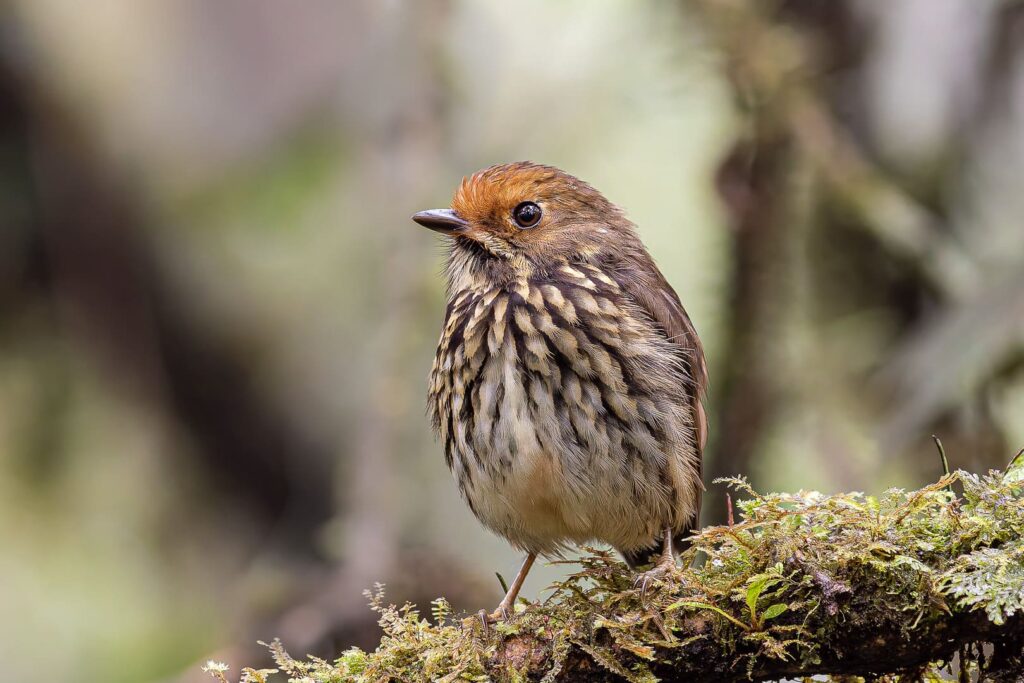
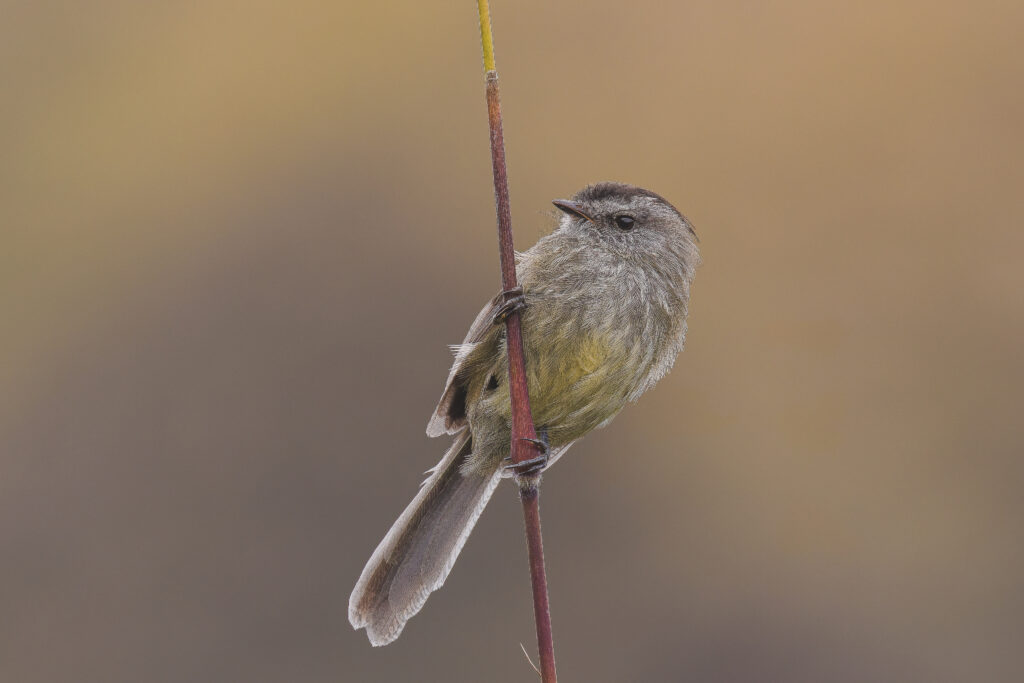
A major target was Unstreaked Tit-Tyrant (E), with three birds found in the montane vegetation. This localized Peruvian endemic is one of the characteristic specialties of the Abra Málaga region.
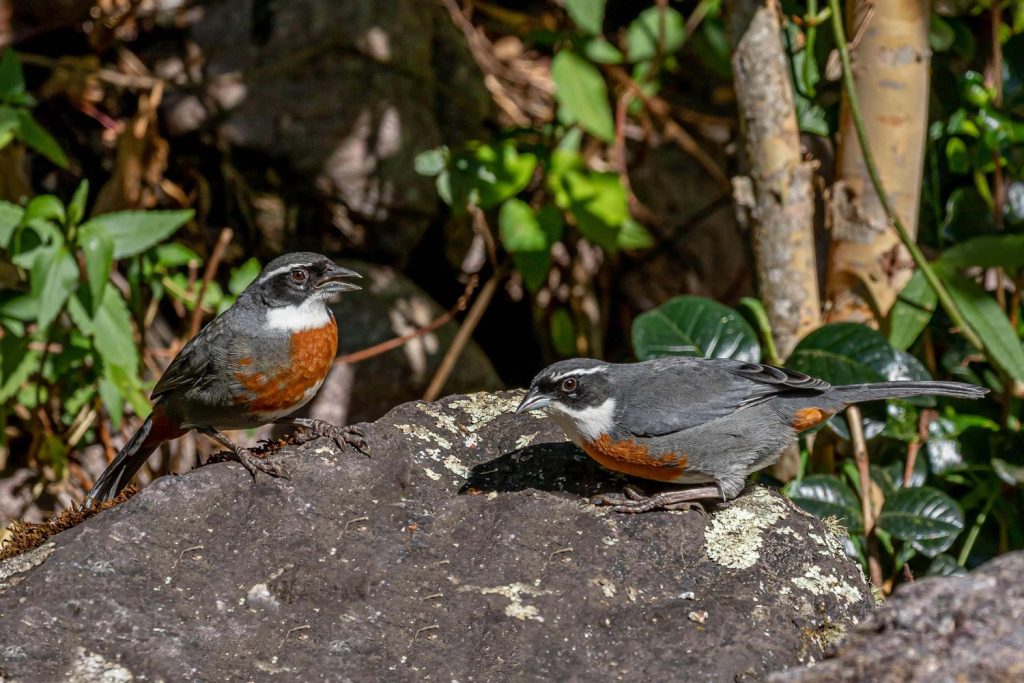
Another particularly important bird was Cuzco Brushfinch (E), with four individuals encountered on the eastern slope. The same habitat also produced Parodi’s Hemispingus (E), another restricted Peruvian endemic and one of the key birds of this route.
Dense bamboo and cloud-forest vegetation held Inca Wren (E), heard several times during the descent. Although we had seen this species at Machu Picchu the previous day, finding it again in its natural montane habitat emphasized how closely associated it is with bamboo-rich forest in this part of the Andes.
Marcapata Spinetail (E) was another significant specialty, with one bird recorded during the descent.
The mixed montane vegetation also produced Violet-throated Starfrontlet, Long-tailed Sylph, Streak-necked Flycatcher, Sierran Elaenia, White-throated Tyrannulet, Rufous-breasted Chat-Tyrant and Trilling Tapaculo.
Tanagers became increasingly evident as we reached the wetter elevations. Hooded Mountain Tanager and Scarlet-bellied Mountain Tanager added both color and a distinctly cloud-forest character to the afternoon.
We also encountered Pale-footed Swallows over the slopes, while an Aplomado Falcon late in the day provided an excellent final raptor.
By the end of the afternoon we had descended to approximately 3,000 metres before returning toward Tancac.
Few places illustrate Andean ecological zonation as clearly as Abra Málaga. During a single day we had moved from dry inter-Andean slopes and archaeological landscapes through high puna beneath the glaciers, then descended into humid cloud forest—encountering a completely different bird community at each stage.
Few other additional Peruvian endemics were heard during the day, including Rusty-fronted Canastero (E), Chestnut-breasted Mountain Finch (E) and Creamy-crested Spinetail (E). Since all three had already been seen very well earlier in the trip, we did not spend additional time trying to relocate them visually, preferring instead to focus on the main Abra Málaga targets.
Bird List – July 11, 2026
DUCKS & GEESE
1. Andean Goose — Chloephaga melanoptera
2. Yellow-billed Teal — Anas flavirostris
SHOREBIRDS
3. Andean Lapwing — Vanellus resplendens
4. Grey-breasted Seedsnipe — Thinocorus orbignyianus
IBISES
5. Andean Ibis — Theristicus branickii
6. Puna Ibis — Plegadis ridgwayi
HUMMINGBIRDS
7. Sparkling Violetear — Colibri coruscans
8. White-tufted Sunbeam (E) — Aglaeactis castelnaudii
9. Violet-throated Starfrontlet — Coeligena violifer
10. Long-tailed Sylph — Aglaiocercus kingii
11. Sword-billed Hummingbird — Ensifera ensifera
12. Great Sapphirewing — Pterophanes cyanopterus
13. Giant Hummingbird — Patagona gigas
14. Tyrian Metaltail — Metallura tyrianthina
15. White-bellied Hummingbird — Elliotomyia chionogaster
HAWKS & EAGLES
16. Variable Hawk — Geranoaetus polyosoma
FALCONS & CARACARAS
17. Mountain Caracara — Daptrius megalopterus
18. Aplomado Falcon — Falco femoralis
WOODPECKERS
19. Andean Flicker — Colaptes rupicola
TAPACULOS
20. Trilling Tapaculo — Scytalopus parvirostris
OVENBIRDS
21. Cream-winged Cinclodes — Cinclodes albiventris
22. White-winged Cinclodes — Cinclodes atacamensis
23. Line-fronted Canastero — Asthenes urubambensis
24. Rusty-fronted Canastero (E) — Asthenes ottonis
25. Marcapata Spinetail (E) — Cranioleuca marcapatae
26. Creamy-crested Spinetail (E) — Cranioleuca albicapilla
TYRANT FLYCATCHERS
27. Streak-necked Flycatcher — Mionectes striaticollis
28. Sierran Elaenia — Elaenia pallatangae
29. White-throated Tyrannulet — Mecocerculus leucophrys
30. Unstreaked Tit-Tyrant (E) — Uromyias agraphia
31. Rufous-breasted Chat-Tyrant — Ochthoeca rufipectoralis
32. D’Orbigny’s Chat-Tyrant — Ochthoeca oenanthoides
SWALLOWS
33. Blue-and-white Swallow — Pygochelidon cyanoleuca
34. Pale-footed Swallow — Orochelidon flavipes
WRENS
35. Inca Wren (E) — Pheugopedius eisenmanni
THRUSHES
36. Chiguanco Thrush — Turdus chiguanco
37. Great Thrush — Turdus fuscater
PIPITS
38. Paramo Pipit — Anthus bogotensis
SPARROWS & BRUSHFINCHES
39. Rufous-collared Sparrow — Zonotrichia capensis
40. Cuzco Brushfinch (E) — Atlapetes canigenis
WARBLERS & WHITESTARTS
41. Spectacled Whitestart — Myioborus melanocephalus
TANAGERS & ALLIES
42. Glacier Finch — Idiopsar speculifer
43. Ash-breasted Sierra Finch — Geospizopsis plebejus
44. Plumbeous Sierra Finch — Geospizopsis unicolor
45. Black-throated Flowerpiercer — Diglossa brunneiventris
46. Parodi’s Hemispingus (E) — Kleinothraupis parodii
47. Hooded Mountain Tanager — Buthraupis montana
48. Scarlet-bellied Mountain Tanager — Anisognathus igniventris
49. Chestnut-breasted Mountain Finch (E) — Poospizopsis caesar
TOTAL: 49 SPECIES
PERUVIAN ENDEMICS: 9
(E) indicates species endemic to Peru at the species level.
If you want to know some basic tipping guideliness during Birding and Photography Tours, see here.
If you are more interested in a Birding and Cultural Trip see here.