
Per person ?In the event that only 2 or 3 participants confirm, a small additional charge of 10% over the total cost will be applied to guarantee the departure.
- June 17th to 28th – 2027
- Sept 10th to 21st – 2027
- Nov 9th to 20th – 2027
Birding in Northern Peru is one of the most rewarding experiences for any serious birder. With exceptional biodiversity, extreme endemism, and some of the rarest species in South America, this region is a must-visit destination for birdwatchers seeking something extraordinary.
This 12-day itinerary is a compact yet powerful route through a wide range of habitats—from Tumbesian dry forests, Pacific shore to lush cloud forests and lowland Amazonian rainforest—allowing you to see more in less time, without sacrificing quality or comfort.
This region stands as a biodiversity stronghold, with birdlife shaped by unique geographic isolation and habitat variety. You’ll target species found nowhere else on Earth and enjoy close-up encounters with rare and restricted Hummingbirds, Antpittas and Tanagers at trusted feeder locations.
Designed for Intermediate birders and hardcore listers alike, this tour provides an exceptional balance of access, pace, and species richness—ideal for those looking for a shorter adventure packed with lifers and photography opportunities.
Our Northern Peru birding tour includes visits to key areas known for their range-restricted and sought-after species. You’ll search for:
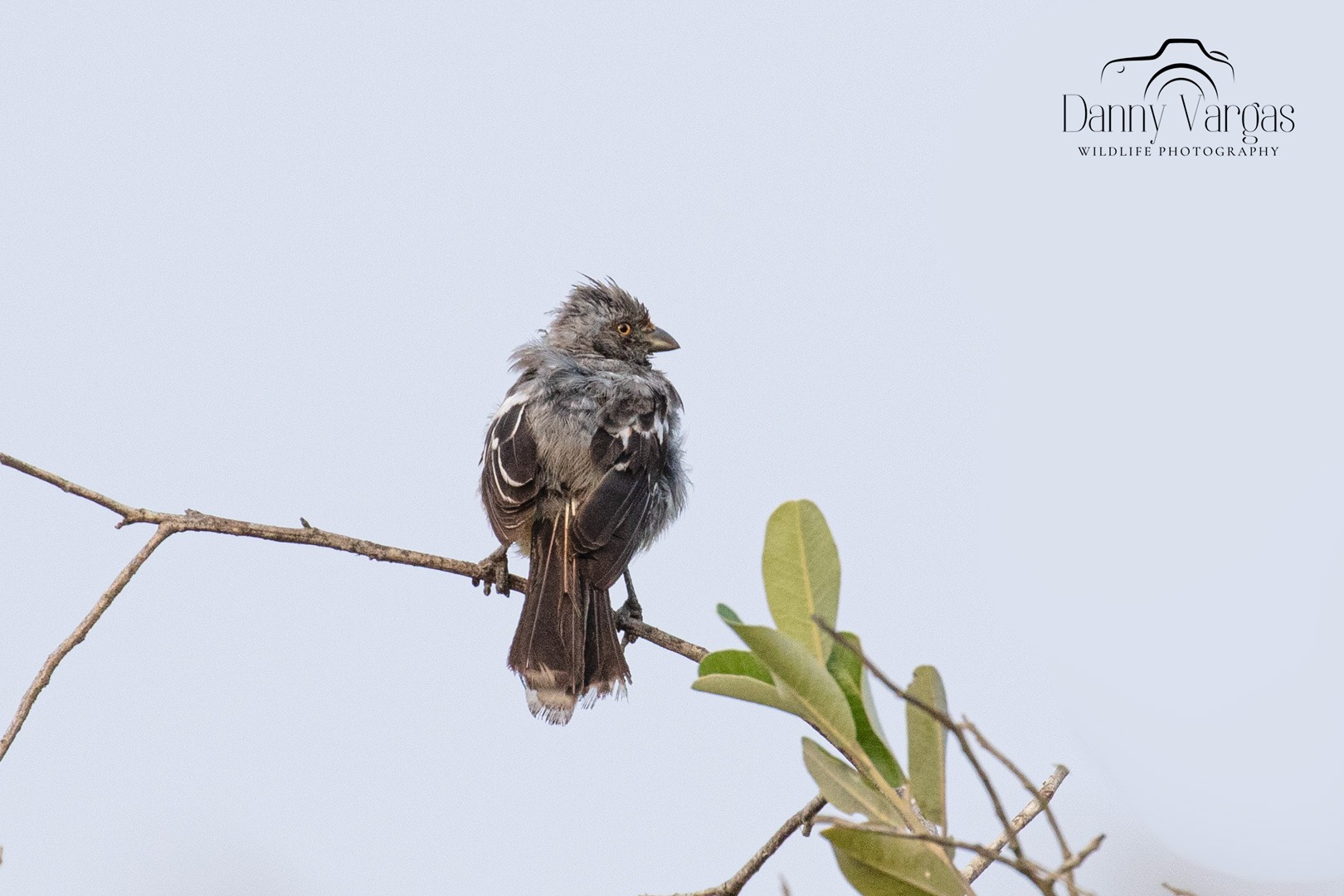
Marvelous Spatuletail, Long-whiskered Owlet, Yellow-scarfed Tanager, Marañón Crescentchest, Pale-billed Antpitta, Chinchipe Spinetail, Little Inca-Finch, Johnson’s Tody-Flycatcher, Bar-winged Wood-Wren, Ochre-fronted Antpitta, Rusty-tinged Antpitta, Chestnut Antpitta, Peruvian Rufous-vented Tapaculo, Speckle-chested Piculet, Black-bellied Tanager, and many more.
This tour also includes multiple feeding stations—perfect for observing and photographing hummingbirds and mixed flocks up close.
This route covers some of the top birding hotspots in Northern Peru:
Each zone contributes to a mosaic of ecosystems that boost your trip list significantly.
This 12-day Northern Peru birding tour is built for convenience and performance. With easy road access, private transportation, and comfortable lodges, you can focus on the birds—not the logistics.
You’ll travel with a top Peruvian bird guide, ensuring maximum sightings, expert insight, and local knowledge throughout the trip.
Whether your dream is to photograph a Marvelous Spatuletail, find elusive antpittas, or simply immerse yourself in the best of the Peru’s birdlife, this itinerary offers excellent value and can be tailored to your preferences.
Shorter than our Northern Peru Grand Tour but nearly as diverse, this Northern Peru birding tour is ideal for those who want a high-quality, compact trip with exceptional biodiversity and comfortable travel.
See a Trip Report of one of our Birding Tours in Northern Peru here.
| NOTHERN PERU: THE CLASSIC TOUR | LODGING | |
| Day 1 | LIM-CIX + Equatorial Dry Forest | Chaparri Lodge |
| Day 2 | Casupe – Chaparri Lodge | Chaparri Lodge |
| Day 3 | Bosque de Pomac | Basic lodging in Motupe |
| Day 4 | Porculla Pass | Urqu – Jaen (3*** superior hotel) |
| Day 5 | Marañon Basin | Gocta Lodge |
| Day 6 | Utucubamba Basin | Owlet Lodge |
| Day 7 | Full day Abra Patricia | Owlet Lodge |
| Day 8 | Full day Abra Patricia | Arena Blanca Reserve |
| Day 9 | Alto Mayo Basin – Moyobamba | Waqanki |
| Day 10 | Waqanki Lodge + Mishquiyaquillo | Waqanki |
| Day 11 | Waqanki AM + Ricuricocha Lake | Cumbaza (3*** superior hotel) – Tarapoto |
| Day 12 | Cordillera Escalera + OUT | – |
We begin our Northern Peru birding adventure early in Chiclayo at approximately 6:00 am, picking you up either from your hotel (not included but suggested) or directly from the airport upon arrival. Our first stop takes us to Bosque de Pómac, one of the most important remnants of equatorial dry forest in Peru and a key site along the Northern Birding Route.
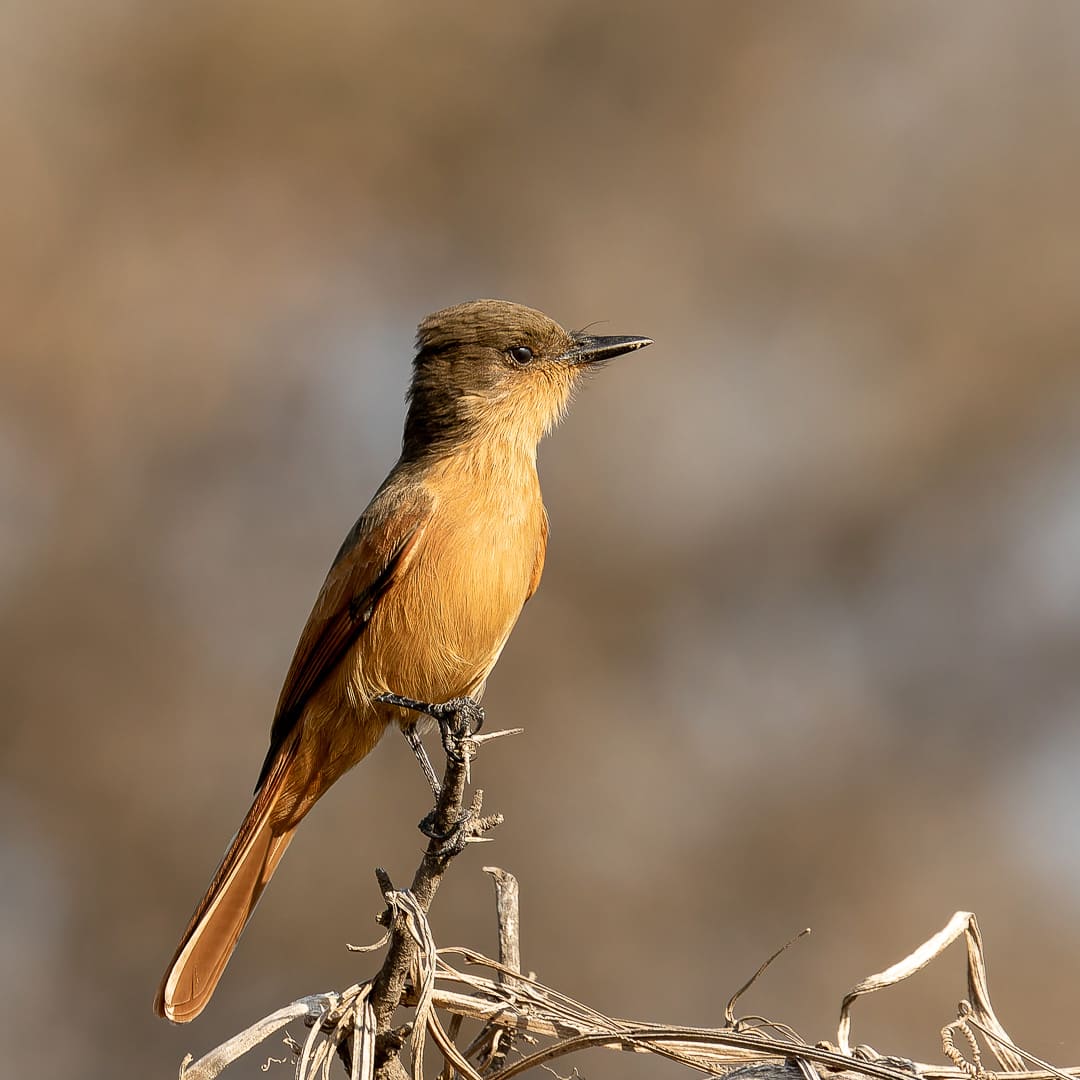
Here, we will explore dry forest habitats dominated by ancient algarrobo trees, searching for Tumbesian endemics such as Peruvian Plantcutter (E), Tumbes Tyrannulet (E), Cinereous Finch (E), Rufous Flycatcher (E), Necklaced Spinetail, and Amazilia Hummingbird. This ecosystem supports a remarkable diversity of birdlife, with over 100 species recorded in the area, including several endemics and threatened species.
We then continue towards the Tinajones Reservoir, an important wetland system where we will look for aquatic and open-country species such as Peruvian Thick-knee (NE), Black-necked Stilt, Peruvian Meadowlark, Burrowing Owl, and various herons, shorebirds, and raptors.
After a productive morning and early afternoon of birding, we head inland toward the Chaparrí Private Conservation Area, one of Peru’s most successful conservation projects and home to more than 280 bird species. Upon arrival, we will settle into our lodge and enjoy an afternoon birding session in this rich dry forest reserve.
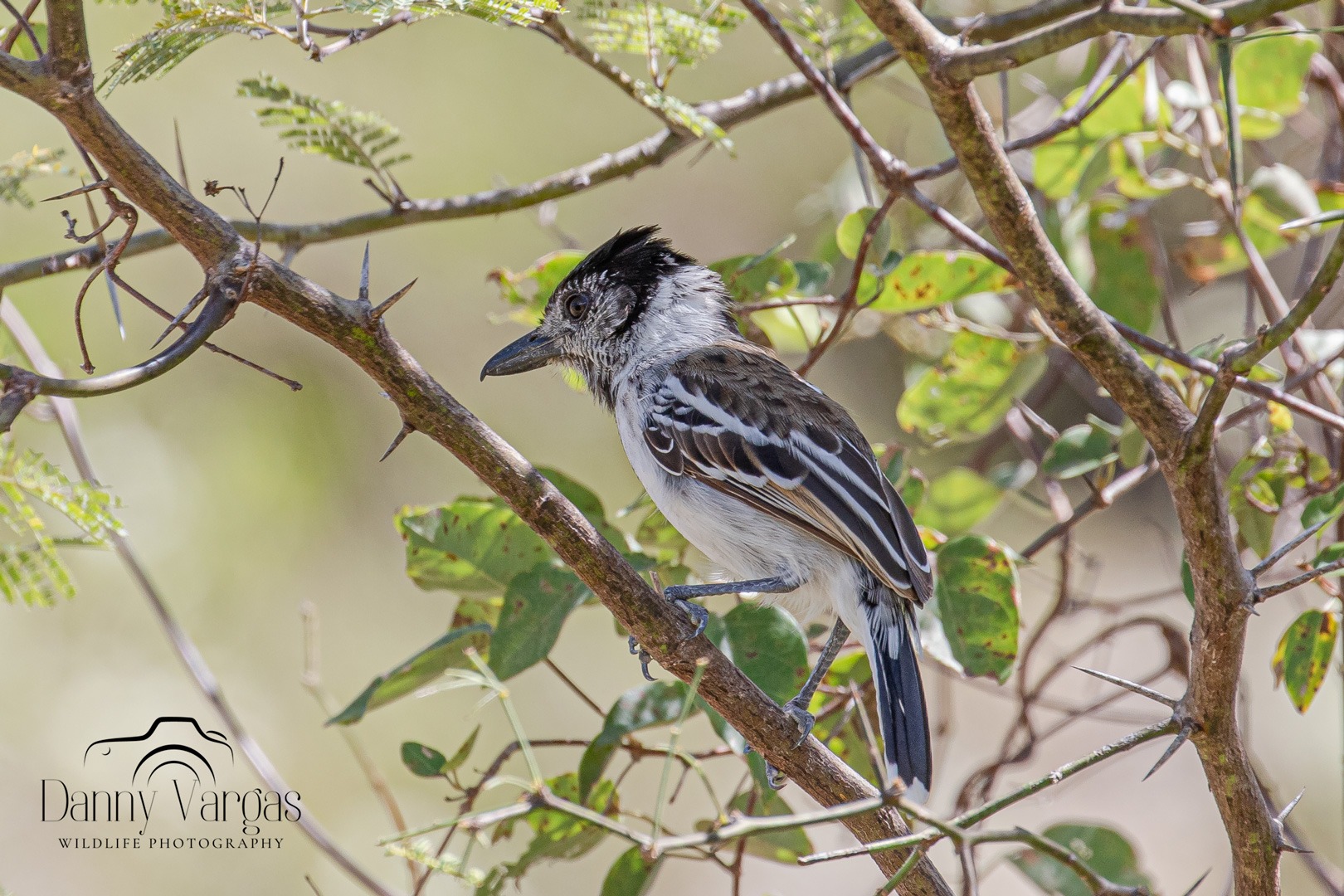
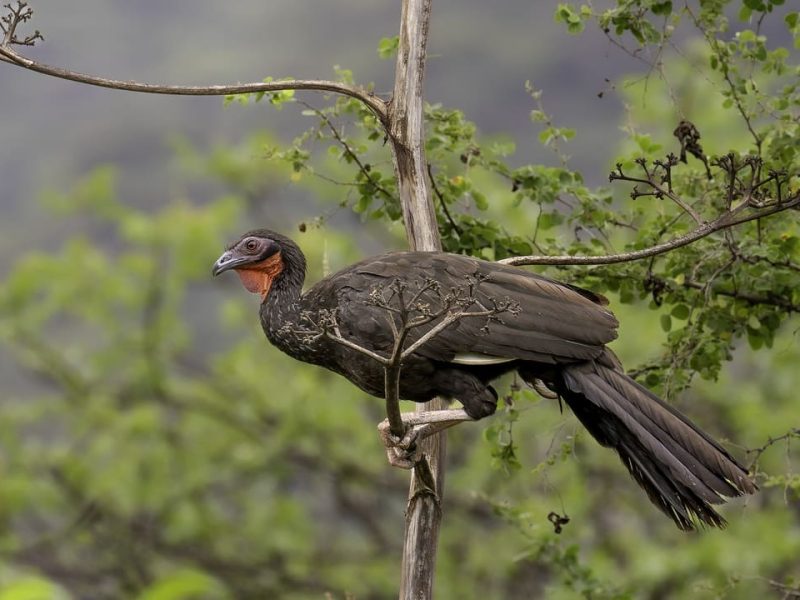
Target species here include White-winged Guan (E), Elegant Crescentchest, Short-tailed Woodstar, Peruvian Screech-Owl (pacificus race), White-tailed Jay, and Collared Antshrike, with chances for mammals such as Spectacled Bear and Sechuran Fox.
Night at Chaparri Lodge.
After breakfast, we’ll head toward Casupe Road, one of the last remaining strongholds for wild populations of the endemic White-winged Guan (E). This area also offers excellent chances for Guayaquil Woodpecker, Piura Chat-Tyrant (E), Chapman’s Antshrike, Black-capped Sparrow, Ecuadorian Piculet, Whooping Motmot, Ochre-bellied Dove, and Henna-hooded Foliage-Gleaner, among others.
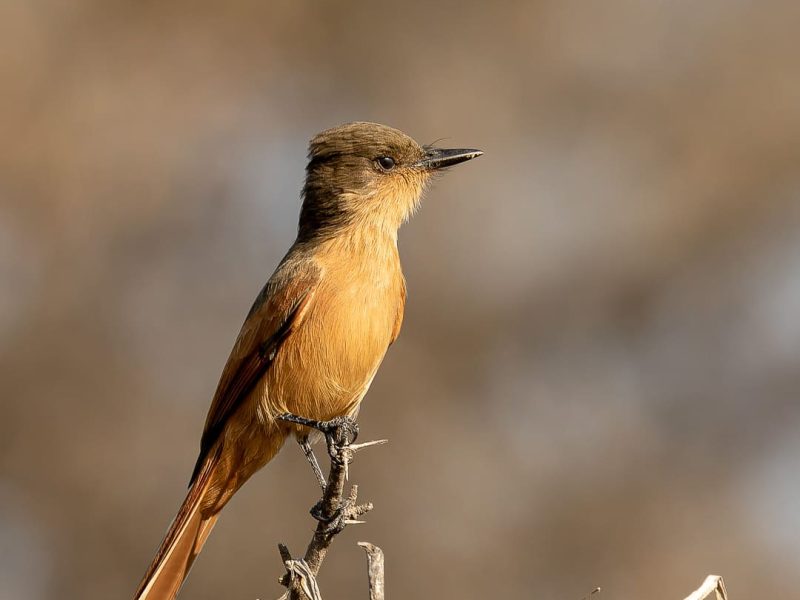
In the afternoon, we return to Chaparri Reserve, where we’ll search for dry-forest specialists such as Lesser Nighthawk, Scrub Nightjar, Purple-collared Woodstar, Savanna Hawk, Red-masked Parakeet, Collared Antshrike, Pacific Hornero, Sooty-crowned Flycatcher, Snowy-throated Kingbird, White-tailed Jay, Tumbes Sparrow, Peruvian Meadowlark, and White-edged Oriole.
Night at Chaparri Lodge.
After an early breakfast at Chaparrí, we depart the reserve and head back toward the Pacific coast, transitioning from dry forest foothills to rich coastal habitats. Our first stop will be the wetlands and coastal plains around Eten, one of the most productive birding areas along the northern Peruvian coast.
Here, we will focus on a mix of coastal, wetland, and scrub species. Key targets include the endemic Peruvian Thick-knee (NE) and Tumbes Sparrow (E), often well camouflaged in open sandy areas, as well as Collared Warbling-Finch in nearby dry scrub. Wetland areas may produce Peruvian Pipit (E), Many-colored Rush Tyrant, Wren-like Rushbird, Grassland Yellow-Finch, and a variety of shorebirds depending on seasonal conditions.
We then continue birding along the Pacific coast, scanning beaches, estuaries, and open shoreline at one of the best sites for the rare and elusive Peruvian Tern (E). Other species include Peruvian Pelican, Belcher’s Gull, Gray Gull, and Guanay Cormorant, along with migratory shorebirds and occasional surprises.
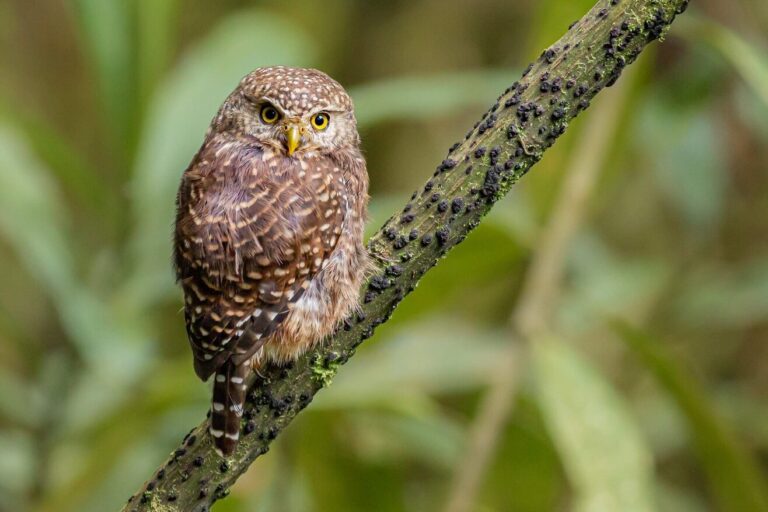
After a productive morning on the coast, we begin our drive north toward Motupe, gradually re-entering dry forest habitats. Along the way, we will make strategic birding stops targeting species such as Peruvian Pygmy-Owl, Superciliated Wren, Tumbes Chat-Tyrant, and Elegant Crescentchest, depending on conditions and time.
We arrive in the Motupe area in the late afternoon, where we settle into our accommodation and prepare for the next phase of our Northern Peru birding route.
Night in a basic but clean and comfortable hotel in Motupe.
Today we’ll explore the renowned Abra Porculla, a mountain pass that crosses the western Andes at an elevation of 2,145 meters. This area features semi-humid montane scrub habitat, a unique ecological transition zone with an excellent concentration of localized and endemic bird species.
Key targets here include Piura Chat-Tyrant (E), Marañón Tyrannulet (E), Tumbes Tyrannulet (E), Gray-chinned (Porculla) Hermit (E), Tumbes Hummingbird (NE), Marañón Antshrike (E), Ecuadorian Piculet, Line-cheeked Spinetail, Black-cowled Saltator, Chapman’s Antshrike, Bay-crowned, White-winged, and White-headed Brush-Finches, Henna-hooded and Rufous-necked Foliage-Gleaners, Mouse-gray Flycatcher, Tumbes Pewee, Three-banded Warbler, Gray-and-Gold Warbler, Chestnut-crowned Antpitta, Plumbeous-backed Thrush, Speckle-breasted Wren, White-browed Gnatcatcher, etc.
After lunch, we will continue our drive toward the upper Marañón Basin, descending in elevation as the habitat shifts once again.
Overnight at Urqu Hotel in Jaén (3-star superior hotel).
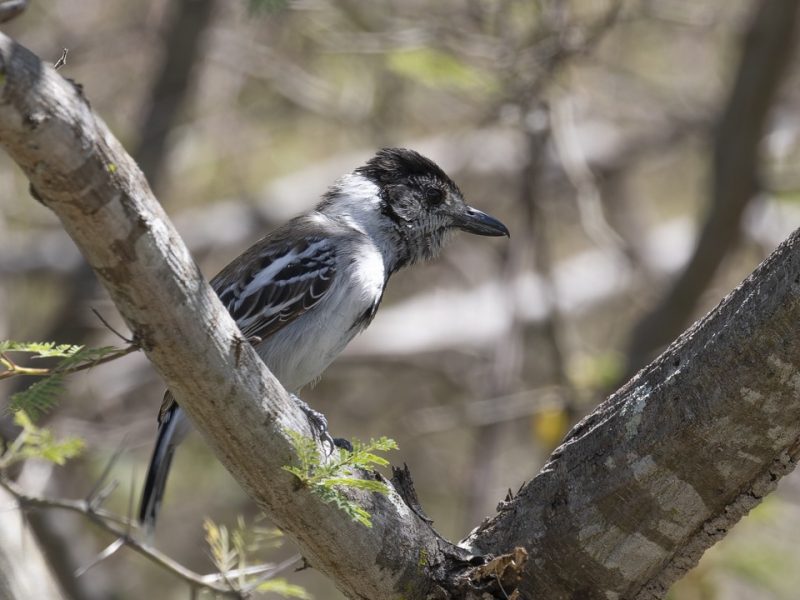
Jaén is located in the heart of the Marañón Basin, an area renowned for its exceptionally high endemism and top-tier birding. We’ll spend the morning exploring this hotspot, targeting regional specialties such as Chinchipe Spinetail (E), Marañón Crescentchest (E), Marañón Tyrannulet (E), Peruvian Screech-Owl (roboratus race), Tataupa Tinamou, and the recently split Marañón Antshrike (E)—species that are very rarely found elsewhere.
We will later search for other specialties such as the remarkable Little Inca-Finch (E), Northern Slaty-Antshrike (Peruvian), Red-crested Finch, Ecuadorian Ground Dove, Cordilleran Parakeet, Rufous-fronted Thornbird, Fulvous-faced Scrub-Tyrant, Cryptic Becard, and Gray-breasted Crake.
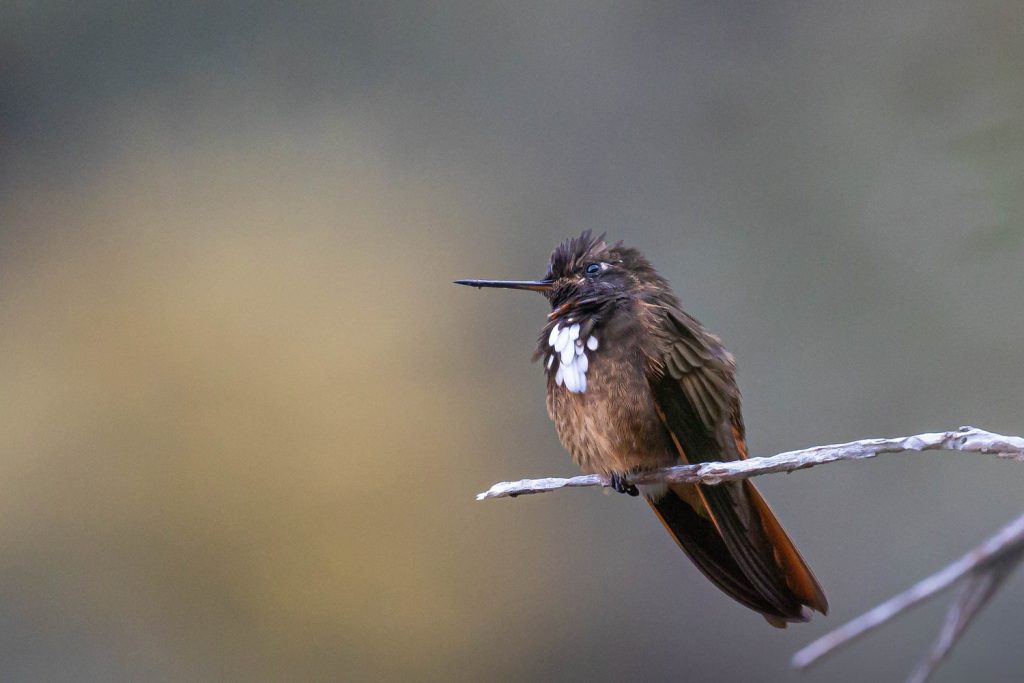
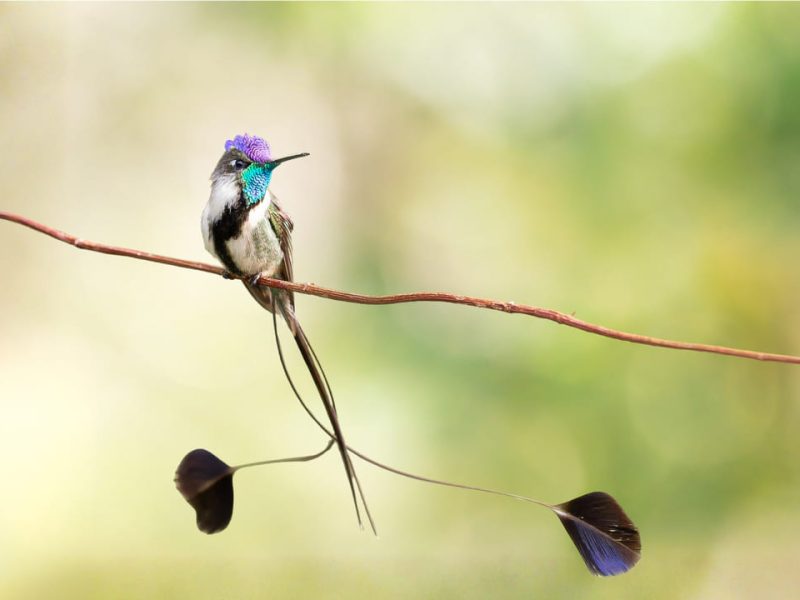
After lunch, we begin our ascent into the eastern Andes, arriving at a hummingbird feeding garden where we’ll search for the iconic and endemic Marvelous Spatuletail (E). This magnificent species often visits alongside other hummingbirds such as Andean Emerald, Lesser Violetear, Bronzy Inca, and Long-tailed Sylph.
Dinner and overnight at the beautiful Gocta Lodge in Cocachimba.
We will spend the morning birding along the road through remote and outstanding cloud forest, with Pale-billed Antpitta (E) as our main target. This is one of the best areas for this rare Peruvian endemic, along with other specialties such as Chachapoyas Antpitta (E), Utcubamba Tapaculo (E), Peruvian Wren (E), Russet-mantled Softtail (E), Yellow-scarfed Tanager (E), and Coppery Metaltail (E).
Another particularly exciting possibility is the rare Mountain Avocetbill. Other species we may encounter include Sword-billed Hummingbird, Mountain Velvetbreast, Gray-breasted Mountain-Toucan, White-collared Jay, and several colorful mountain tanagers.
After lunch, we will have another opportunity to look for Marvelous Spatuletail (E), particularly if we would benefit from additional time with this spectacular species. One of the absolute highlights of the trip, this stunning hummingbird is restricted to Northern Peru and regularly visits the lodge’s garden feeders. It may be accompanied by Buff-bellied Tanager (NE), Purple-collared Woodstar, Little Woodstar, Andean Emerald, Lesser Violetear, and other hummingbird species, as well as Peruvian Pigeon (E), Marañón Thrush (E), Spot-throated Hummingbird (NE), Black-necked Woodpecker (E), Cordilleran Parakeet, Fasciated Tiger-Heron, and Torrent Duck.
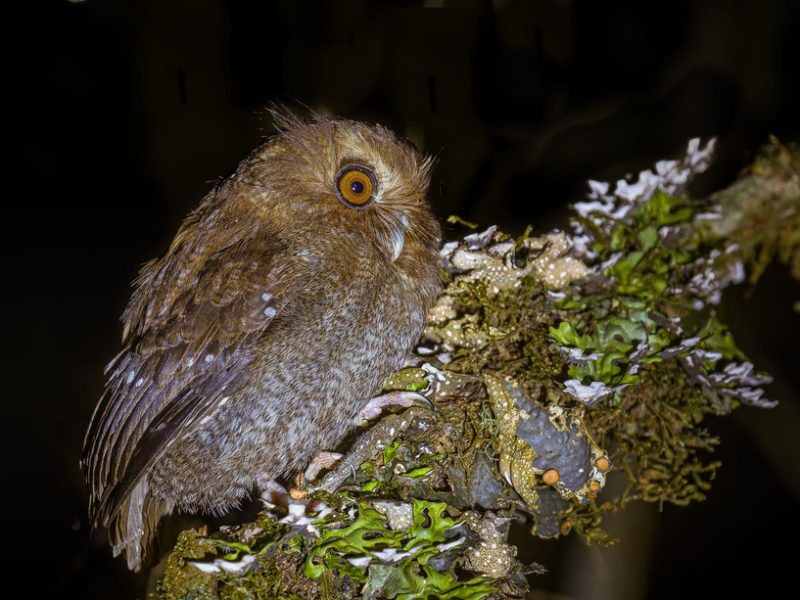
After a productive day in the scenic cloud forest, we will continue to Owlet Lodge for a nocturnal outing in search of the Long-whiskered Owlet.
Night at Owlet Lodge.
Abra Patricia sits at 2,300 meters elevation and marks the Andean pass toward the Amazon Basin. This area is home to one of the most productive and accessible birding roads in the entire Neotropics.
We spend the morning in Alto Nieva, where feeders attract stunning hummingbirds and tanagers, including Royal Sunangel (E), White-capped Tanager, Peruvian Racket-tail, Violet-fronted Brilliant, Greenish Puffleg, Rufous-vented Whitetip, Collared Inca, Green-fronted Lancebill, and Amethyst-throated Sunangel. Forest trails here may reward us with rarities such as Rufous-vented Tapaculo (E), Bar-winged Wood-Wren, Cinnamon-breasted Tody-Tyrant, Inca Jay, and Crimson-bellied Woodpecker.
Other possibilities in the area include Chestnut-breasted Chlorophonia, Red-hooded Tanager, the elusive White-faced Nunbird, Variable Antshrike, Flame-faced Tanager, and others.
At night, the forest comes alive with the possibility of seeing several owls. We’ll search for Cinnamon Screech-Owl (E), White-throated Screech-Owl, and possibly Common Potoo.
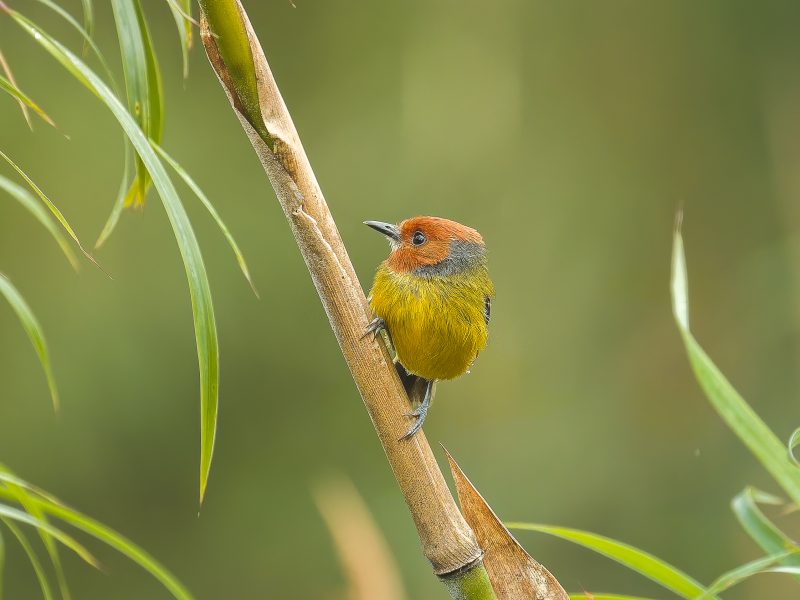
From the gardens of Owlet Lodge, you can enjoy relaxed birding with regular sightings of White-bellied Woodstar, Emerald-bellied Puffleg, Fawn-breasted Brilliant, Bronzy Inca, and Lesser Violetear. On the nearby trails, mixed tanager flocks may include colorful species such as Yellow-scarfed Tanager (E), Grass-green, Flame-faced, Black-faced, Metallic-green, Beryl-spangled, and Yellow-throated Tanagers.
The endemic Johnson’s Tody-Flycatcher (E) is also often seen around Owlet Lodge and is one of the important specialties we will look for in this area.
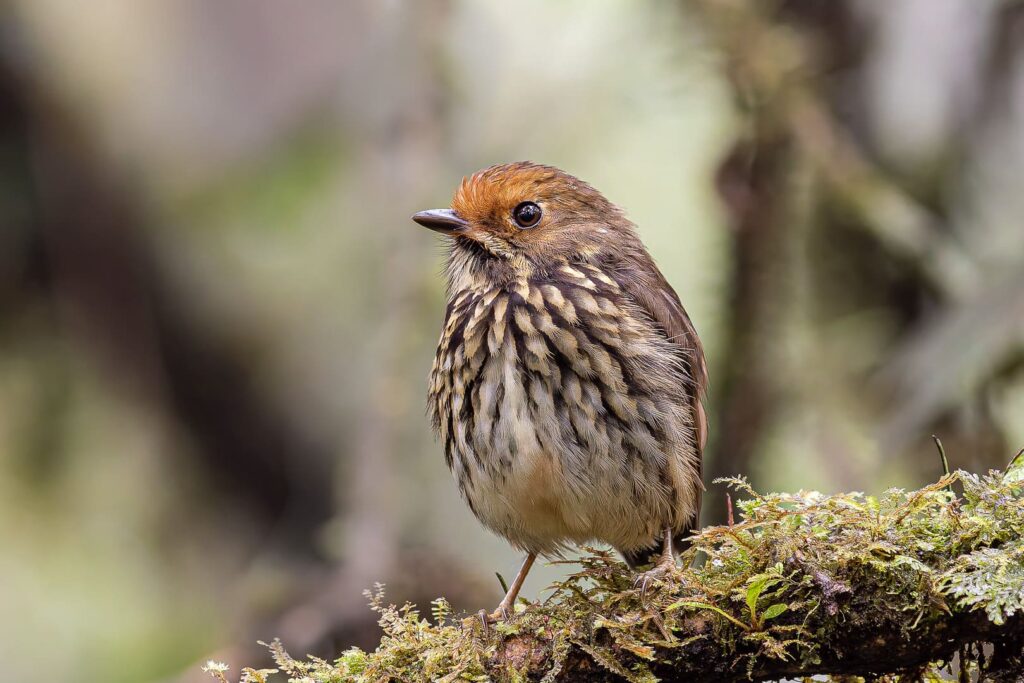
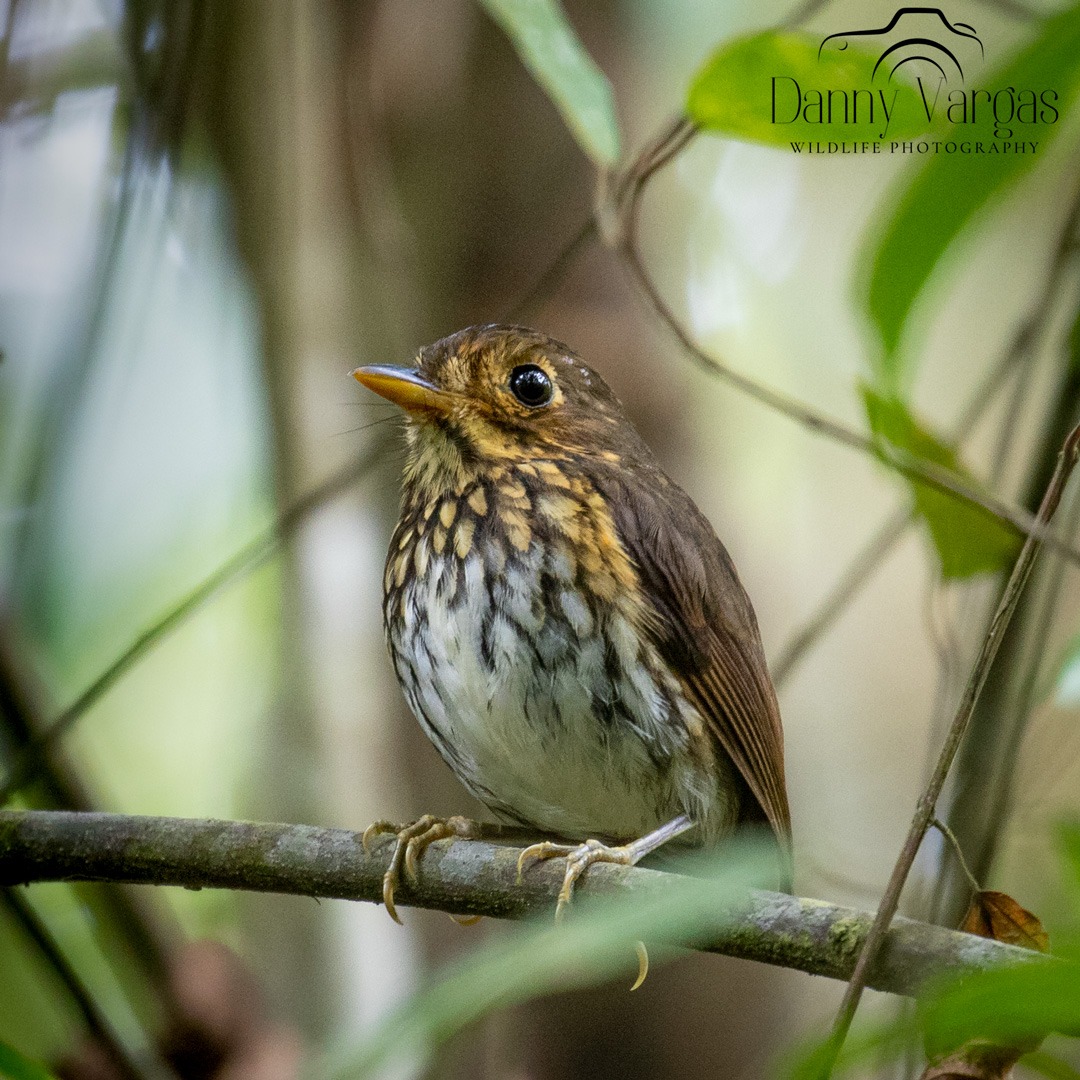
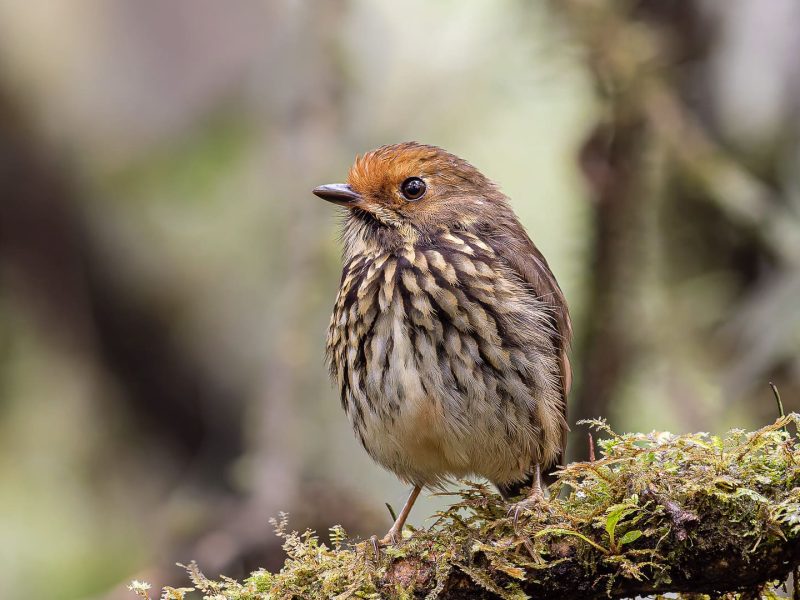
This mountain range is also a hotspot for Antpittas. With a bit of luck and patience, you may observe Rusty-tinged Antpitta (E) and Chestnut Antpitta (E), both coming to feeders.
After our final birding session at Abra Patricia and lunch, we’ll descend to Arena Blanca Reserve, a private site with excellent feeders for tinamous, hummingbirds, and tanagers. This site offers a relaxing but productive continuation of our tour.
With a bit of luck, we may also spot the endangered Yellow-tailed Woolly Monkey, a rare and charismatic primate endemic to Northern Peru.
Night at Arena Blanca Reserve.
We begin with a morning visit to Arena Blanca Reserve, a privately managed hotspot famous for its ground-level feeding stations and vibrant hummingbird garden. At the forest-floor hide, we may encounter Rufous-breasted Wood-Quail, Orange-billed Sparrow, Cinereous Tinamou, and Little Tinamou—a rare opportunity to see these shy species at close range.
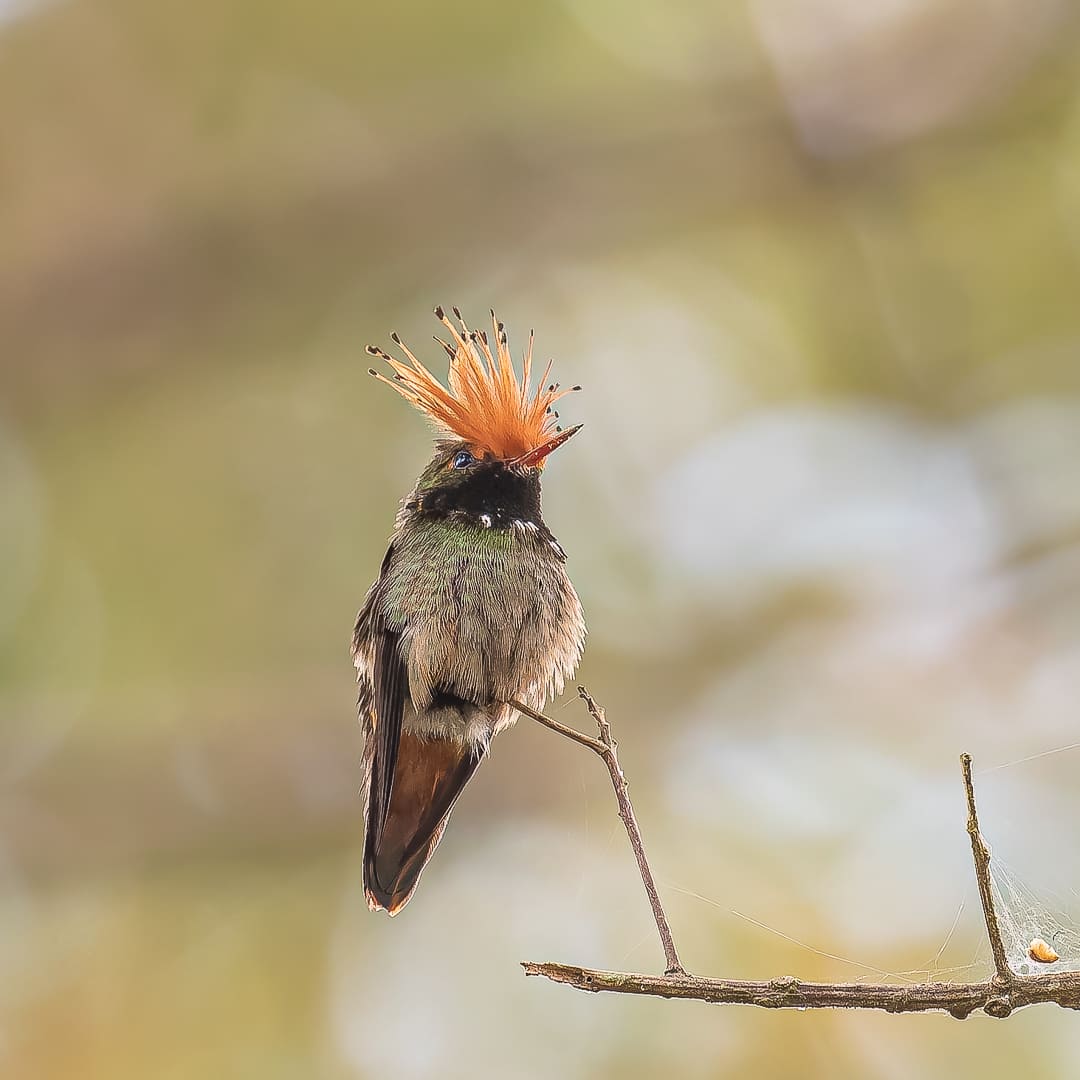
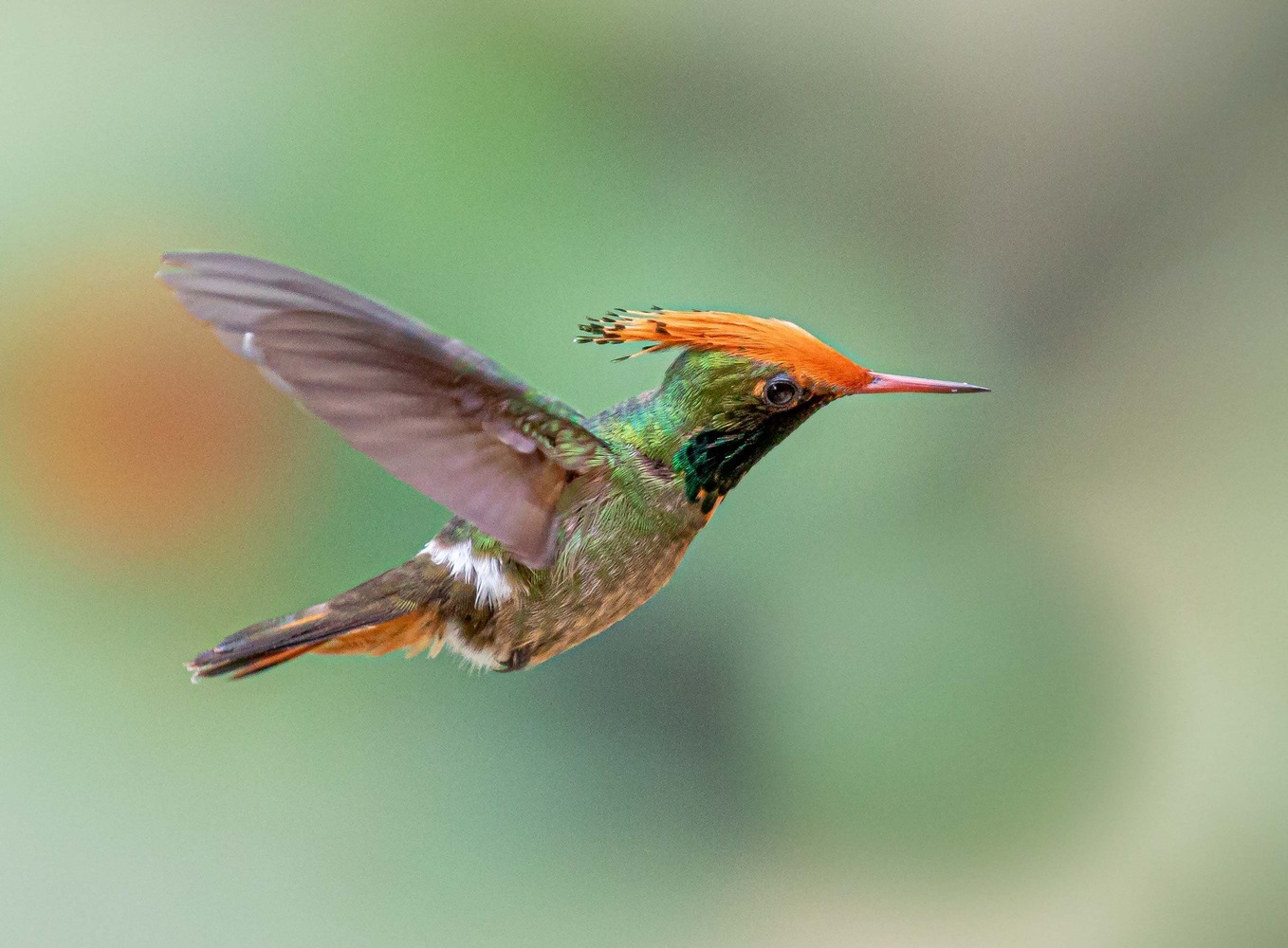
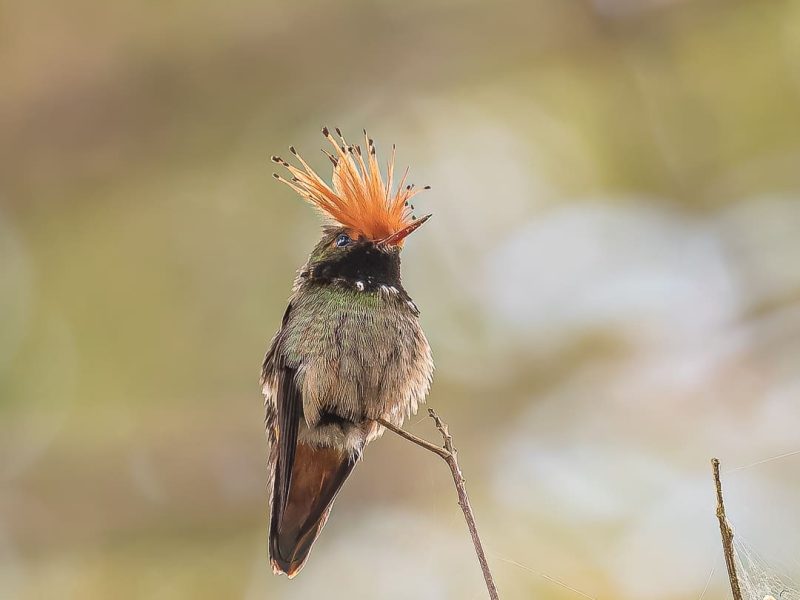
Nearby feeders attract a dazzling variety of hummingbirds, including Blue-fronted Lancebill, Wire-crested Thornbill, Rufous-throated Sapphire, Black-throated Brilliant, Golden-tailed Sapphire, and our first chance to see the exquisite Rufous-crested Coquette. Colorful fruit feeders are visited by Black-bellied Tanager (E), Burnished-buff Tanager, White-lined Tanager, Turquoise Tanager, Green-throated Tanager, and Paradise Tanager. We may also spot secretive species such as White-browed Purpletuft, Russet-crowned Crake, and Lanceolated Monklet.
In the afternoon, we transfer to Waqanki Lodge in Moyobamba, where we spend two nights immersed in the Amazonian foothill forest—one of the richest regions for birding in northern Peru.
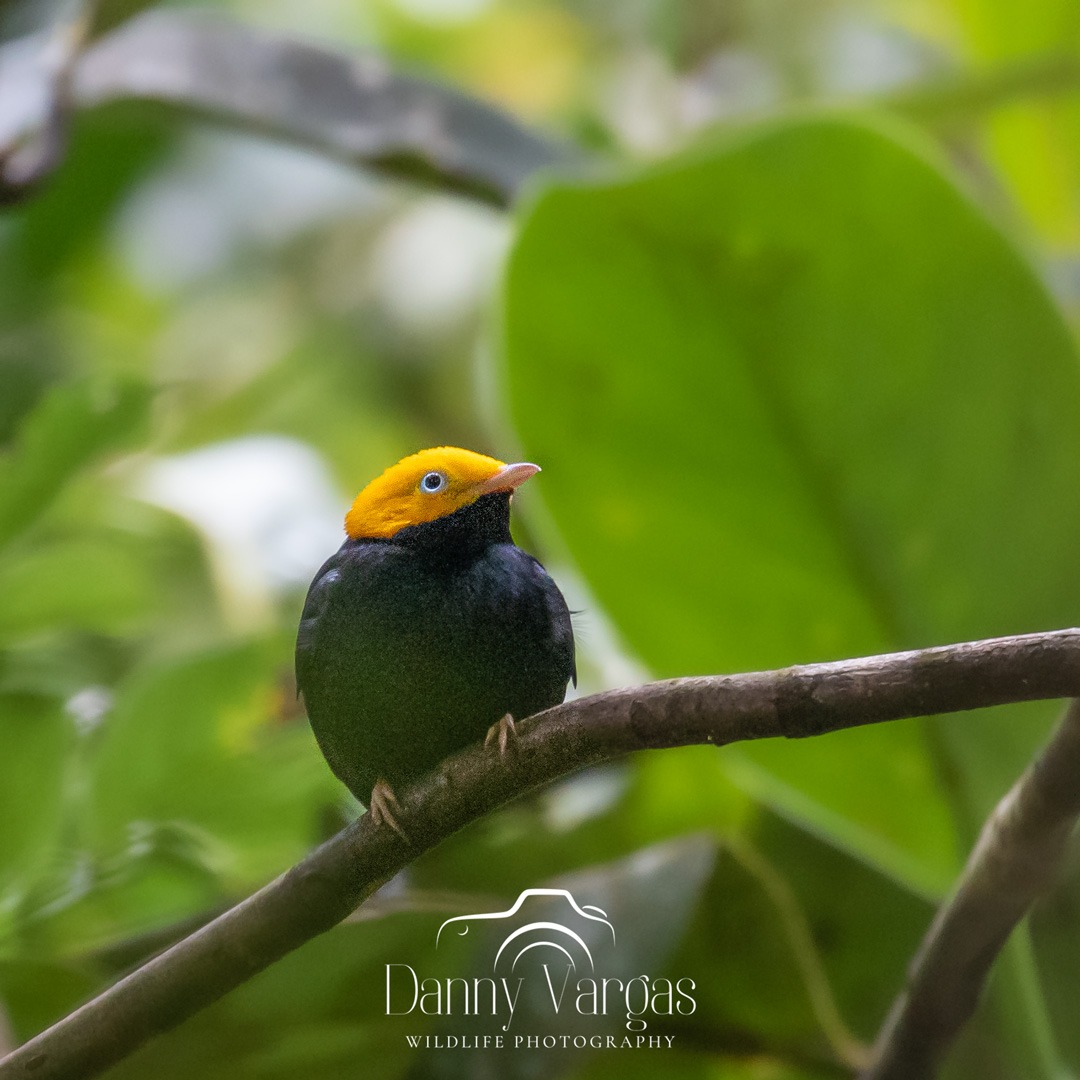
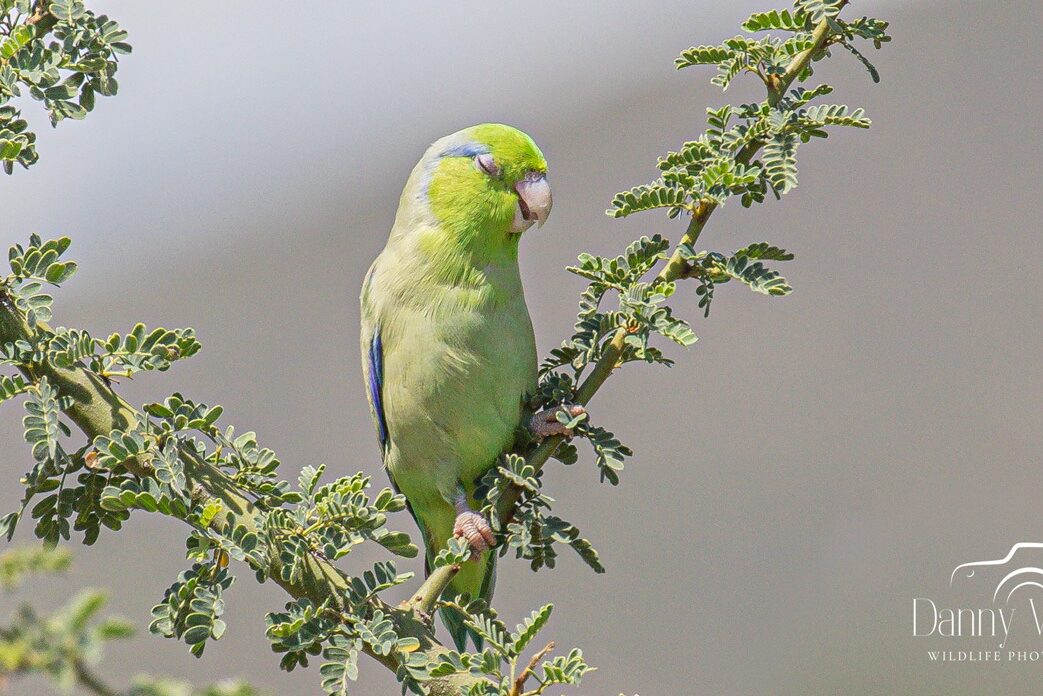
The trails of Waqanki offer excellent chances for Painted Manakin (E), Golden-headed Manakin, Fiery-capped Manakin, Fiery-throated Fruiteater, Zimmer’s Antbird, Lafresnaye’s Piculet, Riparian Parrotlet, Wing-barred Piprites, Stripe-necked and Pearly-vented Tody-Tyrants, Foothill Stipplethroat, Green-backed Trogon, Golden-collared Toucanet, and both Rufous and Broad-billed Motmots.
The lodge gardens add even more specialties, including Mishana Tyrannulet (E), Channel-billed Toucan, Lettered Aracari, Red-shouldered Tanager, Black-faced Tanager, and Pale-breasted Thrush. Feeders here are bustling with hummingbirds such as Rufous-crested Coquette, Sapphire-spangled Emerald, Violet-fronted Brilliant, Gray-breasted Sabrewing, Brown Violetear, Golden-tailed Sapphire, Great-billed Hermit, and many more.
Roadside birding may produce Russet-crowned Crake, while a short drive offers the chance to see the elusive Masked Duck at dusk. At night, the forest comes alive with Tropical Screech-Owl, Band-bellied Owl, and the rare Stygian Owl.
Two nights at Waqanki Lodge.
We begin with some early morning birding around the lodge to make the most of our last hours at Waqanki, followed by a relaxed breakfast.
Afterward, we head east toward Tarapoto, making a special stop along the road to visit a known Oilbird roost, where these unique nocturnal frugivores can often be seen perched in daylight.
Upon arrival in Tarapoto, we’ll spend the afternoon birding in nearby areas, searching for Comb Duck, Planalto Hermit, Stripe-chested Antwren, Coraya Wren, Stripe-necked Tody-Flycatcher, Pale-breasted Thrush, and the distinctive Sulphur-bellied Tyrant-Manakin, among other foothill and wetland species.
Overnight at Cumbaza Hotel (3-star superior) in Tarapoto.
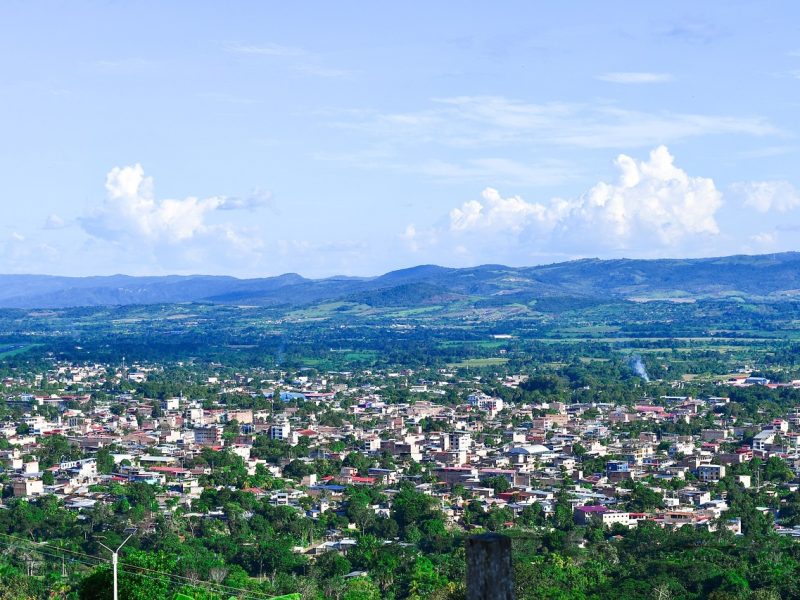
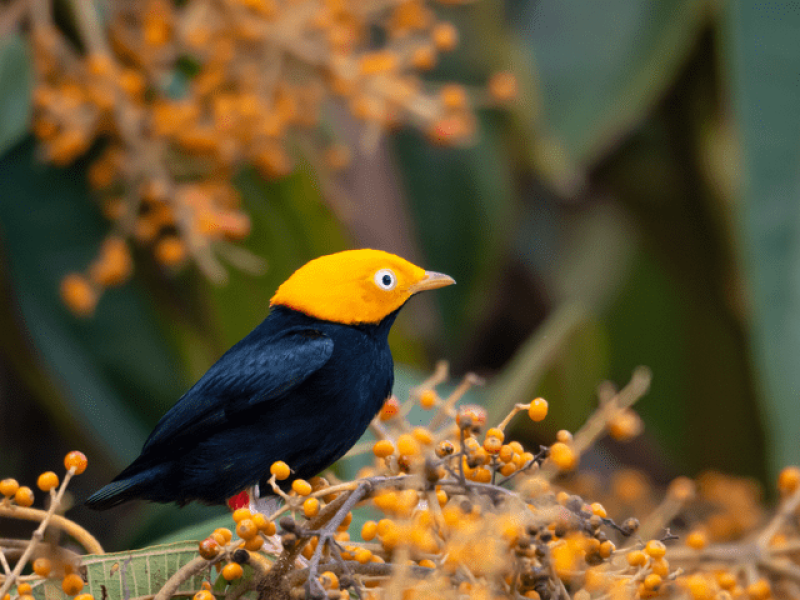
After breakfast, we head to Cordillera Escalera and the ACONABIKH Reserve, a superb birding site located just outside Tarapoto. This area offers lush Amazonian foothill forest and is home to several sought-after species. Targets include:
Koepcke’s Hermit (E), Plumbeous Euphonia, Dotted Tanager, Buff-tailed Sicklebill, Pink-throated Brilliant, Hook-billed Kite, Lettered Aracari, White-bellied Pygmy-Tyrant, Peruvian Tyrannulet (E), Black Antbird, Cliff Flycatcher, Brown-crested Flycatcher, White-throated Toucan, Black-faced Tanager, Ashy-headed Greenlet, Blue-capped Manakin, and White-throated Manakin.
A special highlight is the active lek of Golden-headed Manakin, offering close views and excellent photographic opportunities.
After lunch, we return to Tarapoto to prepare for our afternoon flight back to Lima.
END OF SERVICES
We recommend continuing your birding adventure with our SCARLET-BANDED BARBET Tour.
Our walks are designed to keep you focused on birdwatching while enjoying the scenery.
Duration: The longest walk lasts about 2–3 hours, covering roughly 3–5 km (2–3 miles) at a relaxed pace.
Trail Conditions: Paths may be wet, muddy, or uneven—especially in areas like Abra Patricia, Gocta, and Mishquiyacu.
👟 Tip: Wear waterproof hiking boots with good grip.
We’ve planned the driving segments to efficiently connect key birding areas while ensuring your comfort. The first half of the tour includes the longest drives, while the second half is more relaxed.
Longest Drives (with birding stops):
Day 3: Chiclayo – Motupe (~4 hours)
Day 4: Motupe – Jaén (~5 hours)
Day 5: Jaén – Cocachimba (~4 hours)
Road Conditions: Mostly paved highways with occasional gravel segments—curvy and bumpy in some parts.
🛣️ Note: We schedule regular stops for birding, photography, and rest.
Accommodations are selected for their comfort, location, and proximity to birding hotspots.
Examples:
Chaparrí EcoLodge (dry forest)
Basic lodge in Motupe
Urqu Hotel (3*** superior) – Jaén
Gocta Andes Lodge
Cumbaza Hotel (3*** superior) – Tarapoto
🏡 Reminder: Lodges are simple but functional—perfect for birders. Some may vary based on availability.
Focus on gear that is lightweight, functional, and suited to varied conditions.
Clothing: Light, breathable clothes for warm weather, and warm layers for the cool cloud forest.
Luggage: Travel light—ideally a backpack and a small carry-on. This makes moving between lodges easier.
Footwear: Waterproof hiking boots are essential. Rubber boots may be useful during heavy rain (available in Peru for ~$15).
Weather Protection: Bring a rain jacket or poncho. A compact umbrella is also handy for light showers.
Accessories: Hat, sunscreen, insect repellent (with DEET), reusable water bottle, and a small daypack.
Birding Gear: Binoculars (8×42 or 10×42 recommended), a camera, and spare batteries/memory cards.
The tour spans diverse elevations:
Lowlands (500–1,000 m / 1,600–3,300 ft): Jaén, Moyobamba, Tarapoto
Mid-elevations (1,500–2,300 m / 5,000–7,500 ft): Abra Patricia, Gocta
🔺 Note: Bring a light jacket for cool mornings and evenings at higher altitudes.
In humid areas such as Moyobamba, Tarapoto, and Chaparrí, mosquitoes and other insects are common.
Advice: Use insect repellent and consider long sleeves during peak mosquito activity.
Yes, the tour is full-board:
Included: Breakfast, lunch, and dinner (except for the first day’s breakfast and final night’s dinner).
Special Diets: Let us know in advance about any dietary needs.
Yes, although access may be limited in more remote locations:
Note: Lodges like Chaparrí and Owlet Lodge may only provide electricity in the dining area.
Suggestion: Bring a power bank to stay charged in the field.
Electricity: Peru uses 220V (but most electronics rated 100V–240V work fine). Outlets are typically hybrid (flat and round pins).
We keep our groups small to ensure a high-quality, personalized birding experience.
Group Size: 2-6 participants for Fixed Departures / 6–8 participants for private tours.

The most most outstanding aspects of Peru in a week. Including accesible birding in remote areas, impressive Inca monuments like Machupicchu and Manu Park counted as the most biodiverse place on earth. Representing the essence of the country.
Culture and Nature !!

The most most outstanding aspects of Peru in a week. Including accesible birding in remote areas, impressive Inca monuments like Machupicchu and Manu Park counted as the most biodiverse place on earth. Representing the essence of the country.