Southern Peru is one of the most exciting regions in the Andes for birders interested in endemics, highly localized species and dramatic changes in habitat. This seven-day journey was built around exactly that experience, linking the dry western slopes and high puna of Abra Málaga with humid cloud forest, the remote mountains of Vilcabamba, fragments of high-elevation Polylepis woodland, the inter-Andean landscapes of the Sacred Valley and Chonta, and finally the endemic-rich mountains of Apurímac.
The emphasis throughout was on intensive birding. Many of the most important targets occur within surprisingly narrow elevational zones, so our days involved a succession of carefully chosen stops as we moved between dry scrub, alpine puna, upper montane forest, bamboo-dominated cloud forest and isolated high-Andean valleys.
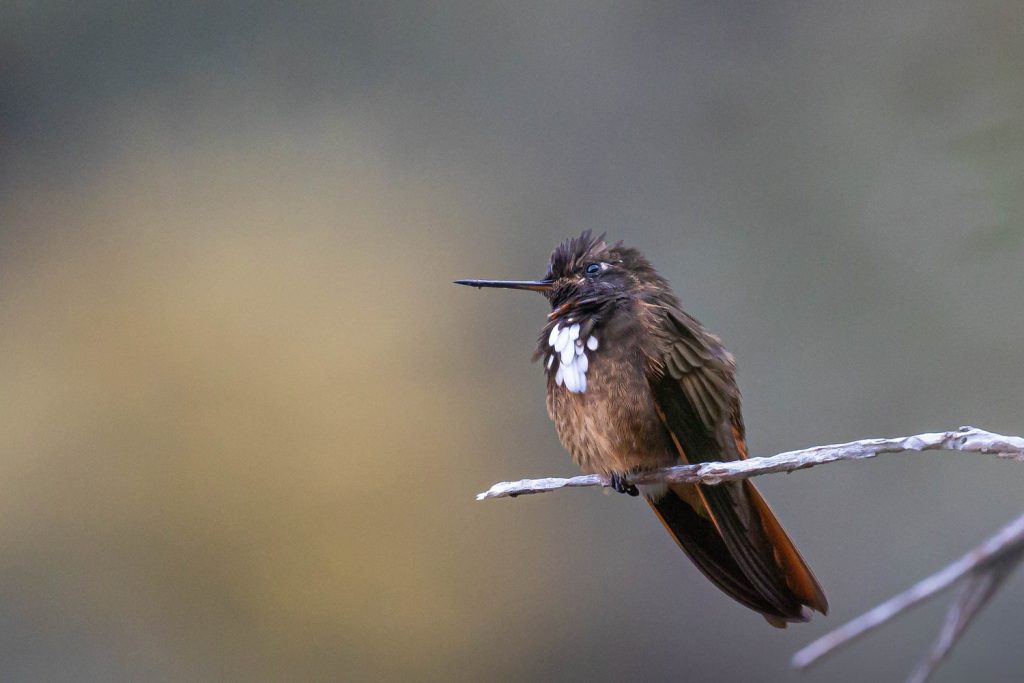
Across the journey we recorded 222 species, including 27 species endemic to Peru. Among them were some of southern Peru’s most sought-after birds, including White-tufted Sunbeam (E), Creamy-crested Spinetail (E), Urubamba Antpitta (E), Red-and-white Antpitta (E), Inca Wren (E), Unstreaked Tit-Tyrant (E), Parodi’s Hemispingus (E), Cuzco Brushfinch (E), Inca Flycatcher (E), Royal Cinclodes, Vilcabamba Tapaculo (E) and Ampay Tapaculo (E).
The route also carried us through Vilcabamba, a region whose remoteness is important not only biologically but historically. After the Spanish occupation of Cusco, the Vilcabamba mountains became the heart of the last independent Inca state and remained a center of resistance until 1572. Birding through these isolated valleys therefore combines exceptional Andean natural history with one of the most fascinating landscapes in Peru’s past.
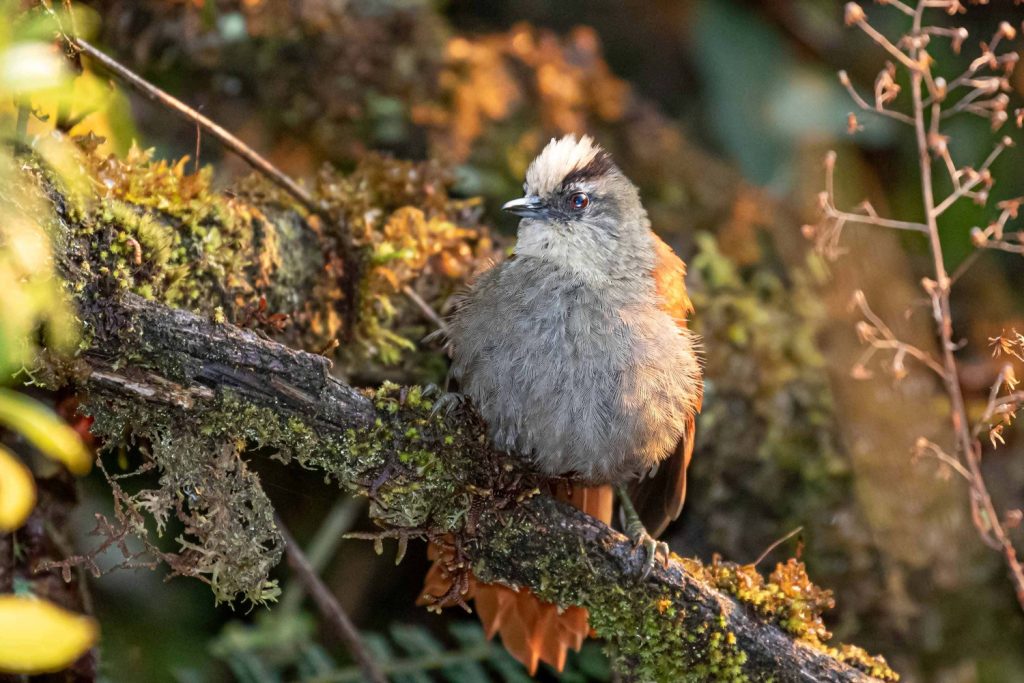
Regions visited: Abra Málaga, Huayopata & Ipal, Huarina Pass & Huarina–Kiteni Road, Vilcabamba, Abra Chucuito & Chucuito Valley, Wamanmarka, Thastayoc, Ollantaytambo, Ensifera Camp, Laguna Huaypo, Chonta, Huanipaca & the Apurímac Highlands
- Total species observed: 222 bird species
- Endemics recorded: 27 Peruvian endemics
- Weather & conditions: Strong variation along the route, from exposed high-Andean puna and cold mountain passes to humid cloud forest, montane bamboo, Polylepis woodland and warmer inter-Andean valleys
- Birding focus: Southern Peru endemics, restricted-range Andean specialties, cloud-forest birds, Polylepis specialists and high-elevation species
| Day / Date | Main activities | Hotel / Lodge |
|---|---|---|
| Day 1 – Aug 30 | Peñas and western Abra Málaga; high-puna birding; descent through San Luis cloud forest to Huayopata; White-tufted Sunbeam, Urubamba Antpitta, Red-and-white Antpitta, Parodi’s Hemispingus and other Cusco endemics | Ipal Ecolodge |
| Day 2 – Aug 31 | Ipal and lower montane cloud forest; intensive birding around 2,070–2,100 m; Andean Cock-of-the-rock, Masked Fruiteater, Inca Flycatcher and Cuzco Brushfinch | Ipal Ecolodge |
| Day 3 – Sep 1 | Laguna Q’ochapata and Huarina Pass; descent along the Huarina–Kiteni Road through montane forest and bamboo; Red-and-white Antpitta, Urubamba Antpitta, Johnson’s Tody-Flycatcher and Yellow-scarfed Tanager | Vilcabamba area |
| Day 4 – Sep 2 | Abra Chucuito and high Vilcabamba mountains; specialist birding above 4,000 m; exceptional views of Royal Cinclodes and Vilcabamba Tapaculo; descent through Chucuito Valley | Ipal Ecolodge |
| Day 5 – Sep 3 | Wamanmarka; return toward Abra Málaga and Thastayoc; high-elevation and Polylepis birding; descent through Peñas, Ollantaytambo and Ñaupa Iglesia; Bearded Mountaineer | Sacred Valley |
| Day 6 – Sep 4 | Morning birding at Ensifera Camp; Laguna Huaypo; afternoon at Chonta for Andean Condor; evening birding for Peruvian Pygmy-Owl and Koepcke’s Screech-Owl | Chonta / Cusco area |
| Day 7 – Sep 5 | Huanipaca and Apurímac highlands; endemic-focused birding for Ampay Tapaculo, Rusty-fronted Canastero and White-tufted Sunbeam; return toward Cusco | OUT |
Day 1: Abra Málaga – From the Dry Andes to Cloud Forest
August 30
Peñas and the western slopes
We began early on the western approach to Abra Málaga, birding dry montane slopes at approximately 3,550 metres. Our first major target appeared quickly: a White-tufted Sunbeam (E) giving brief views while feeding among flowers. Nearby, a Creamy-crested Spinetail (E) remained concealed but called from the surrounding vegetation. Trip report Brooks ebird
Moving higher toward Waqracancha brought colder and more exposed conditions. Here we recorded Stripe-headed Antpitta, Red-crested Cotinga and Chestnut-breasted Mountain Finch (E), the latter another characteristic endemic of the dry southern Peruvian Andes. Trip report Brooks ebird
Abra Málaga and the high puna
Above 4,000 metres, shrubs became increasingly sparse and the landscape opened into puna. The bird community changed almost completely.
Among the high-Andean species were Andean Goose, Crested Duck, Yellow-billed Teal, Andean Lapwing, Andean Ibis, Andean Flicker, Cream-winged Cinclodes, Junin Canastero (E), Puna Ground-Tyrant, Rufous-webbed Bush-Tyrant, Paramo Pipit, Plumbeous Sierra Finch and Ash-breasted Sierra Finch. Trip report Brooks ebird
Birding in the puna can initially seem quiet, but these open landscapes support a highly specialized community adapted to cold temperatures, strong winds and short alpine vegetation.
Eastern slope and upper cloud forest
Crossing the pass transformed the day. The dry western Andes gave way to progressively wetter vegetation, beginning with dense high-elevation scrub and eventually becoming upper montane forest.
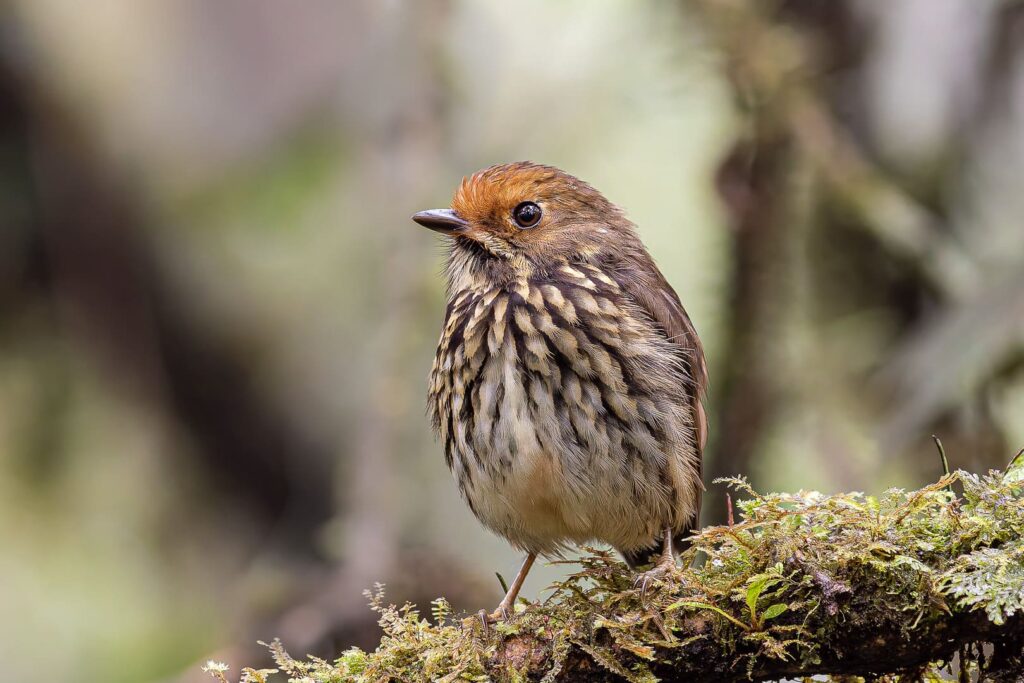
Here we began hearing one of the principal targets of Abra Málaga: Urubamba Antpitta (E). Several were detected at different elevations, including multiple calling birds. The same zone produced Sapphire-vented Puffleg, Shining Sunbeam, Moustached Flowerpiercer, Marcapata Spinetail (E), Plushcap, Paramo Seedeater, Unstreaked Tit-Tyrant (E), Inca Wren (E) and Parodi’s Hemispingus (E).
Lower toward San Luis, we added Red-and-white Antpitta (E) by voice, another extremely localized cloud-forest endemic, together with Cuzco Brushfinch (E), White-rumped Hawk, Masked Trogon, Trilling Tapaculo and Red-crested Cotinga.
By afternoon we had descended to around 1,700 metres near Huayopata, where a Green-and-white Hummingbird (E) was found on a nest. In the space of a single day we had travelled from open puna above 4,000 metres to warm subtropical forest. Trip report Brooks ebird
We finished at Ipal Ecolodge, where the warmer vegetation produced Versicolored Barbet, Russet-crowned Crake, Barred Antshrike, Green Jay, Thick-billed Euphonia, Blue-necked Tanager and Red-crested Finch. Trip report Brooks ebird
Day 2: Ipal and the Lower Montane Forest
August 31
Ipal Ecolodge
Early birding around Ipal gave us a mixture of forest-edge and more open-country species, including Speckled Chachalaca, Barred Antshrike, Short-crested Flycatcher, Social Flycatcher, Russet-backed Oropendola, Palm Tanager and Red-crested Finch.
The morning then shifted to much richer humid forest between approximately 2,070 and 2,100 metres.
Montane cloud forest
This was one of the most productive sessions of the trip, with 49 species recorded during several hours of concentrated birding. Trip report Brooks ebird
The forest began with Wattled Guan, Andean Guan and a calling Rufous-breasted Wood-Quail. Hummingbirds included Lesser Violetear, Speckled Hummingbird, Long-tailed Sylph, Bronzy Inca, Violet-throated Starfrontlet and Rufous-booted Racket-tail.
A Crested Quetzal provided one of the more spectacular sightings, while the understory held Scaled Antpitta, Ochre-breasted Antpitta and White-crowned Tapaculo.
The forest also produced Montane Woodcreeper, Buff-browed Foliage-gleaner, Azara’s Spinetail, Masked Fruiteater (E), Mottle-cheeked Tyrannulet, Cinnamon Flycatcher and several other members of active mixed flocks.
Three male Andean Cock-of-the-rocks were among the day’s highlights. Peru’s national bird is always impressive, but encounters in natural cloud forest are particularly memorable: adult males combine brilliant orange-red plumage with an extraordinary compressed crest and gather at traditional display areas to compete for females.
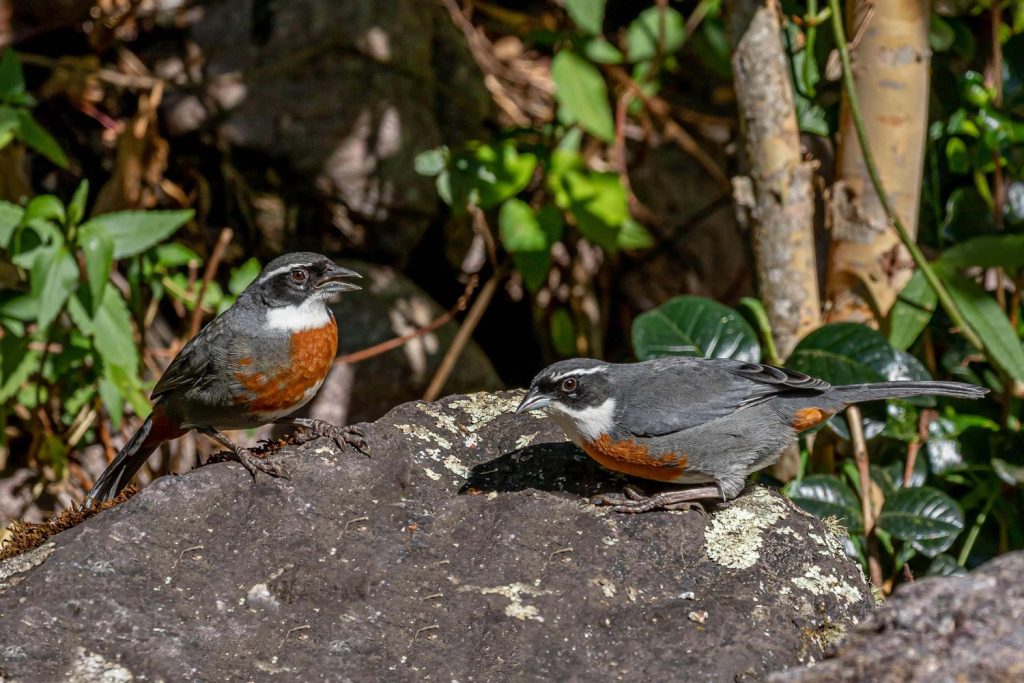
The same forest gave us several important regional specialties, including Inca Flycatcher (E), Inca Wren (E) and Cuzco Brushfinch (E).
Day 3: Vilcabamba – High Andes and Montane Bamboo
September 1
Today we moved deeper into the Vilcabamba range, one of the least conventional sections of the journey and one of its most compelling.
Q’ochapata and Huarina Pass
We began around Laguna Q’ochapata and continued toward Huarina Pass, initially birding high-Andean vegetation.
Among the first birds were Amethyst-throated Sunangel, Creamy-crested Spinetail (E), Azara’s Spinetail, White-winged Black-Tyrant, Spectacled Redstart and Golden-billed Saltator. Trip report Brooks ebird
As elevation increased, the route again entered puna before dropping onto the more humid side of the mountains.
Huarina–Kiteni Road
The descent produced increasingly dense montane vegetation and extensive patches of bamboo.
This was prime habitat for localized forest birds. Around 2,900–2,940 metres we recorded both Red-and-white Antpitta (E) and Urubamba Antpitta (E) calling from the forest.
Other highlights included Violet-throated Starfrontlet, Chestnut-breasted Coronet, Golden-headed Quetzal, Barred Parakeet, Trilling Tapaculo, Pearled Treerunner, Red-crested Cotinga, Johnson’s Tody-Flycatcher (E), Rufous-bellied Bush-Tyrant, Inca Wren (E), Cuzco Brushfinch (E) and Yellow-scarfed Tanager (E). Trip report Brooks ebird
The birding here had a different character from the first two days. Rather than broad open vistas and conspicuous high-Andean birds, progress was slower and more deliberate, listening carefully to dense forest and bamboo where several of the most localized species remained hidden until they vocalized.
These remote forests form part of the same formidable mountain landscape that once sheltered the last independent Inca state. The isolation that made Vilcabamba historically significant also helps explain why this range remains so fascinating biologically.
Day 4: Abra Chucuito and the High Vilcabamba Mountains
September 2
Abra Chucuito
We returned to extreme elevations, reaching open alpine country above 4,000 metres.
This became one of the strongest specialist-birding sessions of the entire trip.
Among the first highlights were Vilcabamba Tapaculo (E), Stripe-headed Antpitta and several high-Andean furnariids. The real star, however, was Royal Cinclodes.
We encountered three birds around the snowmelt immediately below the pass. They performed exceptionally well on large boulders, showing their rich rufous wing panels and patterned underparts. At one point birds displayed while singing, flicking and opening their wings and pulling moss from the rocks—a superb encounter with one of the most iconic birds of high-elevation Andean woodland and rocky stream habitats.
Other birds here included White-winged Cinclodes, Line-fronted Canastero, Junin Canastero (E), Streak-throated Canastero, Cinereous Ground-Tyrant, d’Orbigny’s Chat-Tyrant, Tit-like Dacnis, Plumbeous Sierra Finch and Ash-breasted Sierra Finch.
Chucuito Valley
Descending into the upper Chucuito Valley brought a gradual return to lower and less exposed habitats.
White-collared Swift, White-tipped Swift, Brown-bellied Swallow, Chiguanco Thrush, Ash-breasted Sierra Finch and Plain-colored Seedeater were among the conspicuous birds, while lower in the valley groups of Andean Ibis moved across the landscape. Trip report Brooks ebird
The scenery was as memorable as the birds. Vilcabamba is a landscape of deep valleys, steep ridges and isolated passes, and traveling through it makes clear how effectively these mountains once separated the final Inca stronghold from the Spanish-controlled regions around Cusco.
Day 5: Wamanmarka, Abra Málaga and the Sacred Valley
September 3
Wamanmarka
We began around the archaeological site of Wamanmarka, combining a brief cultural stop with birding in the surrounding vegetation.
Birds included Speckled Chachalaca, Mitred Parakeet, Sclater’s Tyrannulet, Social Flycatcher, Tropical Kingbird, Blue-necked Tanager and Red-crested Finch. Trip report Brooks ebird
This mixture of archaeology and birding is a recurring feature of southern Peru, where many of the best natural habitats lie within landscapes that have been occupied and transformed for centuries.
Abra Málaga and Thastayoc
We climbed once more toward the high forests of Abra Málaga.
In the quebrada we found Sapphire-vented Puffleg and Shining Sunbeam, before continuing higher toward Thastayoc and its specialized high-elevation habitats.
This area contains remnant Polylepis woodland, one of the most distinctive ecosystems of the high Andes. These twisted, slow-growing trees survive at elevations where conventional forest largely disappears, creating isolated woodland patches surrounded by puna.
Such remnants are disproportionately important for specialized birds, making them a major focus for serious Andean birding. The search here concentrated on Polylepis-associated species, including Royal Cinclodes and other high-elevation specialists.
Peñas, Ollantaytambo and Ñaupa Iglesia
Descending toward the Sacred Valley returned us to a much drier landscape.
Near Ñaupa Iglesia, a Bearded Mountaineer (E) was feeding on tobacco flowers at approximately 2,900 metres, a characteristic setting for one of the most distinctive hummingbirds of the dry Cusco valleys. Trip report Brooks ebird
The day ended in the Sacred Valley after another remarkable transition from humid upper montane forest to dry inter-Andean habitat.
Day 6: Sacred Valley to Chonta
September 4
Ensifera Camp
The morning began with hummingbirds at Ensifera Camp.
Flowering vegetation attracted Sparkling Violetear, Black-tailed Trainbearer, Tyrian Metaltail, Shining Sunbeam and Giant Hummingbird, while the surrounding vegetation produced Undulated Antpitta, Black-backed Grosbeak, Blue-and-yellow Tanager, Cinereous Conebill and Black-throated Flowerpiercer. Trip report Brooks ebird
After the concentrated forest birding of Vilcabamba, watching hummingbirds at close range made for a very different start to the day.
Laguna Huaypo and the road to Chonta
We then crossed the open high plateau west of the Sacred Valley, passing wetlands, farmland and increasingly dramatic inter-Andean scenery on our way toward the Apurímac drainage.
The landscape gradually became deeper and more rugged until we reached Chonta.
Chonta – Andean Condor country
The Chonta viewpoint overlooks one of the most impressive canyon systems in the Cusco region.
Here our attention shifted almost entirely to the sky.
We were rewarded with three Andean Condors, including at least one adult and two immature birds. Trip report Brooks ebird
Watching condors in this landscape is a very different experience from simply seeing one at great distance over the Andes. From Chonta, the birds can appear against the canyon walls as they use rising currents of warm air to gain altitude, sometimes passing at a level that makes their immense wingspan and effortless soaring immediately apparent.
For a bird associated so strongly with the Andes, there are few more appropriate settings.
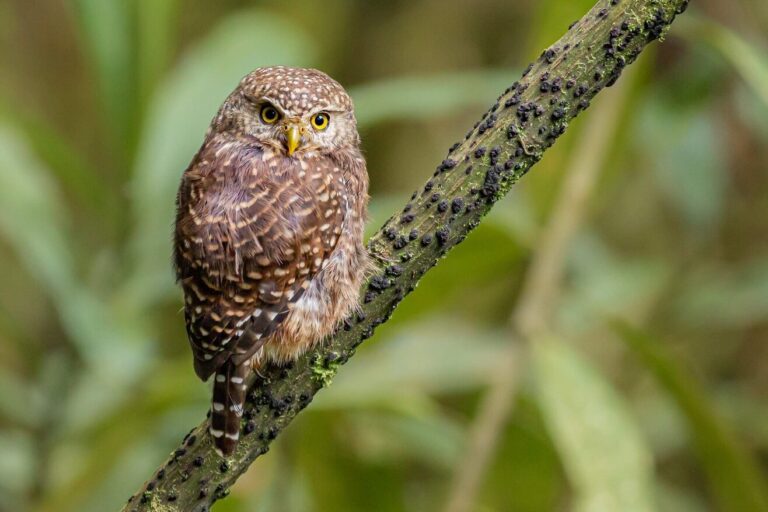
Later in the day a Peruvian Pygmy-Owl was followed by another major endemic highlight, Koepcke’s Screech-Owl (E). The bird was initially heard and then seen well, providing an excellent finish to one of the most memorable days of the journey. Trip report Brooks ebird
Day 7: Huanipaca and the Apurímac Highlands
September 5
Our final morning took us into Apurímac, where another set of localized high-Andean species awaited.
Road to Huanipaca
At approximately 3,940 metres we found one of the key birds of the entire trip: Ampay Tapaculo (E).
This highly localized endemic gave an unusually complete encounter and was recorded, photographed and filmed. A Rusty-fronted Canastero (E) was also heard and recorded nearby, while Black-billed Shrike-Tyrant, Blue-and-yellow Tanager, Black-throated Flowerpiercer and Band-tailed Seedeater were also present. Trip report Brooks ebird
Farther along the road we added Sapphire-vented Puffleg and two White-tufted Sunbeams (E), together with the characteristic finches, flowerpiercers and flycatchers of high Andean scrub.
Apurímac is particularly rewarding for endemic-focused birding. Deep river valleys and isolated mountain blocks have created a landscape in which many birds have very restricted distributions, and several of southern Peru’s most localized species are concentrated in these mountains.
It was an appropriate conclusion to a week devoted not simply to accumulating species, but to seeking the birds that make this part of Peru unique.
Trip Summary
Over seven days we recorded 222 species, including 27 Peru endemics, across an exceptional range of southern Andean habitats.
The journey began in the dry slopes and puna of Abra Málaga, crossed into humid upper cloud forest, penetrated the remote mountains and bamboo forests of Vilcabamba, returned through the high passes and Polylepis country, and finally continued through the Sacred Valley to the immense canyon landscapes of Chonta and the endemic-rich highlands of Apurímac.
Among the many highlights were White-tufted Sunbeam (E), Green-and-white Hummingbird (E), Bearded Mountaineer (E), Creamy-crested Spinetail (E), Marcapata Spinetail (E), Urubamba Antpitta (E), Red-and-white Antpitta (E), Vilcabamba Tapaculo (E), Ampay Tapaculo (E), Royal Cinclodes, Inca Flycatcher (E), Unstreaked Tit-Tyrant (E), Inca Wren (E), Parodi’s Hemispingus (E), Cuzco Brushfinch (E), Koepcke’s Screech-Owl (E) and Chestnut-breasted Mountain Finch (E).
The three Andean Condors over Chonta provided one of the great visual moments of the trip, while the encounter with displaying Royal Cinclodes in the high Vilcabamba mountains represented birding of a completely different kind—localized, demanding and intensely rewarding.
For birders whose priorities are endemics, restricted-range species and serious field birding, this route offers an exceptional cross-section of the southern Peruvian Andes.
Bird List
Abra Málaga – Vilcabamba – Sacred Valley – Chonta – Apurímac
August 30 – September 5, 2026
TINAMOUS
1. Brown Tinamou — Crypturellus obsoletus
DUCKS & GEESE
2. Andean Goose — Oressochen melanopterus
3. Crested Duck — Lophonetta specularioides
4. Torrent Duck — Merganetta armata
5. Yellow-billed Teal — Anas flavirostris
6. Andean Duck — Oxyura ferruginea
GUANS & CHACHALACAS
7. Wattled Guan — Aburria aburri
8. Andean Guan — Penelope montagnii
9. Speckled Chachalaca — Ortalis guttata
NEW WORLD QUAIL
10. Rufous-breasted Wood-Quail — Odontophorus speciosus
PIGEONS & DOVES
11. Spot-winged Pigeon — Patagioenas maculosa
12. Band-tailed Pigeon — Patagioenas fasciata
13. Pale-vented Pigeon — Patagioenas cayennensis
14. Eared Dove — Zenaida auriculata
15. White-tipped Dove — Leptotila verreauxi
CUCKOOS
16. Common Squirrel-Cuckoo — Piaya cayana
17. Striped Cuckoo — Tapera naevia
SWIFTS
18. White-collared Swift — Streptoprocne zonaris
19. White-tipped Swift — Aeronautes montivagus
20. Andean Swift — Aeronautes andecolus
HUMMINGBIRDS
21. Sparkling Violetear — Colibri coruscans
22. Lesser Violetear — Colibri cyanotus
23. Amethyst-throated Sunangel — Heliangelus amethysticollis
24. Speckled Hummingbird — Adelomyia melanogenys
25. Long-tailed Sylph — Aglaiocercus kingii
26. Black-tailed Trainbearer — Lesbia victoriae
27. Tyrian Metaltail — Metallura tyrianthina
28. Scaled Metaltail — Metallura aeneocauda
29. Sapphire-vented Puffleg — Eriocnemis luciani
30. Shining Sunbeam — Aglaeactis cupripennis
31. White-tufted Sunbeam (E) — Aglaeactis castelnaudii
32. Bronzy Inca — Coeligena coeligena
33. Violet-throated Starfrontlet — Coeligena violifer
34. Chestnut-breasted Coronet — Boissonneaua matthewsii
35. Rufous-booted Racket-tail — Ocreatus addae
36. Swallow-tailed Hummingbird — Eupetomena macroura
37. Green-and-white Hummingbird (E) — Elliotomyia viridicauda
38. White-bellied Hummingbird — Elliotomyia chionogaster
39. Andean Hillstar — Oreotrochilus estella
40. Olivaceous Thornbill — Chalcostigma olivaceum
41. Blue-mantled Thornbill — Chalcostigma stanleyi
42. Giant Hummingbird — Patagona gigas
43. Bearded Mountaineer (E) — Oreonympha nobilis
RAILS & COOTS
44. Russet-crowned Crake — Rufirallus viridis
45. Slate-colored Coot — Fulica ardesiaca
PLOVERS
46. Southern Lapwing — Vanellus chilensis
47. Andean Lapwing — Vanellus resplendens
GULLS
48. Andean Gull — Chroicocephalus serranus
GREBES
49. White-tufted Grebe — Rollandia rolland
CORMORANTS
50. Neotropic Cormorant — Nannopterum brasilianum
IBISES
51. Puna Ibis — Plegadis ridgwayi
52. Andean Ibis — Theristicus branickii
NEW WORLD VULTURES
53. Andean Condor — Vultur gryphus
54. Black Vulture — Coragyps atratus
55. Turkey Vulture — Cathartes aura
HAWKS & EAGLES
56. Cinereous Harrier — Circus cinereus
57. Plumbeous Kite — Ictinia plumbea
58. Roadside Hawk — Rupornis magnirostris
59. White-rumped Hawk — Parabuteo leucorrhous
60. Variable Hawk — Geranoaetus polyosoma
61. Black-chested Buzzard-Eagle — Geranoaetus melanoleucus
OWLS
62. Tropical Screech-Owl — Megascops choliba
63. Koepcke’s Screech-Owl (E) — Megascops koepckeae
64. Peruvian Pygmy-Owl — Glaucidium peruanum
TROGONS & QUETZALS
65. Masked Trogon — Trogon personatus
66. Crested Quetzal — Pharomachrus antisianus
67. Golden-headed Quetzal — Pharomachrus auriceps
BARBETS
68. Versicolored Barbet — Eubucco versicolor
WOODPECKERS
69. Ocellated Piculet — Picumnus dorbignyanus
70. Andean Flicker — Colaptes rupicola
71. Crimson-mantled Woodpecker — Colaptes rivolii
FALCONS & CARACARAS
72. Mountain Caracara — Daptrius megalopterus
73. American Kestrel — Falco sparverius
PARROTS & PARAKEETS
74. Barred Parakeet — Bolborhynchus lineola
75. Speckle-faced Parrot — Pionus tumultuosus
76. Mitred Parakeet — Psittacara mitratus
ANTSHRIKES
77. Barred Antshrike — Thamnophilus doliatus
78. Variable Antshrike — Thamnophilus caerulescens
ANTPITTAS
79. Stripe-headed Antpitta — Grallaria andicolus
80. Scaled Antpitta — Grallaria guatimalensis
81. Undulated Antpitta — Grallaria squamigera
82. Urubamba Antpitta (E) — Grallaria occabambae
83. Red-and-white Antpitta (E) — Grallaria erythroleuca
84. Ochre-breasted Antpitta — Grallaricula flavirostris
TAPACULOS
85. Trilling Tapaculo — Scytalopus parvirostris
86. White-crowned Tapaculo — Scytalopus atratus
87. Diademed Tapaculo — Scytalopus schulenbergi
88. Puna Tapaculo — Scytalopus simonsi
89. Vilcabamba Tapaculo (E) — Scytalopus urubambae
90. Ampay Tapaculo (E) — Scytalopus whitneyi
WOODCREEPERS
91. Montane Woodcreeper — Lepidocolaptes lacrymiger
OVENBIRDS
92. Cream-winged Cinclodes — Cinclodes albiventris
93. White-winged Cinclodes — Cinclodes atacamensis
94. Royal Cinclodes — Cinclodes aricomae
95. Streaked Tuftedcheek — Pseudocolaptes boissonneautii
96. Streaked Xenops — Xenops rutilans
97. Pearled Treerunner — Margarornis squamiger
98. Buff-browed Foliage-gleaner — Syndactyla rufosuperciliata
99. Azara’s Spinetail — Synallaxis azarae
100. Apurimac Spinetail (E) — Synallaxis courseni
101. Creamy-crested Spinetail (E) — Cranioleuca albicapilla
102. Marcapata Spinetail (E) — Cranioleuca marcapatae
103. Vilcabamba Spinetail (E) — Cranioleuca weskei
104. Tawny Tit-Spinetail — Sylviorthorhynchus yanacensis
105. White-browed Tit-Spinetail (E) — Leptasthenura xenothorax
106. Junin Canastero (E) — Asthenes virgata
107. Rusty-fronted Canastero (E) — Asthenes ottonis
108. Streak-throated Canastero — Asthenes humilis
109. Line-fronted Canastero — Asthenes urubambensis
110. Vilcabamba Thistletail (E) — Asthenes vilcabambae
COTINGAS & FRUITEATERS
111. Masked Fruiteater (E) — Pipreola pulchra
112. Red-crested Cotinga — Ampelion rubrocristatus
113. Andean Cock-of-the-rock — Rupicola peruvianus
TYRANT FLYCATCHERS
114. Sclater’s Tyrannulet — Phyllomyias sclateri
115. White-banded Tyrannulet — Mecocerculus stictopterus
116. White-throated Tyrannulet — Mecocerculus leucophrys
117. Bolivian Tyrannulet — Zimmerius bolivianus
118. Inca Flycatcher (E) — Leptopogon taczanowskii
119. Mottle-cheeked Tyrannulet — Phylloscartes ventralis
120. Variegated Bristle-Tyrant — Pogonotriccus poecilotis
121. Johnson’s Tody-Flycatcher (E) — Poecilotriccus luluae
122. Unstreaked Tit-Tyrant (E) — Uromyias agraphia
123. Ash-breasted Tit-Tyrant — Anairetes alpinus
124. Yellow-billed Tit-Tyrant — Anairetes flavirostris
125. Highland Elaenia — Elaenia obscura
126. Sierran Elaenia — Elaenia pallatangae
127. Yellow-bellied Elaenia — Elaenia flavogaster
128. Cinnamon Flycatcher — Pyrrhomyias cinnamomeus
129. Flavescent Flycatcher — Myiophobus flavicans
130. Unadorned Flycatcher — Myiophobus inornatus
131. Ochraceous-breasted Flycatcher (E) — Nephelomyias ochraceiventris
132. Smoke-colored Pewee — Contopus fumigatus
133. Little Ground-Tyrant — Syrtidicola fluviatilis
134. Puna Ground-Tyrant — Muscisaxicola juninensis
135. Taczanowski’s Ground-Tyrant — Muscisaxicola griseus
136. Cinereous Ground-Tyrant — Muscisaxicola cinereus
137. Rufous-naped Ground-Tyrant — Muscisaxicola rufivertex
138. Rufous-webbed Bush-Tyrant — Cnemarchus rufipennis
139. Rufous-bellied Bush-Tyrant — Myiotheretes fuscorufus
140. Streak-throated Bush-Tyrant — Myiotheretes striaticollis
141. Black-billed Shrike-Tyrant — Agriornis montanus
142. White-winged Black-Tyrant — Knipolegus aterrimus
143. Rufous-breasted Chat-Tyrant — Ochthoeca rufipectoralis
144. Brown-backed Chat-Tyrant — Ochthoeca fumicolor
145. d’Orbigny’s Chat-Tyrant — Ochthoeca oenanthoides
146. Golden-crowned Flycatcher — Myiodynastes chrysocephalus
147. Streaked Flycatcher — Myiodynastes maculatus
148. Dusky-capped Flycatcher — Myiarchus tuberculifer
149. Short-crested Flycatcher — Myiarchus ferox
150. Social Flycatcher — Myiozetetes similis
151. Piratic Flycatcher — Legatus leucophaius
152. Tropical Kingbird — Tyrannus melancholicus
VIREOS
153. Brown-capped Vireo — Vireo leucophrys
154. Chivi Vireo — Vireo chivi
JAYS
155. Green Jay — Cyanocorax yncas
SWALLOWS
156. Brown-bellied Swallow — Orochelidon murina
157. Pale-footed Swallow — Orochelidon flavipes
WRENS
158. Southern House Wren — Troglodytes musculus
159. Inca Wren (E) — Pheugopedius eisenmanni
160. Gray-breasted Wood-Wren — Henicorhina leucophrys
THRUSHES & SOLITAIRES
161. Andean Solitaire — Myadestes ralloides
162. White-eared Solitaire — Entomodestes leucotis
163. Great Thrush — Turdus fuscater
164. Chiguanco Thrush — Turdus chiguanco
PIPITS
165. Paramo Pipit — Anthus bogotensis
FINCHES & EUPHONIAS
166. Blue-naped Chlorophonia — Chlorophonia cyanea
167. Thick-billed Euphonia — Euphonia laniirostris
168. Hooded Siskin — Spinus magellanicus
NEW WORLD SPARROWS
169. Rufous-collared Sparrow — Zonotrichia capensis
170. Common Chlorospingus — Chlorospingus flavopectus
171. Golden-crowned Brushfinch — Atlapetes tricolor
172. Cuzco Brushfinch (E) — Atlapetes canigenis
173. Apurimac Brushfinch (E) — Atlapetes forbesi
BLACKBIRDS & OROPENDOLAS
174. Russet-backed Oropendola — Psarocolius angustifrons
175. Dusky-green Oropendola — Psarocolius atrovirens
176. Giant Cowbird — Molothrus oryzivorus
WOOD-WARBLERS
177. Tropical Parula — Setophaga pitiayumi
178. Citrine Warbler — Myiothlypis luteoviridis
179. Pale-legged Warbler — Myiothlypis signata
180. Russet-crowned Warbler — Myiothlypis coronata
181. Slate-throated Redstart — Myioborus miniatus
182. Spectacled Redstart — Myioborus melanocephalus
CARDINALS & ALLIES
183. Hepatic Tanager — Piranga flava
184. Black-backed Grosbeak — Pheucticus aureoventris
TANAGERS & ALLIES
185. Plushcap — Catamblyrhynchus diadema
186. Rust-and-yellow Tanager — Thlypopsis ruficeps
187. Parodi’s Hemispingus (E) — Kleinothraupis parodii
188. Blue-and-yellow Tanager — Rauenia bonariensis
189. Hooded Mountain Tanager — Buthraupis montana
190. Lacrimose Mountain Tanager — Anisognathus lacrymosus
191. Scarlet-bellied Mountain Tanager — Anisognathus igniventris
192. Yellow-scarfed Tanager (E) — Iridosornis reinhardti
193. Blue-capped Tanager — Sporathraupis cyanocephala
194. Fawn-breasted Tanager — Pipraeidea melanonota
195. Silver-beaked Tanager — Ramphocelus carbo
196. White-lined Tanager — Tachyphonus rufus
197. Blue-gray Tanager — Thraupis episcopus
198. Palm Tanager — Thraupis palmarum
199. Silvery Tanager — Stilpnia viridicollis
200. Blue-necked Tanager — Stilpnia cyanicollis
201. Blue-and-black Tanager — Tangara vassorii
202. Beryl-spangled Tanager — Tangara nigroviridis
203. Saffron-crowned Tanager — Tangara xanthocephala
204. Blue Dacnis — Dacnis cayana
205. Tit-like Dacnis — Xenodacnis parina
206. Giant Conebill — Conirostrum binghami
207. Cinereous Conebill — Conirostrum cinereum
208. Moustached Flowerpiercer — Diglossa mystacalis
209. Black-throated Flowerpiercer — Diglossa brunneiventris
210. Masked Flowerpiercer — Diglossa cyanea
211. Red-crested Finch — Coryphospingus cucullatus
212. Blue-black Grassquit — Volatinia jacarina
213. Yellow-bellied Seedeater — Sporophila nigricollis
214. Band-tailed Seedeater — Catamenia analis
215. Plain-colored Seedeater — Catamenia inornata
216. Paramo Seedeater — Catamenia homochroa
217. Chestnut-breasted Mountain Finch (E) — Poospizopsis caesar
218. Peruvian Sierra Finch — Phrygilus punensis
219. Plumbeous Sierra Finch — Geospizopsis unicolor
220. Ash-breasted Sierra Finch — Geospizopsis plebejus
221. Glacier Finch — Idiopsar speculifer
222. Golden-billed Saltator — Saltator aurantiirostris
TOTAL: 222 SPECIES
TOTAL PERU ENDEMICS: 27 species
If you want to know some basic tipping guideliness during Birding and Photography Tours, see here.
If you are more interested in a Birding and Cultural Trip see here.