

The Iconic Endemics of Northern Peru
Northern Peru is home to some of South America's most extraordinary and sought-after endemic birds. Its remarkable combination of isolated mountain ranges, deep inter-Andean valleys, tropical dry forests, and humid cloud forests has created exceptional conditions for the evolution of species with highly restricted geographical distributions. For dedicated birders, this region offers the opportunity to encounter birds that are not only rare and beautiful but also among the most distinctive representatives of Peru's avifauna.
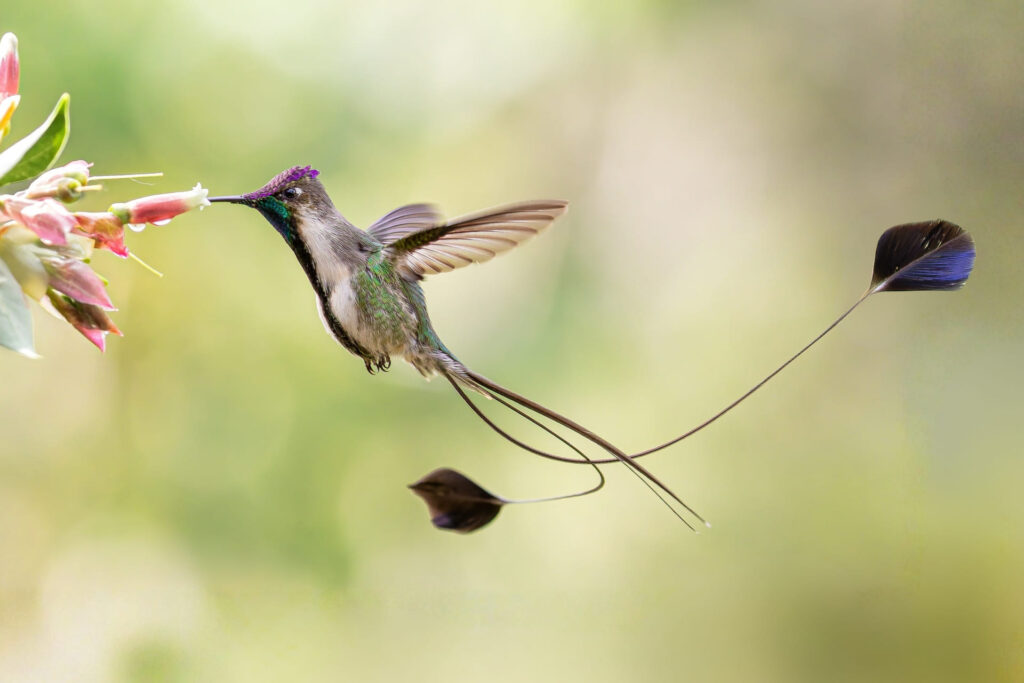
Perhaps the most celebrated is the Marvelous Spatuletail, an extraordinary hummingbird found only in a small region of the Utcubamba Valley, particularly around Pomacochas. The male's two elongated tail feathers, ending in iridescent spatula-shaped discs, are among the most remarkable ornamental structures in the bird world. Its spectacular courtship displays and extremely restricted distribution have made it one of the most recognizable symbols of Peruvian birdwatching.
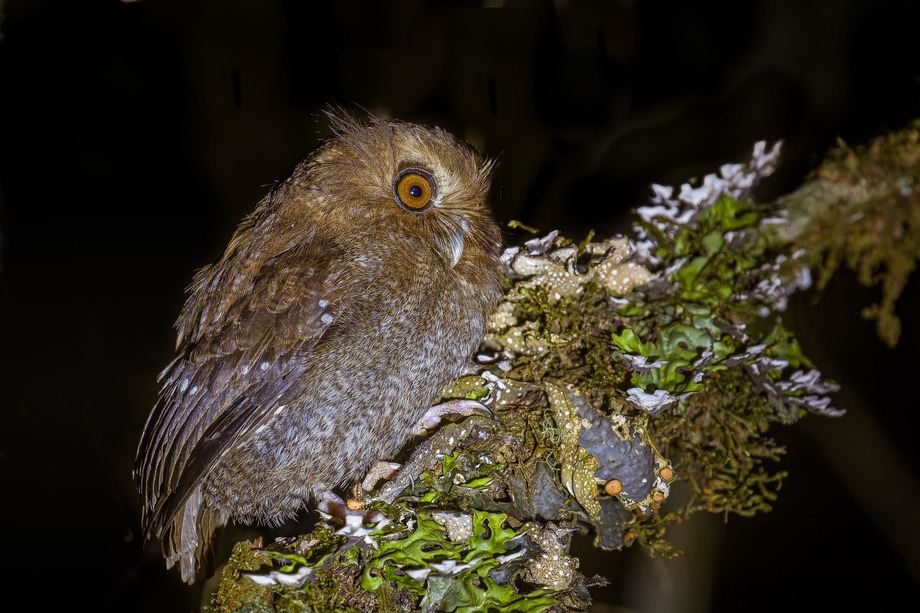
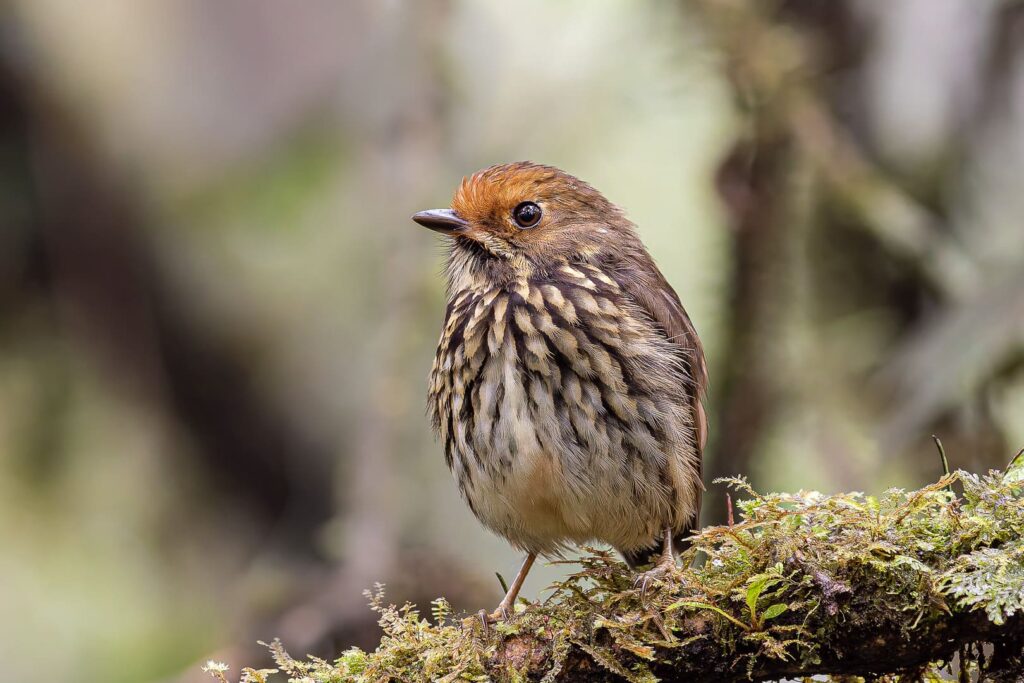
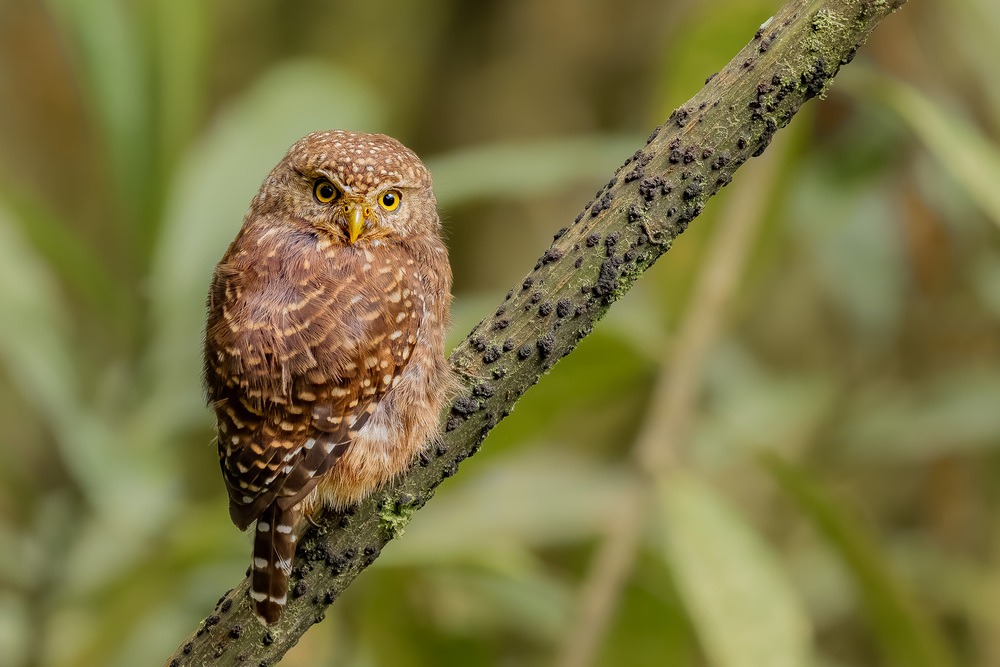
Equally legendary is the Long-whiskered Owlet, a tiny and exceptionally elusive owl inhabiting the dense cloud forests of Abra Patricia. Its unusual facial feathers, diminutive size, and secretive nocturnal behavior make observing it a memorable achievement for visiting birders. These same forests shelter other highly desirable endemics, including the Ochre-fronted Antpitta, a rare and localized understory specialist; the Rusty-tinged Antpitta, known for its rich coloration and distinctive vocalizations; and Johnson's Tody-Flycatcher, a small, colorful flycatcher associated with dense montane vegetation.
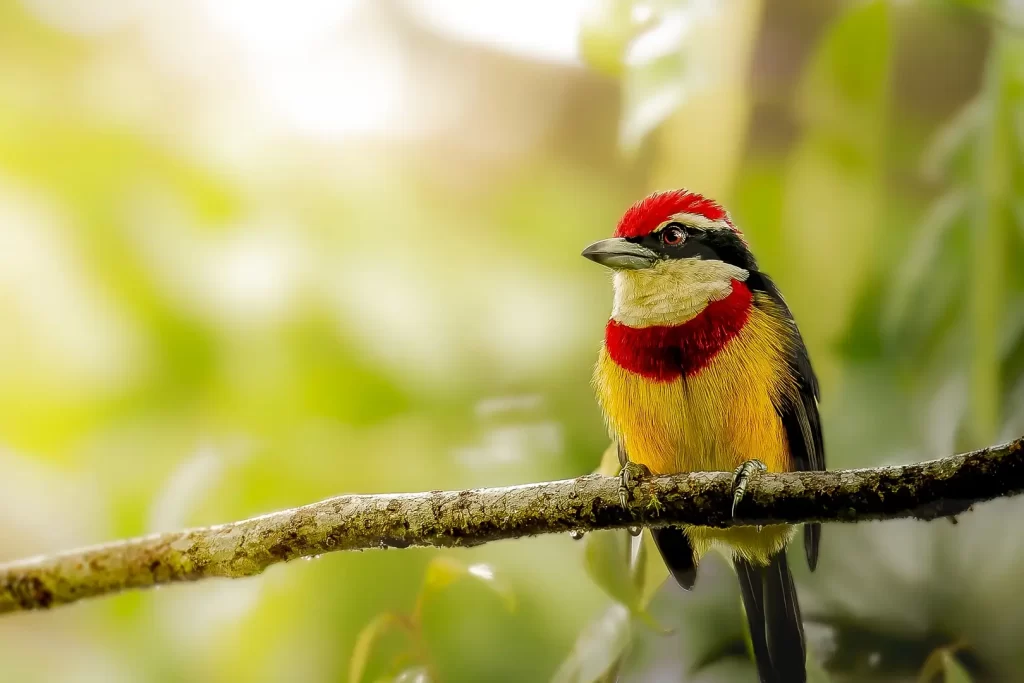
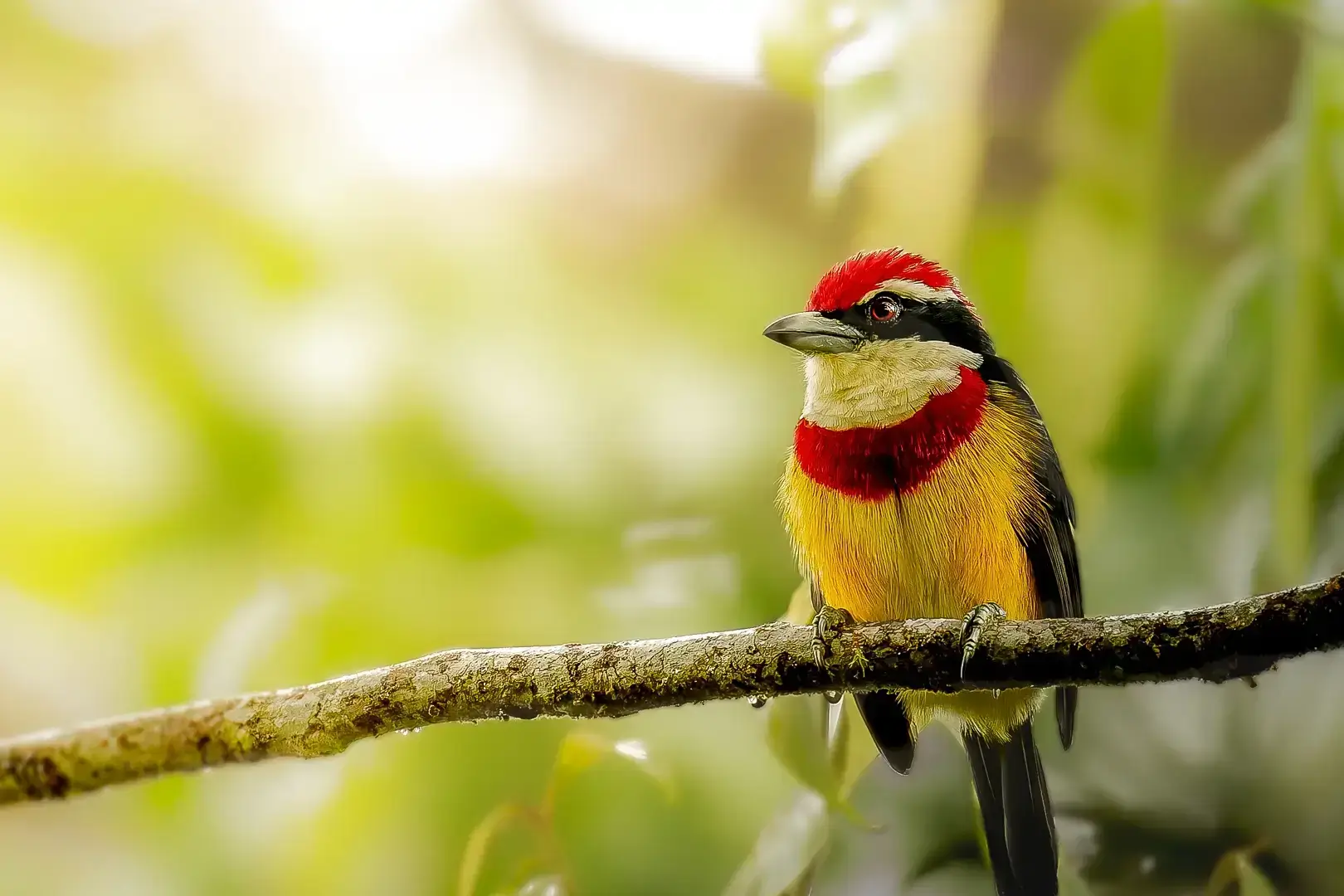
Farther east, the remote forests around Plataforma and Cordillera Azul provide opportunities to search for the spectacular Scarlet-banded Barbet. With its brilliant red breast band, striking combination of colors, and extremely restricted geographical distribution, this species has become one of the ultimate targets for international birders visiting Peru. The same isolated forest system is home to the Cordillera Azul Antbird, a highly localized understory specialist whose relatively recent scientific discovery highlights how much remains to be learned about these remote Andean foothills.
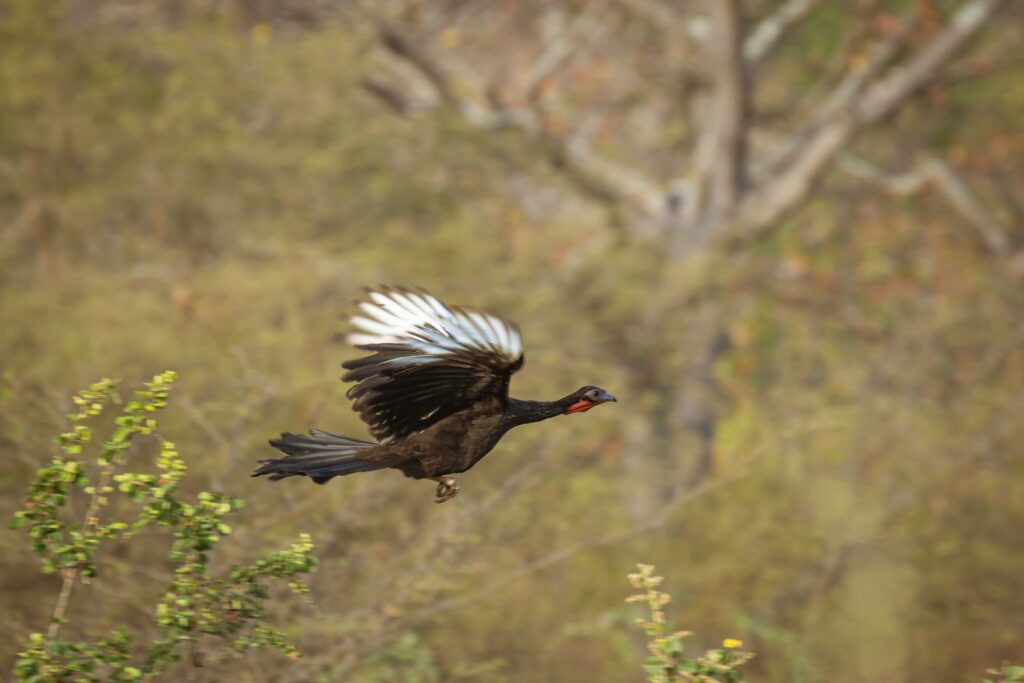
The dry forests of northwestern Peru offer an entirely different collection of iconic endemics. The White-winged Guan, once believed extinct before its rediscovery in 1977, represents one of the country's most remarkable conservation stories. Its survival and recovery efforts are closely associated with the dry forests of Lambayeque, particularly Chaparrí and Laquipampa. Another outstanding target is the Peruvian Plantcutter, a threatened endemic with a distinctive stout bill and specialized feeding habits, strongly associated with the remaining algarrobo woodlands of Bosque de Pómac. Both species demonstrate the extraordinary conservation importance of the Tumbesian dry forests.
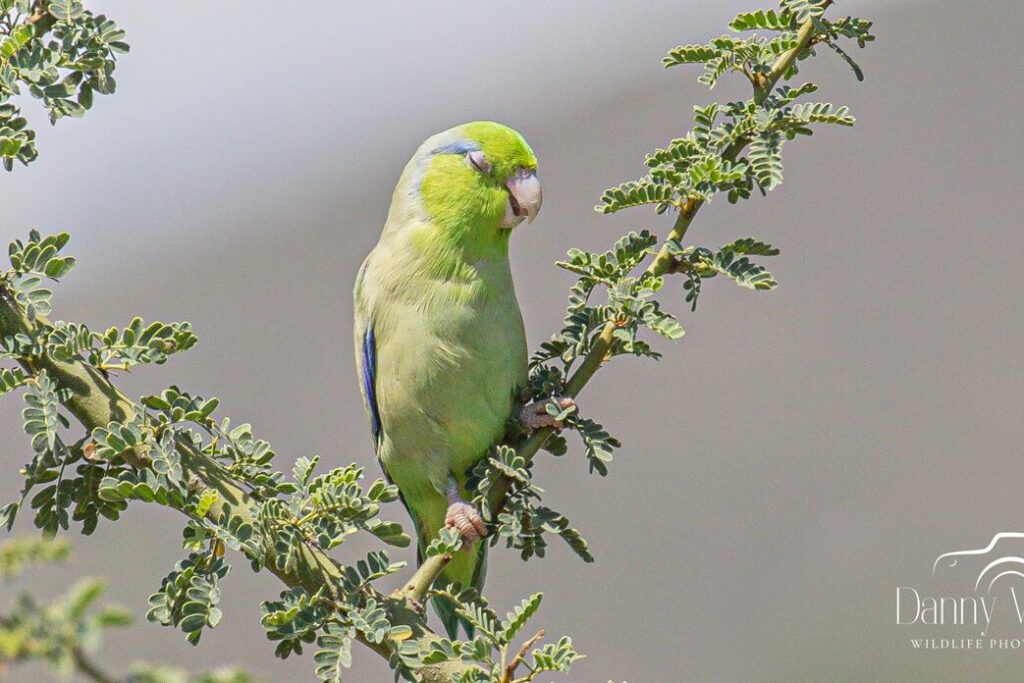
The isolated Marañón Valley contributes another group of remarkable birds. The colorful Yellow-faced Parrotlet, restricted to the dry inter-Andean landscapes of the upper Marañón, is one of Peru's most distinctive parrots. The Marañón Crescentchest, with its striking plumage and secretive behavior, is another highly desirable endemic associated with dense dry scrub. The Little Inca-Finch, adapted to arid slopes and thorny vegetation, further illustrates the unique bird communities that have evolved within this geographical system.
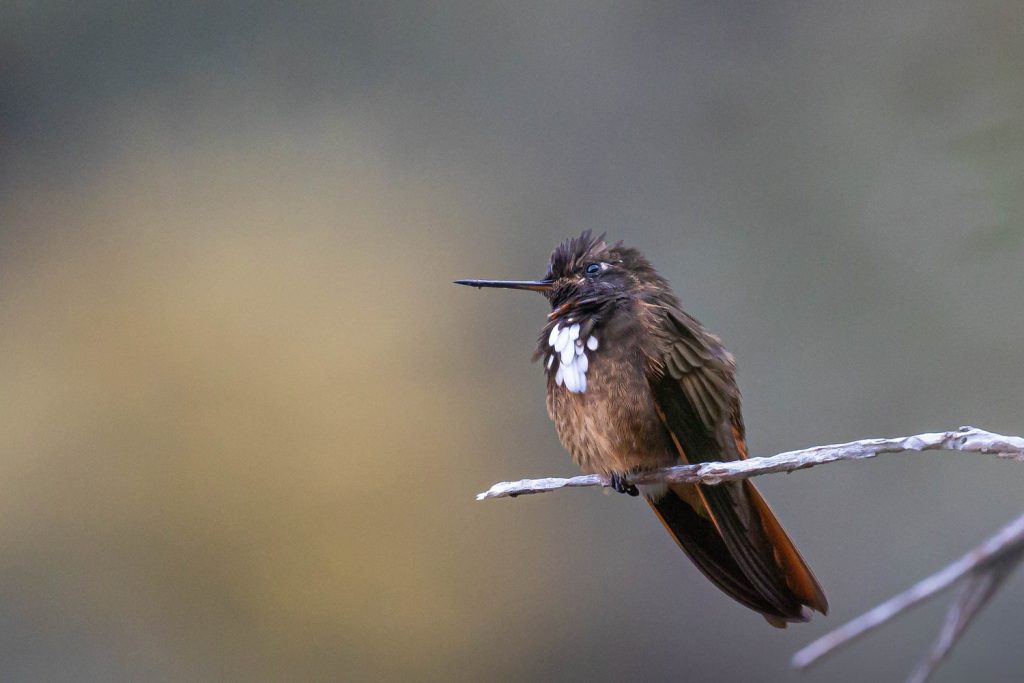
Higher in the Andes, the Cajamarca region supports additional iconic species, particularly the Gray-bellied Comet, a spectacular long-tailed hummingbird associated with flowering vegetation on dry Andean slopes, and the Great Spinetail, a distinctive endemic inhabiting high-elevation scrublands. Meanwhile, the humid montane forests of Amazonas offer opportunities for the impressive Pale-billed Antpitta, one of the largest and most elusive Peruvian antpittas, particularly associated with the forests of the Cordillera de Colán.
Among the eastern Andean foothill specialties, the Painted Manakin also deserves special attention. This small, strikingly patterned endemic, with its brilliant red crown in males, inhabits humid foothill forests around Moyobamba and neighboring mountain systems. Its localized distribution and attractive appearance make it another rewarding target for birders exploring beyond the better-known cloud forest localities.
Together, these iconic endemics represent far more than a collection of desirable sightings. Each reflects a different geographical setting, ecological specialization, or evolutionary history, from the dry forests of the Pacific slopes to isolated Andean valleys and remote Amazonian ridges. For many international birders, encountering these species is among the defining experiences of a Northern Peru birding expedition, making the region one of the world's most compelling destinations for endemic and range-restricted birds.
Tumbesian & Marañón Endemic Birds
The Tumbesian region and the Marañón Valley represent two of South America's most remarkable centers of avian endemism. Although both are characterized by seasonally dry forests, thorn scrub, and arid landscapes, their geographical isolation and distinct evolutionary histories have produced remarkably different bird communities. For dedicated birders, exploring both regions is essential, as they support an extraordinary concentration of endemic, range-restricted, and highly localized species that are rarely encountered along conventional Andean or Amazonian birding routes.
The Tumbesian region, extending from southwestern Ecuador into northwestern Peru, is internationally recognized for its exceptional number of restricted-range birds. Its habitats range from lowland algarrobo woodlands and cactus scrub to semi-deciduous forests and isolated patches of montane vegetation. Among its most important destinations are Bosque de Pómac, Chaparrí, Laquipampa, Casupe, Quebrada El Limón, and Abra de Porculla, each supporting a somewhat different selection of Tumbesian specialties.
The extensive algarrobo forests of Bosque de Pómac are particularly important for two of the region's most sought-after birds: the Peruvian Plantcutter, a threatened endemic with a powerful bill adapted for feeding on vegetation, and the Rufous Flycatcher, a distinctive species strongly associated with the remaining dry woodlands of northwestern Peru. Other characteristic birds include the Tumbes Tyrant (Tumbes Chat-Tyrant), recognizable by its contrasting facial pattern and yellow underparts; the Tumbes Sparrow, frequently encountered in dry scrub and open woodland; and the Tumbes Hummingbird, a regional specialty adapted to the flowering vegetation of arid environments.
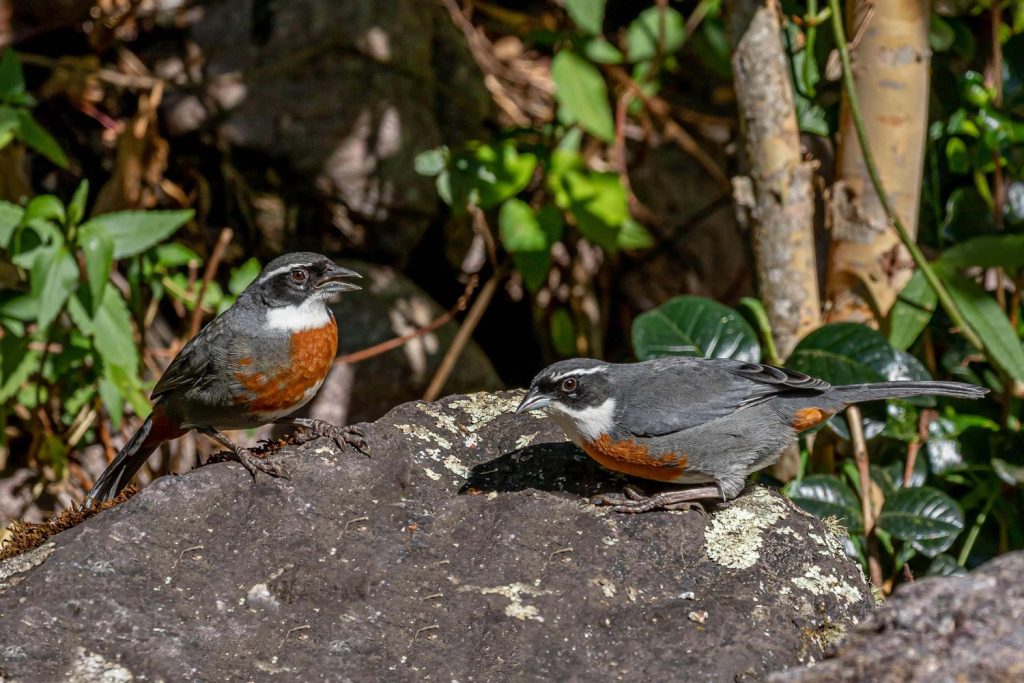
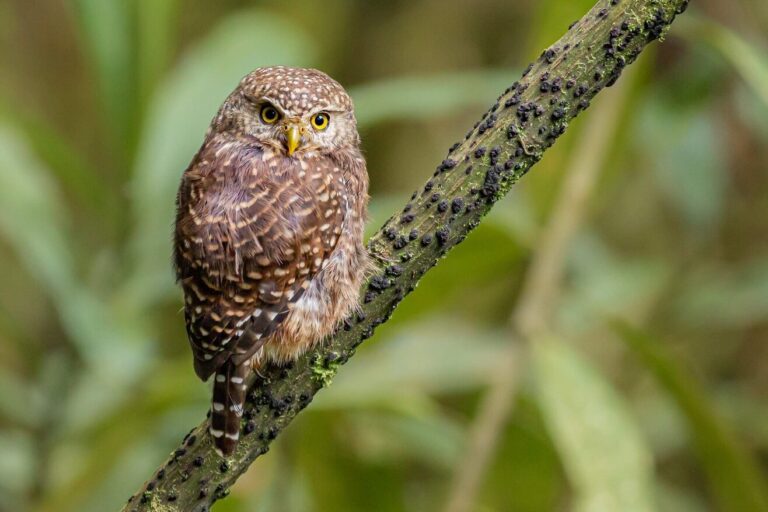
The dry forests of Chaparrí and Laquipampa offer opportunities for the remarkable White-winged Guan, one of Peru's most emblematic conservation species. These habitats also support the beautifully patterned Elegant Crescentchest, often detected by its distinctive song; the striking White-tailed Jay, a conspicuous and colorful inhabitant of dry woodland; and the White-headed Brushfinch, frequently associated with dense scrub and forest edges. Additional specialties include Scarlet-backed Woodpecker, Collared Antshrike, White-edged Oriole, and Pacific Pygmy-Owl, illustrating the considerable diversity supported by these seasonally dry ecosystems.
As the route climbs toward the western Andean slopes, the bird communities change noticeably. The remaining forests around Casupe, Limón de Porcuya, and Abra de Porculla are particularly important for species associated with semi-deciduous and montane woodland. The Piura Chat-Tyrant, a highly localized Peruvian endemic, is among the most desirable targets in this region. Other remarkable birds include the tiny Ecuadorian Piculet, which searches branches for insects; Chapman's Antshrike, typically found in dense forest vegetation; and the Henna-hooded Foliage-gleaner and Rufous-necked Foliage-gleaner, both specialized insectivores that search through foliage and tangled vegetation.
These western Andean habitats also provide opportunities for Gray-breasted Flycatcher, Three-banded Warbler, Black-cowled Saltator, and Bay-crowned Brushfinch, alongside the distinctive porcullae form of the Gray-chinned Hermit. The combination of Tumbesian lowland species and higher-elevation forest specialists makes this transitional region especially interesting for birders seeking to maximize their regional target lists.
Beyond the western Andes, the Marañón Valley introduces an entirely different assemblage of birds. This deep river system, surrounded by steep mountains and isolated dry forests, has played an important role in the geographical separation and diversification of bird populations. Its cactus-covered slopes, thorn woodland, dry scrub, and riverine vegetation support numerous species associated with the Marañón drainage, several of which have exceptionally restricted distributions.
The lower Marañón basin, particularly around Jaén, Gotas de Agua, Bosque de Yanahuanca, and Tamborapa, is especially rewarding. One of its most distinctive inhabitants is the Marañón Crescentchest, a secretive bird with striking plumage that occupies dense dry vegetation and is frequently detected by its repetitive song. Other important specialties include the Marañón Spinetail and Chinchipe Spinetail, two characteristic furnariids associated with dense scrub and dry woodland, as well as the localized Marañón Antshrike, whose taxonomic treatment varies among authorities.
Another notable species is the Little Inca-Finch, a Peruvian endemic with a distinctive facial pattern and orange bill, typically encountered on dry, rocky slopes and in thorny vegetation. The Marañón Gnatcatcher, a small and active insectivorous bird associated with dry scrub in portions of the Marañón drainage, adds another interesting target for birders following current taxonomic developments. The region also supports Marañón Thrush, Buff-bellied Tanager, and Yellow-cheeked Becard, contributing to its distinctive avifauna.
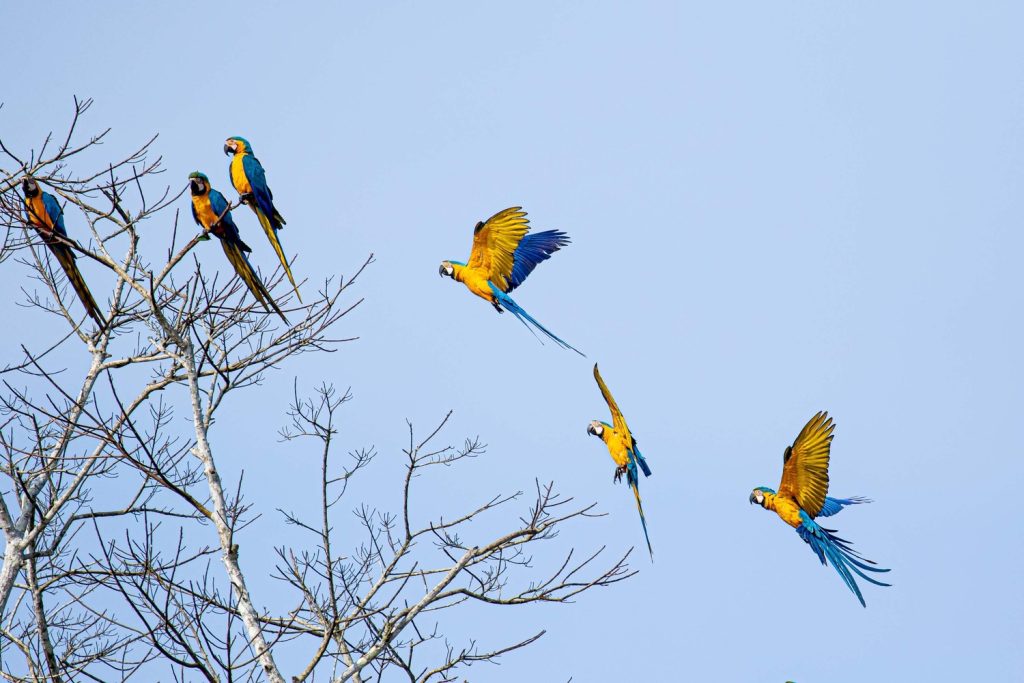
Farther south, the upper Marañón Valley around Balsas, Celendín, and the surrounding inter-Andean slopes offers a different selection of endemic birds. Among the most desirable is the Yellow-faced Parrotlet, a colorful and highly localized parrot that inhabits dry valleys and is often encountered flying in small flocks. The attractive Peruvian Pigeon, with its rich reddish plumage, is another characteristic species of the Marañón drainage, particularly associated with riverine woodland and adjacent vegetation.
These landscapes are also important for several of Peru's remarkable Inca-finches. The Buff-bridled Inca-Finch, with its contrasting facial markings and bright orange bill, favors dry scrub and rocky slopes, while the more localized Gray-winged Inca-Finch occupies selected dry Andean habitats. The Rufous-backed Inca-Finch is another rewarding target in suitable higher-elevation scrub. Their different geographical and elevational distributions highlight the ecological complexity of the Marañón system.
Other characteristic birds of the upper valley include the Spot-throated Hummingbird, associated with dry Andean vegetation, and the Black-necked Woodpecker, a Peruvian endemic that can be encountered in dry woodland and scattered trees. Together, these species illustrate how bird communities change considerably between the lower Marañón basin and the higher, more southern sections of the valley.
For visiting birders, the Tumbesian forests and Marañón Valley are complementary rather than interchangeable destinations. While the former offers an exceptional concentration of specialties associated with northwestern Peru and southwestern Ecuador, the latter provides access to birds shaped by the isolation of one of the Andes' most distinctive river systems. Exploring both regions reveals not only an impressive collection of endemic and range-restricted species but also two fascinating examples of how geography, habitat specialization, and evolutionary history influence bird diversity.
For dedicated listers and experienced Neotropical birders, these dry forest ecosystems are among the most valuable components of a Northern Peru birding expedition. Their extraordinary combination of localized species, contrasting habitats, and important conservation areas makes them essential for anyone seeking a deeper understanding of Peru's remarkable avian endemism.
Andean & Cloud Forest Specialties
The high Andes and cloud forests of Northern Peru support one of the most extraordinary collections of endemic, range-restricted, and highly specialized birds in South America. From the humid montane forests of Amazonas to the isolated ridges of Abra Patricia, the high-elevation valleys of Leymebamba, and the open Andean landscapes of Cajamarca, these habitats offer exceptional opportunities for birders seeking some of Peru's most challenging and rewarding species.
Unlike the seasonally dry forests of the Tumbesian region and Marañón Valley, the humid eastern slopes are characterized by persistent cloud cover, moss-covered trees, orchids, bromeliads, and dense understory vegetation. Changes in elevation, rainfall, and forest structure create distinct bird communities, often within relatively short distances. These conditions are particularly important for antpittas, tapaculos, hummingbirds, tanagers, and specialized montane forest insectivores, many of which occupy narrow elevational ranges or isolated mountain systems.
The Abra Patricia cloud forests are among Northern Peru's most celebrated birding destinations. Centered around Owlet Lodge, Fundo Alto Nieva, García Ridge, and the upper elevations of Alto Mayo, this region protects extensive areas of humid montane forest and distinctive ridge-top vegetation. Its most famous inhabitant is undoubtedly the Long-whiskered Owlet, one of the world's smallest and most unusual owls. This elusive Peruvian endemic inhabits dense, mossy cloud forest, where nocturnal searches offer opportunities for one of the most memorable encounters in Neotropical birding.
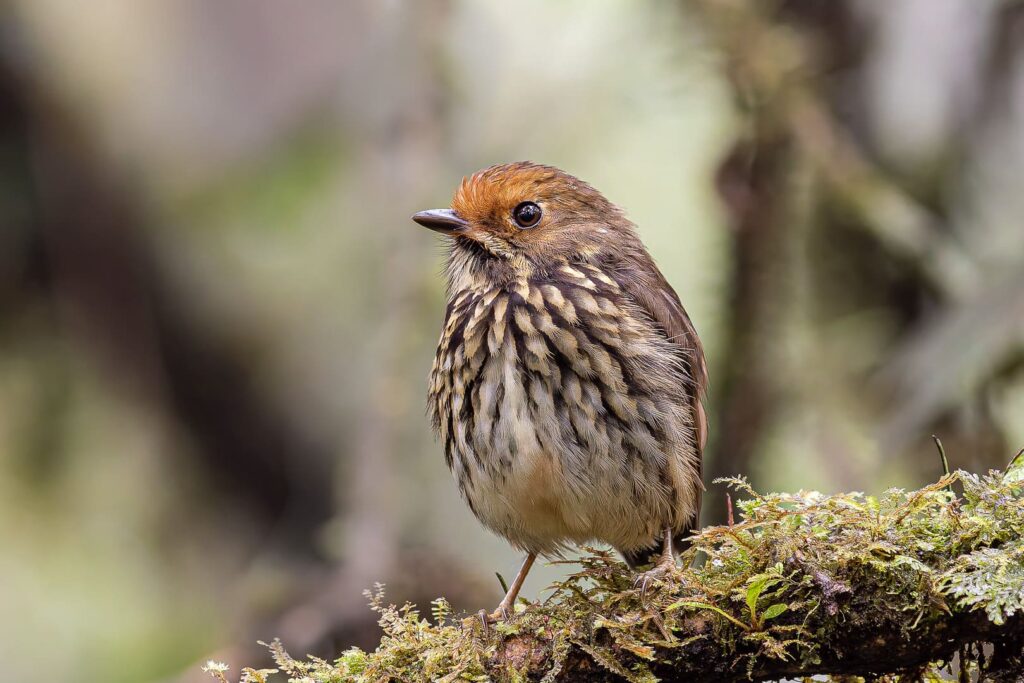
Abra Patricia is particularly famous for its exceptional diversity of antpittas, including several species that rank among the most desirable targets for experienced birders. The endangered Ochre-fronted Antpitta, a small and highly localized Peruvian endemic, inhabits dense cloud forest understory and is one of the region's most important conservation priorities. The Rusty-tinged Antpitta, another Peruvian endemic, is recognized by its rich rufous coloration and characteristic vocalizations, while the Chestnut Antpitta is a secretive forest-floor specialist inhabiting humid montane vegetation.
Other important antpittas of the northern Andes include the Pale-billed Antpitta, a large and elusive species associated with the montane forests of Amazonas; the Leymebamba Antpitta, a small understory bird of humid Andean forests; and the Atuen Antpitta, a localized high-elevation species inhabiting grasslands and shrub-dominated environments above the treeline. Their different habitats and elevational preferences illustrate the remarkable diversity of this bird family in Northern Peru.
Established observation and feeding stations, particularly around Fundo Alto Nieva, have improved opportunities to observe species such as Ochre-fronted and Rusty-tinged Antpittas. Nevertheless, many antpittas remain difficult to encounter, and successful observation often depends on vocal recognition, patient searching, and favorable conditions.
The region is equally important for specialized hummingbirds, including some of the most spectacular species of the northern Andes. The brilliant Royal Sunangel, distinguished by the male's intense iridescent violet-blue plumage, is closely associated with stunted cloud forests, flowering shrubs, and exposed mountain ridges. García Ridge and Alto Nieva are among the most important locations for this highly sought-after hummingbird.
The hummingbird diversity extends well beyond the Royal Sunangel. The Emerald-bellied Puffleg, with its metallic green plumage and distinctive feathered legs, is a characteristic cloud forest species, while the elegant Peruvian Racket-tail, Long-tailed Sylph, Chestnut-breasted Coronet, Fawn-breasted Brilliant, and Sword-billed Hummingbird add remarkable variety to the region's montane avifauna. Other interesting species include Purple-throated Sunangel, Greenish Puffleg, Rufous-capped Thornbill, and White-bellied Woodstar, which occupy different forest structures, elevations, and flowering habitats.
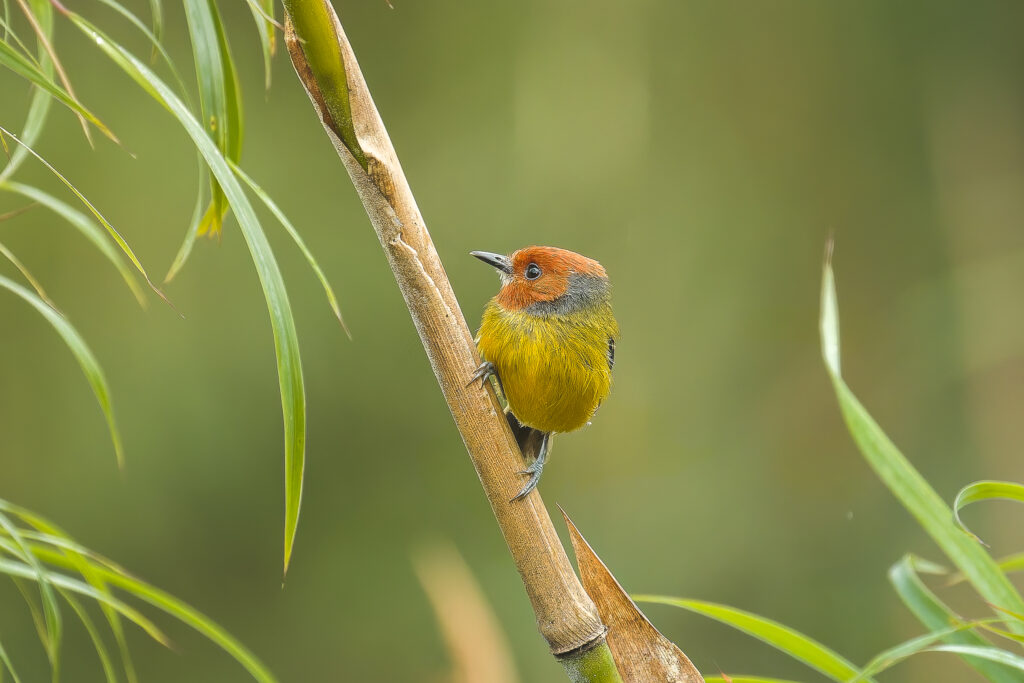
The dense vegetation of Abra Patricia also shelters some of Peru's most distinctive small insectivorous birds. Johnson's Tody-Flycatcher, a colorful and localized endemic with a contrasting reddish head and yellow underparts, is one of the area's principal targets. The Cinnamon-breasted Tody-Tyrant, a tiny and inconspicuous bird associated with dense vegetation, is another rewarding specialty. Both species can be challenging to locate because of their small size and preference for thick forest growth.
Another remarkable inhabitant is the Bar-winged Wood-Wren, a localized species whose distinctive vocalizations are often heard from dense cloud forest understory. The Rufous-vented Tapaculo, a secretive Peruvian endemic, is similarly associated with dense montane vegetation and is more frequently detected by its voice than by sight.
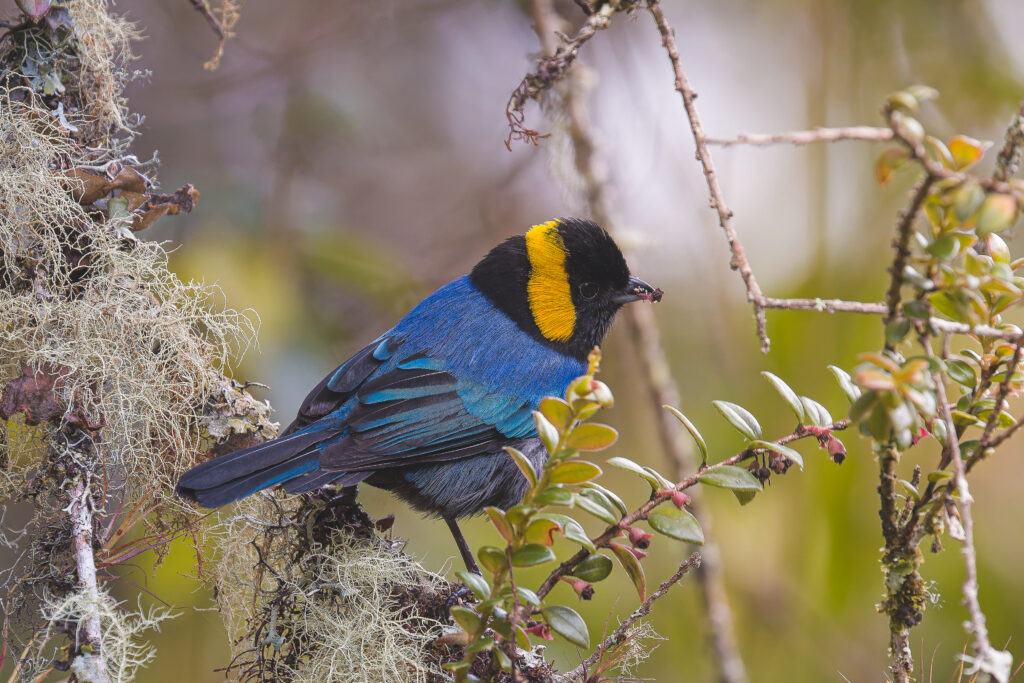
The upper montane forests are also exceptionally productive for colorful tanagers and mixed-species flocks. Among the most desirable species is the Yellow-scarfed Tanager, a striking Peruvian endemic recognizable by its bright yellow scarf contrasting with dark plumage. Other impressive species include White-capped Tanager, Grass-green Tanager, Flame-faced Tanager, Metallic-green Tanager, Blue-and-black Tanager, and Blue-winged Mountain Tanager.
These mixed flocks often include a remarkable assortment of additional forest birds, such as Pearled Treerunner, Streaked Tuftedcheek, Masked Fruiteater, White-faced Nunbird, and various woodcreepers, flycatchers, and foliage-gleaners. For birders interested in observing complex Neotropical bird communities, following these flocks through different elevations can be one of the most rewarding experiences in Northern Peru.
Farther west, the Utcubamba Valley and Cordillera de Colán introduce another important collection of montane forest specialties. The forests around San Lorenzo, particularly along higher mountain trails and remaining native forest patches, are among the most important locations for the impressive Pale-billed Antpitta. Its large size, powerful vocalizations, and secretive behavior make it one of the most challenging and rewarding endemic birds of the northern Andes.
These isolated forests also provide opportunities for other difficult species, including the Utcubamba Tapaculo, a localized Peruvian endemic whose distinctive song is often the best indication of its presence. Tapaculos are particularly interesting to experienced birders because several species have similar appearances but can be distinguished by their vocalizations, habitat preferences, and geographical distributions.
The Leymebamba and Atuen Valley region provides access to an additional series of habitats, from humid montane forests to high-elevation shrublands, grasslands, and areas approaching the puna. The Atuen Antpitta, Leymebamba Antpitta, Neblina Tapaculo, and Large-footed Tapaculo are among the specialized birds associated with these mountain environments. Exploring this region requires careful attention to elevation and vegetation, as different species occupy distinct ecological zones.
The nearby Abra Barro Negro, also known as Calla Calla, is another outstanding high-Andean birding locality. Its combination of montane forest, dense scrub, and open high-elevation habitats supports an interesting mixture of regional specialties. Among the most desirable are the Utcubamba Tapaculo, Chachapoyas Antpitta, Coppery Metaltail, Neblina Tapaculo, and White-collared Jay, alongside characteristic mountain birds such as the Striated Earthcreeper, Mountain Velvetbreast, and various high-Andean tyrants and furnariids.
Continuing toward the Cajamarca highlands, the landscape changes dramatically. Extensive open grasslands, rocky slopes, dry Andean scrub, agricultural valleys, and isolated woodland fragments replace the dense cloud forests of the eastern slopes. These environments support a different group of endemic and highly localized species that are often absent from the traditional Chiclayo–Tarapoto birding circuit.
One of the most spectacular is the Gray-bellied Comet, a long-tailed hummingbird endemic to northern Peru and strongly associated with flowering vegetation along dry Andean slopes. The Chonta Valley near Cajamarca is one of the best-known locations for searching for this remarkable species. Another major target is the Great Spinetail, a large and distinctive furnariid inhabiting dense scrub and remaining natural vegetation in the Cajamarca region.
Other noteworthy highland species include the Black Metaltail, a distinctive hummingbird associated with Andean shrublands; the Unicolored Tapaculo, a localized and secretive inhabitant of dense vegetation; and the Striated Earthcreeper, which searches for food on rocky and open slopes. The region also supports a diverse assemblage of canasteros, ground-tyrants, brushfinches, cinclodes, and other high-Andean specialists, making it particularly rewarding for birders seeking to expand their lists beyond humid forest species.
For dedicated birders, the Andean and cloud forest habitats of Northern Peru are exceptionally valuable because many of their most desirable birds have narrow elevational distributions, specialized habitat requirements, or highly restricted geographical ranges. A species found in the dense understory of Abra Patricia may be completely absent from the exposed ridges of García, the isolated forests of San Lorenzo, or the dry highlands of Cajamarca.
This geographical and ecological complexity makes careful itinerary planning essential. While established lodges, hummingbird gardens, and specialized antpitta feeding stations provide excellent observation opportunities, many of the region's most rewarding birds still require patient fieldwork along forest trails, mountain roads, and remote Andean habitats.
Together, the cloud forests of Abra Patricia, the Cordillera de Colán, the Utcubamba basin, the Atuen Valley, Abra Barro Negro, and the Cajamarca highlands represent one of the richest combinations of montane birding environments in Peru. Their extraordinary collection of antpittas, hummingbirds, tapaculos, tanagers, and other regional specialties makes this region an essential destination for birders interested in the remarkable diversity and evolutionary history of the tropical Andes.
Highly Localized Eastern Andean & Amazonian Foothill Specialties
The eastern Andean foothills and isolated mountain ranges of Northern Peru support an extraordinary collection of endemic, range-restricted, and highly specialized birds. Extending from the humid forests of Alto Mayo and Moyobamba to Cordillera Escalera near Tarapoto and the remote ridges of Cordillera Azul, these habitats offer some of the most rewarding birding opportunities in the western Amazon Basin.
Unlike the higher cloud forests of Abra Patricia, this region encompasses a complex mosaic of humid foothill forests, tropical lowland rainforest, sandy-soil woodlands, seasonally dry tropical forests, and isolated mountain ridges. These environments support distinctive bird communities, including species with remarkably small geographical distributions alongside a rich assortment of Amazonian and eastern Andean birds.
The Alto Mayo Valley, particularly the forests surrounding Moyobamba, Waqanki, Mishquiyaquillo, and Morro de Calzada, is among the most important areas for specialized foothill birding. One of its most significant endemics is the Ash-throated Antwren, a vulnerable species restricted to a relatively small area within the Mayo drainage. This inconspicuous insectivore inhabits the middle and upper levels of humid forest, often moving through dense foliage and mixed-species flocks. Its localized distribution and sensitivity to forest loss make it an important target for dedicated birders and conservationists.
Another notable specialty is the Mishana Tyrannulet, a small Peruvian endemic with geographically separated populations in Loreto and San Martín. Particularly interesting are the populations inhabiting the Mayo and Huallaga basins, which occur in habitats different from those occupied by the better-known populations near Iquitos. Differences in vocalizations and habitat associations have attracted ornithological interest, making this otherwise inconspicuous flycatcher especially rewarding for birders interested in taxonomy and regional variation.
The forests around Mishquiyaquillo and Waqanki also provide opportunities for an impressive selection of foothill specialists. Species such as Zimmer's Antbird, Black-and-white Tody-Flycatcher, Fiery-capped Manakin, Golden-headed Manakin, Lafresnaye's Piculet, Wing-barred Piprites, and Fiery-throated Fruiteater illustrate the region's diversity. Another particularly attractive endemic is the Black-bellied Tanager, also known as the Huallaga Tanager, whose striking red-and-black plumage makes it a memorable sight in forest edges, secondary vegetation, and suitable foothill habitats.
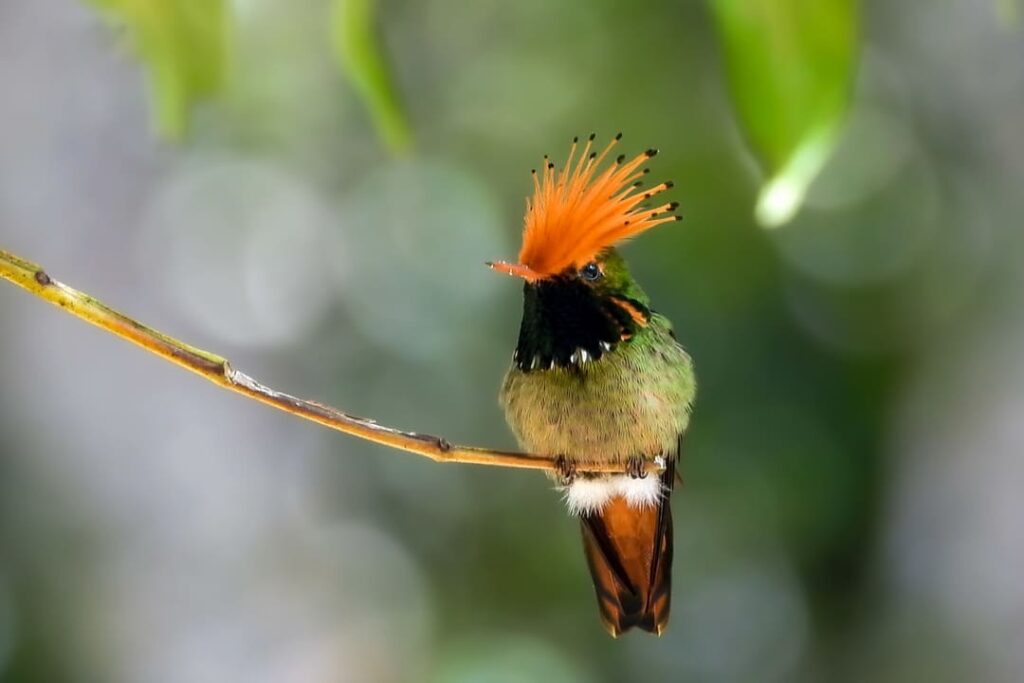
The region is equally celebrated for its exceptional hummingbird diversity, particularly around established gardens and feeding stations. The spectacular Rufous-crested Coquette, one of Waqanki's principal attractions, is distinguished by the male's remarkable reddish crest and ornamental facial feathers. Other highly desirable hummingbirds include the Wire-crested Thorntail, with its extraordinary tail and crest, and the delicate Black-bellied Thorntail, both particularly attractive to photographers. Additional species such as Golden-tailed Sapphire, Great-billed Hermit, Napo Sabrewing, Ecuadorian Piedtail, and White-chinned Sapphire contribute to the remarkable hummingbird diversity encountered across the eastern foothills.
Descending from Abra Patricia toward Aguas Verdes and Arena Blanca, birders encounter a different assemblage of tropical forest species. Arena Blanca is especially interesting for its specialized observation hides, where normally elusive forest-floor birds such as Rufous-breasted Wood-Quail, Little Tinamou, and Cinereous Tinamou may be observed under favorable conditions. These species are notoriously difficult to encounter during conventional forest birding, making the opportunity for prolonged observation particularly rewarding. The surrounding forest and hummingbird feeders also attract Wire-crested Thorntail, Black-throated Brilliant, Blue-fronted Lancebill, Orange-billed Sparrow, and other foothill specialties.
Farther east, the Cordillera Escalera, particularly along the Tarapoto–Yurimaguas road, supports extensive humid foothill forests with an impressive selection of regional specialties. Among the most desirable are the beautifully patterned Dotted Tanager and the uncommon Plumbeous Euphonia, both highly attractive targets for birders exploring the forests near Tarapoto. These habitats also offer opportunities for Golden-collared Toucanet, Blackish Pewee, Fiery-throated Fruiteater, Red-ruffed Fruitcrow, and numerous antbirds, woodcreepers, and mixed-flock insectivores.
One of the most important specialized birding destinations in this area is ACONABIKH Reserve, a private conservation area dedicated to protecting humid forest and its remarkable birdlife. Its principal attraction is Koepcke's Hermit, an endemic hummingbird associated with the eastern Andean foothills of Peru. The reserve's established observation areas provide opportunities to appreciate this distinctive species alongside other remarkable hummingbirds, including Gould's Jewelfront, Black-bellied Thorntail, Black-throated Mango, and White-necked Jacobin. Forest trails also offer possibilities for Golden-headed Manakin, Spot-winged Antbird, Collared Puffbird, and a variety of secretive tropical forest species.
The wider Huallaga Valley introduces an entirely different ecological environment. Parts of the central basin contain seasonally dry tropical forests, scrub, and semi-deciduous vegetation that contrast sharply with the humid forests of Cordillera Escalera. Birding localities around Juan Guerra, Shapaja, and Quebrada Upaquihua provide opportunities for a distinctive group of species associated with these drier environments.
Among the most interesting is the Sulphur-bellied Tyrant-Manakin, an unusual member of the manakin family that inhabits dry woodland and scrubby vegetation. Other specialties include Pearly-vented Tody-Tyrant, Rufous Casiornis, and various spinetails, antshrikes, and flycatchers adapted to seasonally dry tropical habitats. The presence of these birds within the broader Amazonian region illustrates how local rainfall patterns and vegetation can create unexpectedly different bird communities over relatively short distances.
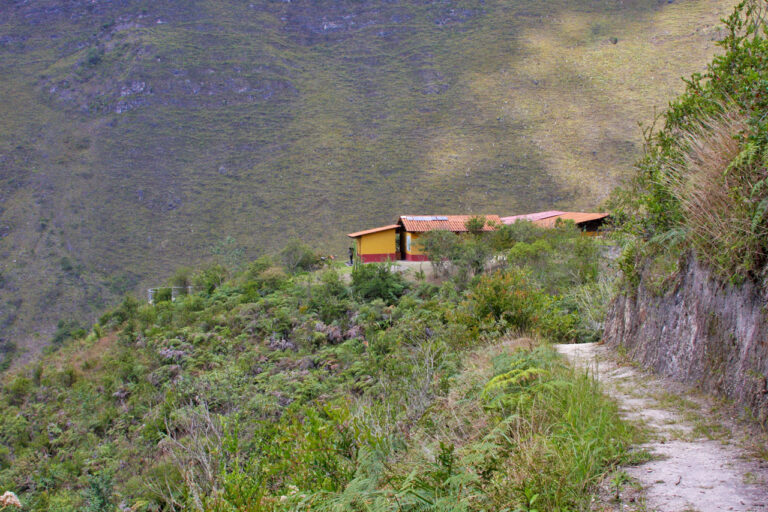
Perhaps the most specialized destination in eastern Northern Peru is Plataforma, also known as Flor de Café, situated in the isolated mountain system associated with Cordillera Azul. As described among the region's iconic endemics, this remote locality is internationally recognized for the spectacular Scarlet-banded Barbet and the exceptionally localized Cordillera Azul Antbird. However, the importance of Plataforma extends well beyond these two species.
The surrounding forests support an impressive selection of manakins, cotingas, barbets, antbirds, and specialized forest insectivores. Particularly noteworthy are the Blue-rumped Manakin, a striking Peruvian endemic associated with humid foothill and montane forests, and the Yungas Manakin, another attractive regional specialty. The Jet Manakin adds further interest, while species such as Scarlet-breasted Fruiteater, Fiery-throated Fruiteater, Gray-tailed Piha, and Versicolored Barbet make these forests exceptionally rewarding for birders interested in colorful and distinctive Neotropical birds.
Mixed-species flocks around Plataforma can also contain Yellow-breasted Antwren, Foothill Antwren, Lined Antshrike, Rufous-rumped Foliage-gleaner, Strong-billed Woodcreeper, Blue-browed Tanager, Orange-eared Tanager, and Bronze-green Euphonia. Among the more elusive understory specialists are Rufous-breasted Antthrush and various antbirds whose observation often requires patience, familiarity with vocalizations, and careful exploration of suitable forest habitats.
The combination of geographically restricted endemics and a rich assemblage of humid forest birds makes Plataforma particularly rewarding for experienced birders. Although access involves traveling through remote mountain landscapes and conditions can vary with weather and road maintenance, the opportunity to search for several exceptional species within the same forest system makes the journey an important consideration for specialized itineraries.
Beyond their importance for birdwatching, the forests of Alto Mayo, Cordillera Escalera, and Cordillera Azul have considerable conservation value. Species such as Ash-throated Antwren and other localized forest specialists depend on the persistence of suitable native vegetation, while agricultural expansion and forest fragmentation continue to affect portions of their habitats. Responsible birdwatching, local conservation initiatives, and the protection of remaining forest corridors are therefore especially important in these regions.
For visiting birders, the eastern Andean foothills offer a distinctive combination of highly localized endemics, specialized tropical forest birds, spectacular hummingbirds, and exceptional opportunities for observing manakins and other Amazonian species. The forests of Moyobamba and Alto Mayo are especially valuable for regional specialties and hummingbird photography; Tarapoto and Cordillera Escalera provide access to another assemblage of foothill birds; and Plataforma offers some of the most geographically restricted targets in Peru.
Together, these destinations form an essential component of a comprehensive Northern Peru birding expedition, particularly for dedicated listers and experienced Neotropical birders interested in exploring beyond the conventional cloud forest and dry forest routes. For those seeking the most specialized targets, the Cordillera Azul Birding Extension provides an opportunity to explore one of the most distinctive birding environments in the region.