The Scarlet-banded Barbet is one of the rarest endemic birds of Peru and one of the most remarkable discoveries in modern Neotropical ornithology. Hidden within the cloud forests of north-central Peru, this striking species has quickly become a top target for birdwatchers visiting the country.
With its bold coloration, extremely restricted range, and elusive behavior, the Scarlet-banded Barbet represents both the richness and fragility of Peru’s montane ecosystems. For birders and researchers alike, encountering this species in the wild is considered a truly exceptional experience.
Taxonomy and Discovery
The Scarlet-banded Barbet (Capito wallacei) was formally described in 2000, following its discovery in 1996 by a team of researchers exploring remote areas of northeastern Peru. Its scientific name honors the conservationist David Wallace, recognizing contributions to biodiversity research in the region.
This species belongs to the family Capitonidae, a group of Neotropical barbets known for their robust bills, frugivorous diets, and vibrant plumage. Unlike many other members of the family, Capito wallacei has an extremely limited distribution, making it one of the most geographically restricted birds in South America.
Find more info here.
Description and Identification
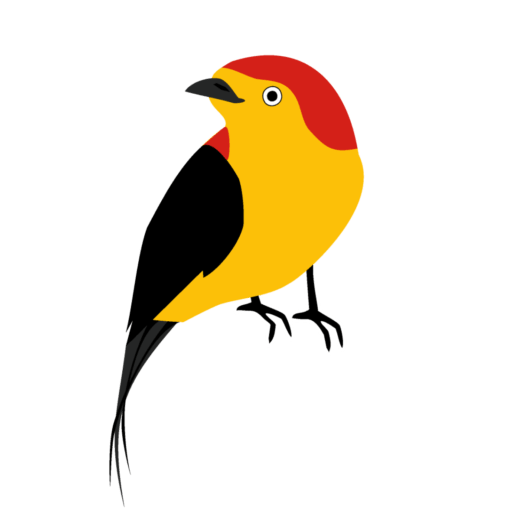
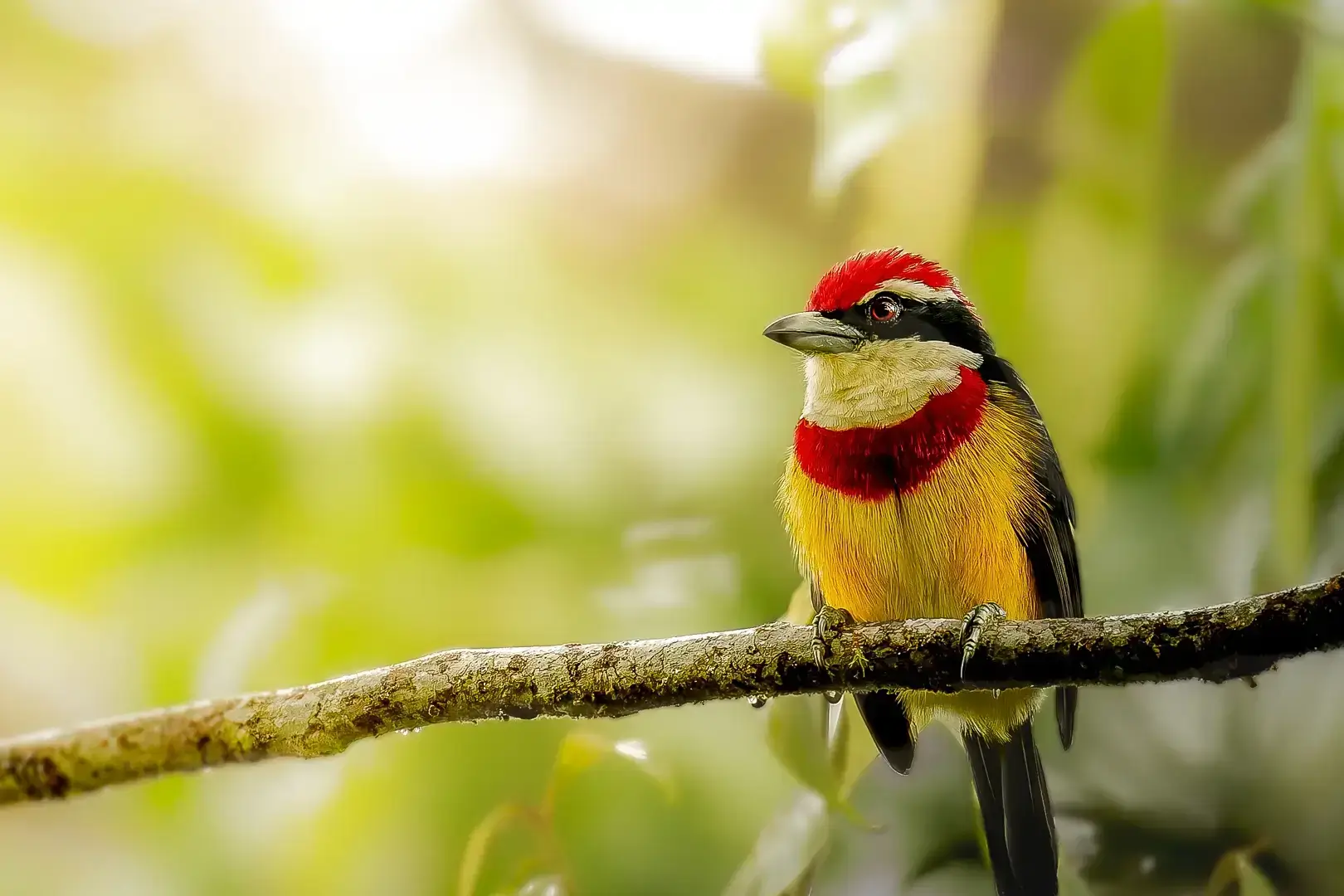
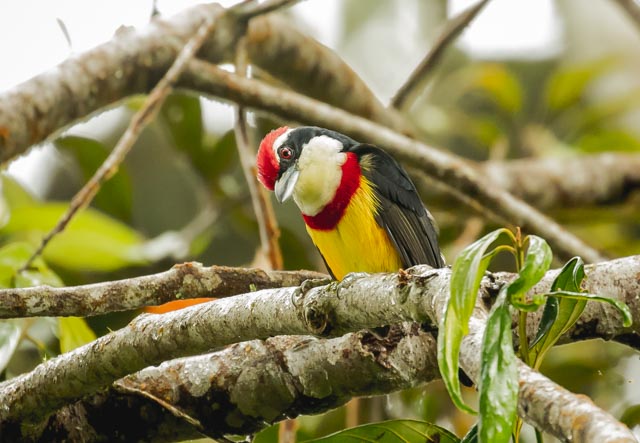
The Scarlet-banded Barbet is instantly recognizable thanks to its bold and contrasting coloration. Males display a bright scarlet crown and breast band, sharply contrasting with black upperparts, a white throat, and a vivid yellow belly. This combination of colors makes it one of the most visually striking birds in Peru.
Females are more subdued but equally distinctive, showing golden and buff tones instead of the intense red. Juveniles resemble females but with softer and less defined plumage patterns.
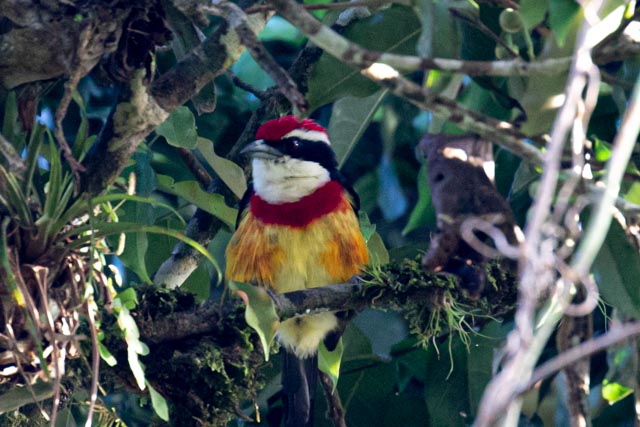
Despite its striking appearance, the species is relatively small, measuring approximately 19.5 cm in length and weighing between 63 and 78 grams. Its compact body and strong bill are well adapted for feeding on fruits and small invertebrates within dense forest canopies
Habitat and Ecology
The Scarlet-banded Barbet inhabits humid montane forests along the eastern slopes of the Andes, typically between 950 and 1,500 meters in elevation. These cloud forests are characterized by dense vegetation, abundant epiphytes, moss-covered branches, and high humidity throughout the year.
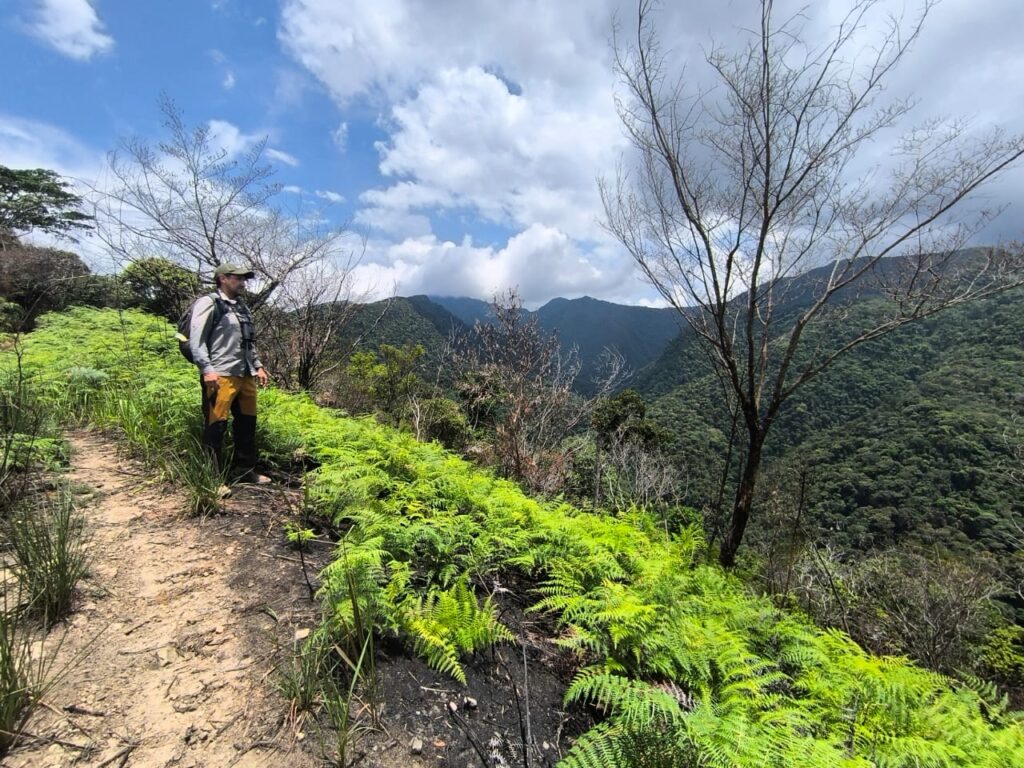
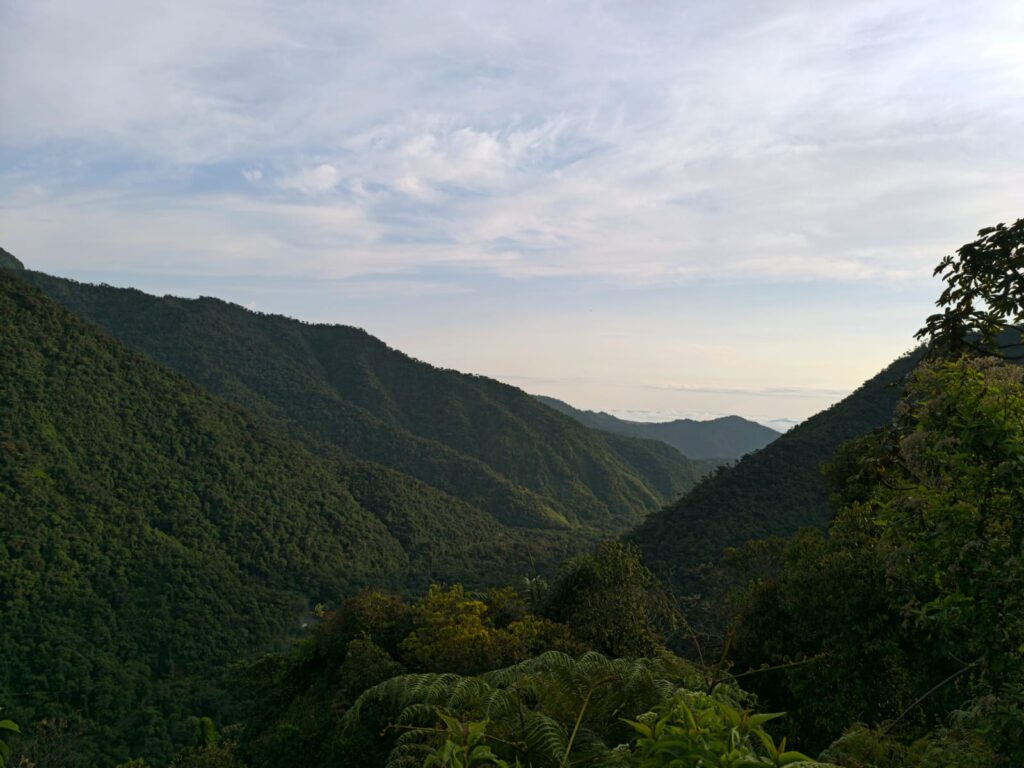
The species is most often associated with ridge tops and upper slopes, where forest structure includes a mix of mature trees and dense understory vegetation. These habitats provide both food resources and nesting opportunities, although much about its breeding ecology remains unknown.
Behavior and Vocalization
Like many Neotropical barbets, the Scarlet-banded Barbet is primarily frugivorous, feeding on a variety of berries and small fruits found in the forest canopy. It may also consume insects, particularly during the breeding season when additional protein is required.
The species is typically observed in pairs or small groups and occasionally joins mixed-species flocks, moving methodically through the canopy while foraging.
Its vocalizations are distinctive and often the first clue to its presence. The song consists of a fast, low-pitched trill, somewhat reminiscent of distant woodpecker drumming. Additional calls include harsh notes and soft, stuttering sounds exchanged between individuals.
Distribution and Range
The Scarlet-banded Barbet has an extremely restricted distribution in northeastern Peru, confined to a small area between the Huallaga and Ucayali river systems. This limited range makes it one of the most localized endemic birds in the country.
Although it is associated with the Cordillera Azul National Park region, much of its known population occurs in adjacent buffer zones rather than within the core protected area.
Today, the most reliable location to observe this species in the wild is Plataforma (Flor de Café), a remote site that has become a key destination for birders seeking this rare endemic.
Best birding tours for Scarlet-banded Barbet
Very few tours go to the place known Plataforma or Flor de Café (although there is another town with the same name nearby which can cause confusion when going to the right spot). A beautiful but still isolated village with several coffee plantations.
Check some of our birding tours specifially for Scarlet-banded Barbet here:
See one of our trip reports here.
Conservation status
The Scarlet-banded Barbet is currently classified as Vulnerable due to its small population size and restricted range. Estimates suggest fewer than 1,000 individuals remain in the wild, distributed across fragmented and isolated habitats.
Although its remote location provides some protection from immediate human pressures, potential threats such as deforestation, agricultural expansion, and infrastructure development could have significant impacts on its survival.
Protecting the cloud forest habitats where this species occurs is essential not only for the barbet itself but also for the many other endemic and rare species that share this ecosystem.
Why Is the Scarlet-banded Barbet So Special?
Few bird species combine such striking visual appearance with such a limited distribution. The Scarlet-banded Barbet is not only one of the most colorful birds in Peru but also one of the least accessible, making every encounter particularly meaningful.
For birdwatchers, it represents a true “target species” — a bird that justifies long journeys and challenging logistics. For conservationists, it stands as a symbol of the importance of preserving isolated Andean ecosystems that continue to reveal new and extraordinary biodiversity.