Birding Trip Report: Northern Peru – The Classic Tour (September 2026)
12 Days Exploring the Tumbesian Dry Forests, Marañón Valley, Andean Cloud Forests and Amazonian Foothills
Trip Overview of the Expedition
- Trip Type: Fixed Departure
- Dates: September 10–21, 2026
- Duration: 12 days
- Regions visited: Lambayeque, Piura, Cajamarca, Amazonas and San Martín
- Total recorded: 359 species-level bird taxa across 29 eBird checklists
- Birding Guide: Juan José Salas Falcón
- Habitats: Pacific coastal wetlands, equatorial dry forest, Marañón inter-Andean scrub, humid montane forest, cloud forest, Amazonian foothills and tropical wetlands
- Itinerary: https://manakinexpeditions.com/tours/birding-northern-peru/
Daily Itinerary
| Day | Date | Main birding locations |
|---|---|---|
| 1 | Sep 10 | Mocupe, Playa Santa Rosa, Puente Tulipe and Chaparrí |
| 2 | Sep 11 | Chaparrí – La Huerta |
| 3 | Sep 12 | Quebrada Casupe, Tinajones and Bosque de Pómac |
| 4 | Sep 13 | Abra de Porculla, Jaén and Bosque de Yanahuanca |
| 5 | Sep 14 | Bagua, Utcubamba Valley, Pedro Ruiz and Cocachimba |
| 6 | Sep 15 | Huaylla Belén |
| 7 | Sep 16 | Abra Patricia – Owlet Lodge |
| 8 | Sep 17 | Alto Nieva, Llantería/Afluente and Arena Blanca |
| 9 | Sep 18 | Santa Elena and Waqanki–Mishquiyaquillo |
| 10 | Sep 19 | Morro de Calzada |
| 11 | Sep 20 | Laguna Ricuricocha |
| 12 | Sep 21 | Koepcke’s Hermit conservation area, San Martín |



Introduction
Northern Peru is one of South America’s most extraordinary destinations for birdwatching. Few regions offer such a remarkable concentration of endemic and range-restricted birds across such dramatically different ecosystems.
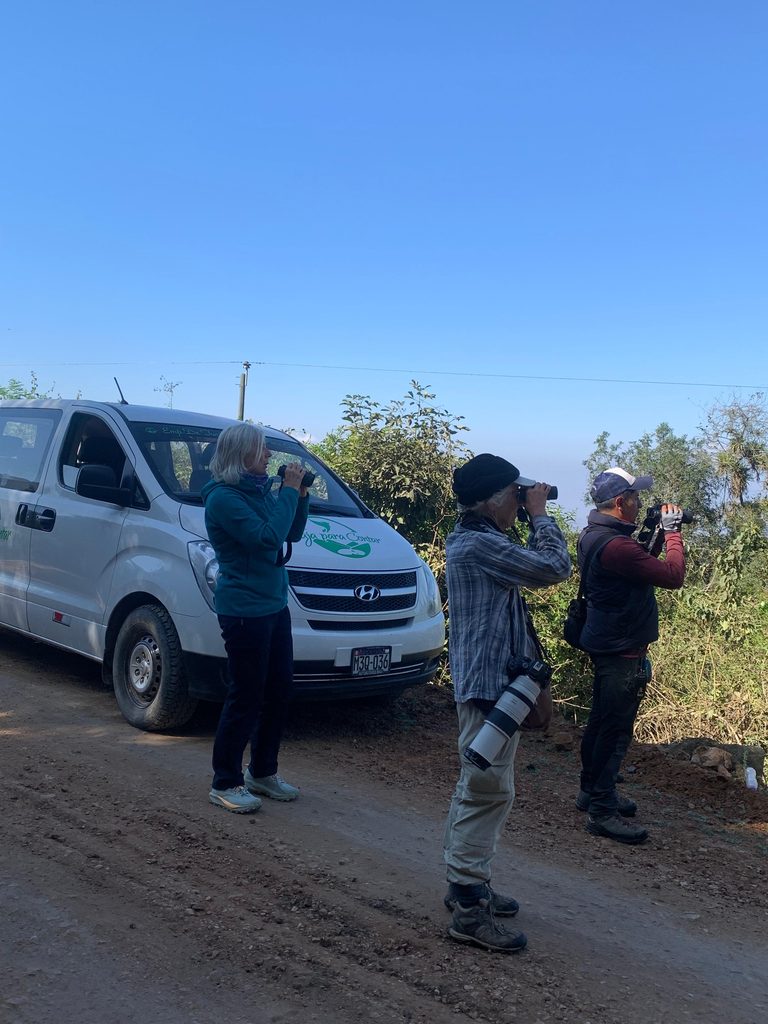
Our 12-day expedition in September 2026 followed a classic route from the Pacific lowlands near Chiclayo through the Tumbesian dry forests, across the Marañón Valley, into the northern Andes and the cloud forests of Abra Patricia, before descending toward the Amazonian foothills of San Martín.
The journey had been designed to concentrate on some of northern Peru’s most distinctive birds. White-winged Guan, Peruvian Plantcutter, Peruvian Tern and Rufous Flycatcher were among the principal objectives in the dry forests and coastal lowlands. Farther inland, the Marañón Valley promised specialized birds such as Marañón Crescentchest, Marañón Antshrike, Marañón Gnatcatcher and Little Inca-Finch.
The humid northern Andes offered an entirely different selection of targets: Marvelous Spatuletail, Pale-billed Antpitta, Chachapoyas Antpitta, Long-whiskered Owlet, Johnson’s Tody-Flycatcher and Royal Sunangel.
Finally, the Amazonian foothills around Alto Mayo, Moyobamba and Tarapoto provided opportunities for Painted Manakin, Koepcke’s Hermit, numerous hummingbirds and a diverse assemblage of forest birds.
The contrast between these habitats is what makes northern Peru so rewarding. Within a relatively short period, a birder can move from arid coastal desert to tropical dry forest, through narrow inter-Andean valleys, into misty cloud forest and finally to humid Amazonian foothills.
Our field records documented 359 different species, including an impressive selection of Peruvian endemics, regional specialties and birds with highly restricted distributions.
The following report follows our journey day by day, highlighting the most interesting observations and the distinctive habitats encountered along the way.
Day 1 – September 10
Chiclayo, Mocupe, Playa Santa Rosa and Chaparrí
Our northern Peru adventure began in the coastal lowlands of Lambayeque, where the first morning was dedicated to some of the characteristic birds of northwestern Peru’s dry forests and desert landscapes.
Our first important stop was Mocupe, south of Chiclayo. The surrounding landscape consists of arid scrub, scattered vegetation and agricultural habitats, providing excellent opportunities for several species adapted to the dry Pacific lowlands.
One of our main targets here was Peruvian Plantcutter (Phytotoma raimondii), a highly localized Peruvian endemic associated with threatened dry-forest habitats. The morning produced three individuals, giving us an excellent start to the expedition.
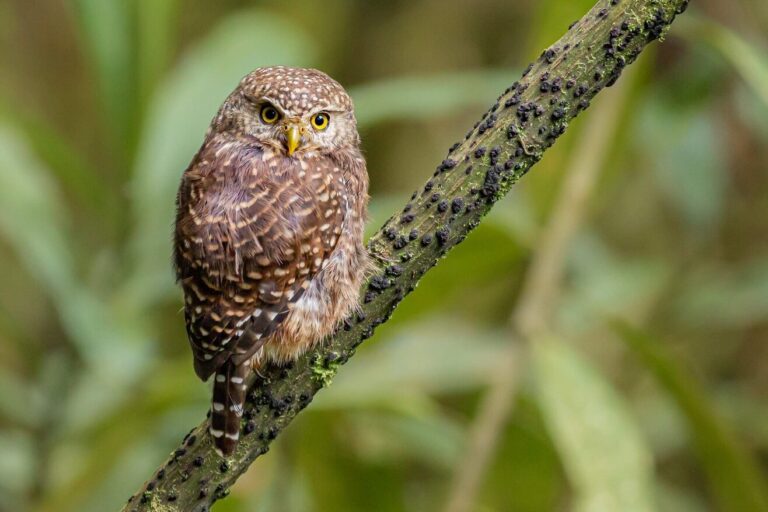
Other characteristic birds included Peruvian Thick-knee, Peruvian Pygmy-Owl, Burrowing Owl, Pacific Hornero, Necklaced Spinetail, Collared Antshrike and Tumbesian Tyrannulet.
We also recorded Short-tailed Field Tyrant, Cinereous Finch, White-browed Gnatcatcher, Fasciated Wren and Superciliated Wren. The combination of these species provided an introduction to the specialized bird communities of Peru’s arid northwest.
From Mocupe we continued toward Playa Santa Rosa, where our attention shifted completely from dry-forest birds to coastal wetlands and marine species.
The principal highlight was an impressive concentration of 60 Peruvian Terns (Sternula lorata), one of the most significant observations of the day.
The surrounding coastal habitat also produced Inca Tern, South American Tern, Royal Tern, Gray Gull, Belcher’s Gull, Kelp Gull and Peruvian Booby.
Shorebirds were well represented, including Collared Plover, Snowy Plover, Hudsonian Whimbrel, Spotted Sandpiper, Willet, Sanderling and Least Sandpiper. A Roseate Spoonbill, Little Blue Heron and Cocoi Heron added further interest.
Before heading inland, we also recorded Peruvian Pipit, another characteristic bird of Peru’s coastal habitats.
The afternoon brought us toward Chaparrí, one of the most important conservation areas for the equatorial dry forest and its threatened wildlife.
A short stop at Puente Tulipe produced Chestnut-collared Swallow and Parrot-billed Seedeater. Along the entrance road to Chaparrí, our records included Tumbes Sparrow, White-edged Oriole, Collared Warbling Finch, Drab Seedeater and Hooded Siskin.
Lesser Nighthawk and the pacificus form of Peruvian Screech-Owl were also recorded along this section.
It had been a remarkably varied opening day, with birds ranging from arid scrub specialists to shorebirds and seabirds, before our first introduction to the Tumbesian dry forest.

Day 2 – September 11
Chaparrí – White-winged Guan and Tumbesian Dry Forest Specialties
We began our birding in the dry forests around La Huerta del Chaparrí, concentrating on one of the most distinctive and conservation-important birds of northwestern Peru.
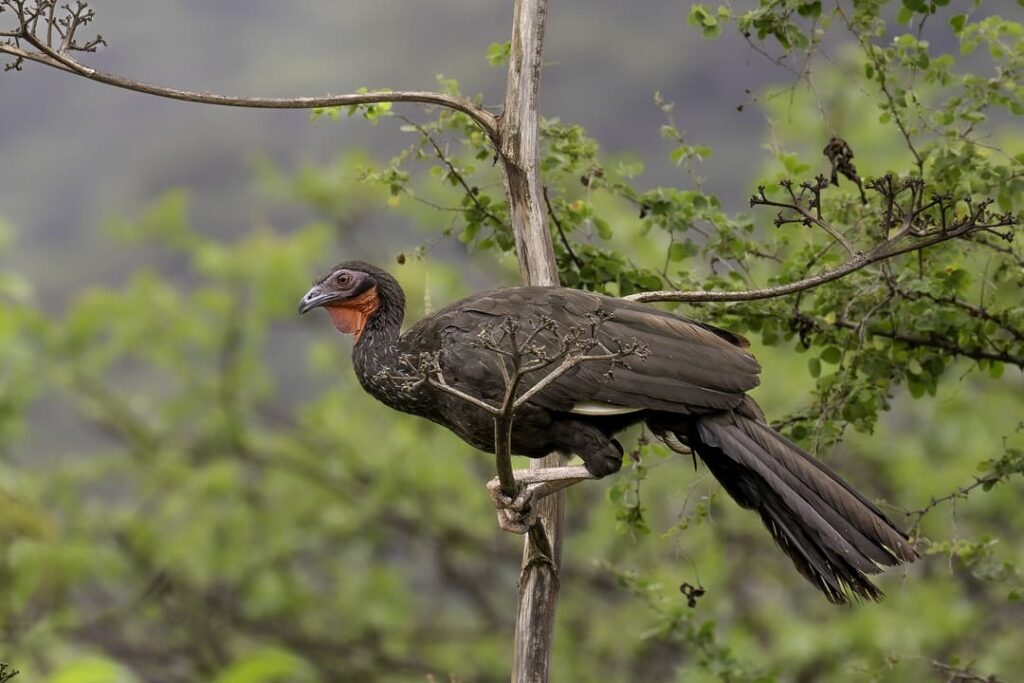
The White-winged Guan (Penelope albipennis) was our principal target.
This remarkable species is endemic to Peru and was once considered extinct before being rediscovered in the late twentieth century. Today, Chaparrí is among the best-known places associated with its conservation.
Our checklist recorded six White-winged Guans, making this one of the most memorable results of the early part of the expedition.
Although the guans were the obvious highlight, Chaparrí also delivered an excellent selection of Tumbesian specialties.
Among the most interesting species were Elegant Crescentchest, Tumbes Pewee, Tumbes Chat-Tyrant, Rufous Flycatcher, Baird’s Flycatcher and Sooty-crowned Flycatcher.
The two Rufous Flycatchers were particularly welcome. This localized bird is one of the signature flycatchers of northwestern Peru’s dry forests and an important objective for visiting birders.
Elegant Crescentchest was another valuable addition, representing a distinctive family of terrestrial birds often associated with dense scrub and forest understory.
The surrounding woodland also produced Scarlet-backed Woodpecker, Golden-olive Woodpecker, White-tailed Jay, Superciliated Wren, White-headed Brushfinch and Gray-and-gold Warbler.
A group of twenty Red-masked Parakeets added activity to the morning’s observations, while Short-tailed Woodstar and Purple-collared Woodstar represented the smaller hummingbirds of the dry forest.
The day’s records also included Tschudi’s Nightjar, Harris’s Hawk, Plumbeous-backed Thrush and Tumbes Sparrow.
Chaparrí demonstrated why the Tumbesian region is such an essential component of a northern Peru birding itinerary.
Unlike the Amazonian forests farther east, these seasonally dry landscapes support a highly distinctive bird community, with numerous species restricted to western Ecuador and northwestern Peru.
Securing White-winged Guan, Rufous Flycatcher and several additional Tumbesian specialties made this an exceptionally productive dry-forest session.

Day 3 – September 12
Quebrada Casupe, Tinajones and Bosque de Pómac
We began the morning at Quebrada Casupe, where the vegetation becomes greener and more developed than in the lower, drier landscapes around Chaparrí.
This transition in habitat allowed us to concentrate on a different selection of Tumbesian birds, particularly forest species associated with the foothills.
Among the highlights were Ecuadorian Trogon, Ecuadorian Piculet and Guayaquil Woodpecker.
Ecuadorian Piculet is an especially attractive target for birders visiting this part of Peru, while Guayaquil Woodpecker is a characteristic inhabitant of the Tumbesian forests.
The undergrowth and forest edges produced Rufous-necked Foliage-gleaner, Gray-breasted Flycatcher, Speckle-breasted Wren and Black-capped Sparrow.
The warblers were also interesting, with Three-banded Warbler and Tropical Parula recorded alongside White-winged Brushfinch and Hepatic Tanager.
Chestnut-crowned Antpitta was detected by voice, adding a representative of this generally secretive family to the morning list.
We then descended toward the lower valleys and stopped at the Tinajones Reservoir, where the habitat changed considerably.
Here we recorded Comb Duck, Baird’s Sandpiper, Spotted Sandpiper, Black-necked Stilt and Osprey.
Although this was a relatively brief visit, it provided an opportunity to add wetland species that would not be encountered in the surrounding dry forest.
Later in the afternoon, we continued toward the Bosque de Pómac Historical Sanctuary, one of the most important remnants of dry Prosopis woodland in northern Peru.
Our first observations along the Ruta de la Cortarrama included Streak-headed Woodcreeper, Gray-and-white Tyrannulet and White-browed Gnatcatcher.
A second stop near Mirador Salinas produced Tumbes Swallow (Tachycineta stolzmanni), another valuable regional specialty.
The contrast between the greener foothill forests of Casupe, the open wetlands of Tinajones and the dry woodland of Pómac made this another highly varied birding day.
Day 4 – September 13
Abra de Porculla, Jaén and the Marañón Valley
The next stage took us away from the Pacific lowlands and into one of the most fascinating biogeographic regions of northern Peru.
Our route crossed the western Andean foothills around Abra de Porculla, an important transition zone between Tumbesian dry forest and more humid Andean habitats.
Birding around Limón de Porculla produced several excellent regional specialties.
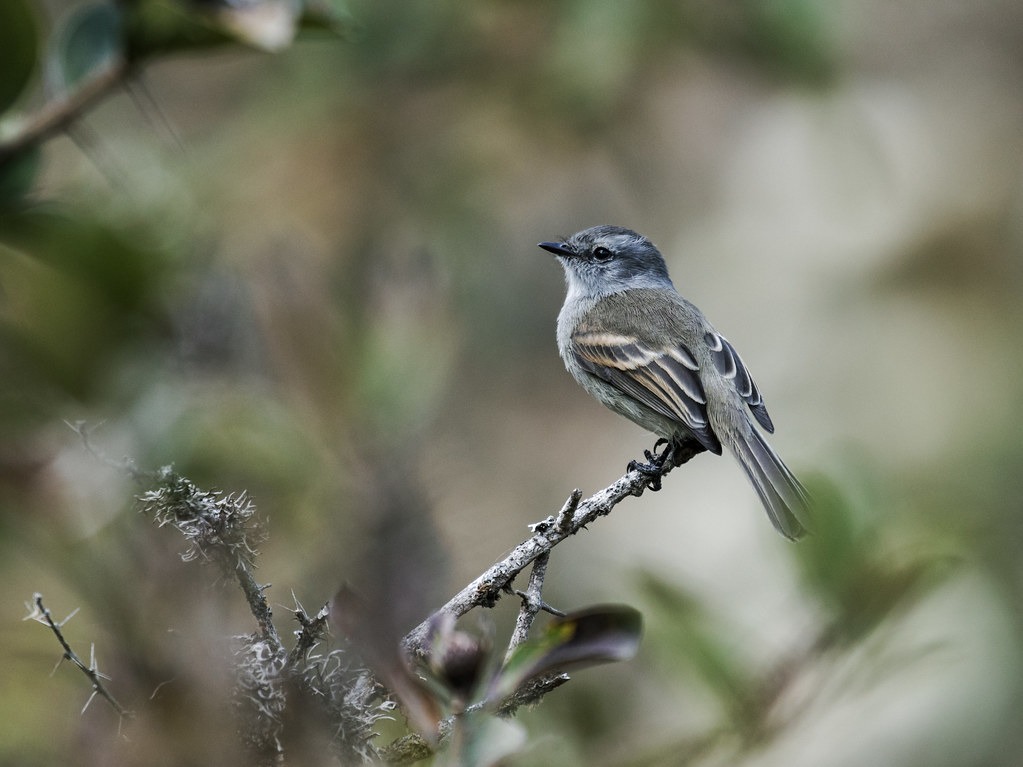
One of the most important was Chapman’s Antshrike (Thamnophilus zarumae), a characteristic bird of this part of the northern Andes.
We also recorded Henna-hooded Foliage-gleaner, Line-cheeked Spinetail, Piura Chat-Tyrant and Black-cowled Saltator.
The hummingbird community included Short-tailed Woodstar, Purple-collared Woodstar, Speckled Hummingbird and Sparkling Violetear.
Other birds included White-winged Brushfinch, Gray-and-gold Warbler, Slate-throated Redstart and Plumbeous-backed Thrush.
From Porculla, we continued toward Jaén, descending into warmer and increasingly dry inter-Andean landscapes.
A stop at the rice fields near Jaén produced an unexpected concentration of thirty Comb Ducks, together with Western Cattle-Egret, Striated Heron and Groove-billed Ani.
The afternoon was dedicated to Bosque de Yanahuanca, where the bird community changed noticeably as we entered the Marañón dry-forest system.
This valley is one of Peru’s most distinctive centers of endemism, with numerous species adapted to its isolated, seasonally dry habitats.
Among the strongest records were Marañón Antshrike, Marañón Crescentchest, Marañón Tyrannulet and Marañón Gnatcatcher.
Finding these four regional specialties within the same afternoon was an excellent result and demonstrated the importance of preserving the remaining dry forest.
Other observations included Spot-throated Hummingbird, Rufous-fronted Thornbird, Brown-crested Flycatcher, Pearl Kite and Red-crested Finch.
This was a particularly rewarding transition day.
Within a single journey, we moved from the western Andean slopes through agricultural valleys into the isolated Marañón basin, encountering a succession of species with remarkably restricted distributions.
Day 5 – September 14
Bagua, the Utcubamba Valley and Marvelous Spatuletail
We continued our journey through the dry northern valleys, concentrating initially on another important endemic.
Our first notable stop was around Bagua Chica, where we recorded Little Inca-Finch (Incaspiza watkinsi).
This species is closely associated with the arid slopes and scrub habitats of the Marañón region and was one of the principal targets of this section.
Green Jay and Streaked Saltator were also recorded before we continued toward the Utcubamba Valley.
As we traveled northward, the landscape gradually became greener and more varied.
A short observation stop in the middle Utcubamba Valley produced Fasciated Tiger-Heron along the river, while another stop at Pedro Ruiz added Marañón Spinetail, a further localized specialty.
Continuing toward Cocachimba, we recorded Marañón Crescentchest and Marañón Thrush along the approach road.
The most anticipated session of the afternoon, however, was still ahead.
We visited the Refugio del Colibrí Espátula, a hummingbird site near Cocachimba, to search for one of the world’s most extraordinary hummingbirds.
The Marvelous Spatuletail (Loddigesia mirabilis) is endemic to a small region of northern Peru and is famous for the spectacular tail ornamentation of adult males.
Our visit produced two Marvelous Spatuletails, securing one of the defining targets of the expedition.
Other hummingbirds recorded at the site included White-bellied Woodstar, Andean Emerald and Sparkling Violetear.
The surrounding habitat also produced Peruvian Pigeon, Black-necked Woodpecker, Buff-bellied Tanager and Silvery Tanager.
Later, around Cocachimba village, both Marañón Thrush and Chiguanco Thrush were recorded.
The day illustrated the remarkable changes in birdlife across relatively short distances: from Little Inca-Finch in the dry Bagua area to specialized hummingbirds along the greener slopes of the Utcubamba Valley.
The encounter with Marvelous Spatuletail was undoubtedly one of the most important successes of the journey.

Day 6 – September 15
Huaylla Belén – Antpittas and High-Andean Endemics
Our journey now took us into a completely different environment.
We spent the morning birding the upper montane habitats of Huaylla Belén, an area characterized by high-elevation grasslands, shrubs and patches of humid montane vegetation.
This region is particularly important for several restricted-range northern Andean birds.
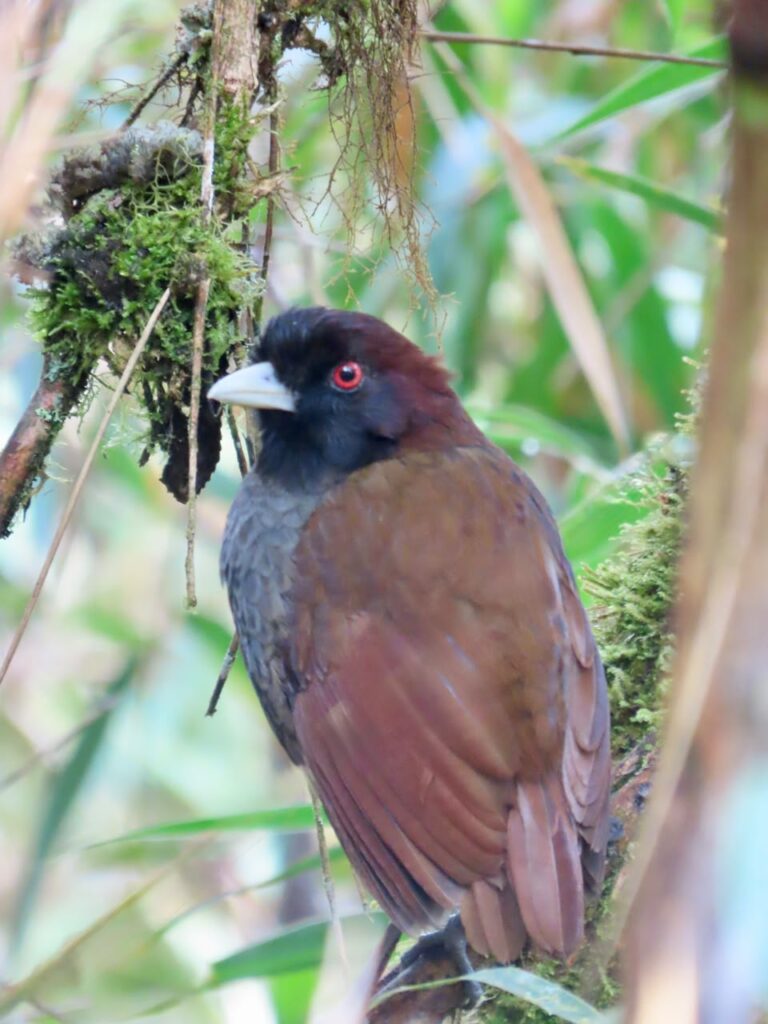
One of our principal objectives was Pale-billed Antpitta (Grallaria carrikeri), a Peruvian endemic associated with high-elevation montane forest.
Our checklist recorded two individuals, representing an excellent result for this highly localized species.
Another important record was Chachapoyas Antpitta (Grallaria gravesi), with one individual detected during the morning.
Chestnut-crowned Antpitta was also recorded, adding a third antpitta species to the day’s observations.
The local tapaculo community was represented by Utcubamba Tapaculo, a species with a restricted distribution in the northern Andes. This individual was detected by voice.
The hummingbirds were equally interesting.
Purple-backed Thornbill, Coppery Metaltail, Tyrian Metaltail and Sword-billed Hummingbird all featured in the checklist.
Coppery Metaltail was a particularly worthwhile addition, being endemic to Peru and associated with high Andean habitats.
The surrounding montane vegetation also produced Streaked Tuftedcheek, Azara’s Spinetail, Rufous Spinetail and Maroon-belted Chat-Tyrant.
Among the tanagers, we recorded Hooded Mountain Tanager, Grass-green Tanager, Scarlet-bellied Mountain Tanager, Streak-crowned Mountain Tanager and Yellow-scarfed Tanager.
Yellow-scarfed Tanager is especially characteristic of the northern Peruvian Andes and is always a welcome target on this route.
Mountain Cacique, Spectacled Redstart and White-sided Flowerpiercer added further variety.
With Pale-billed Antpitta, Chachapoyas Antpitta, Coppery Metaltail and Yellow-scarfed Tanager recorded in the same morning, Huaylla Belén proved to be one of the most important high-elevation birding sites of the expedition.
Day 7 – September 16
Abra Patricia and Owlet Lodge – Long-whiskered Owlet
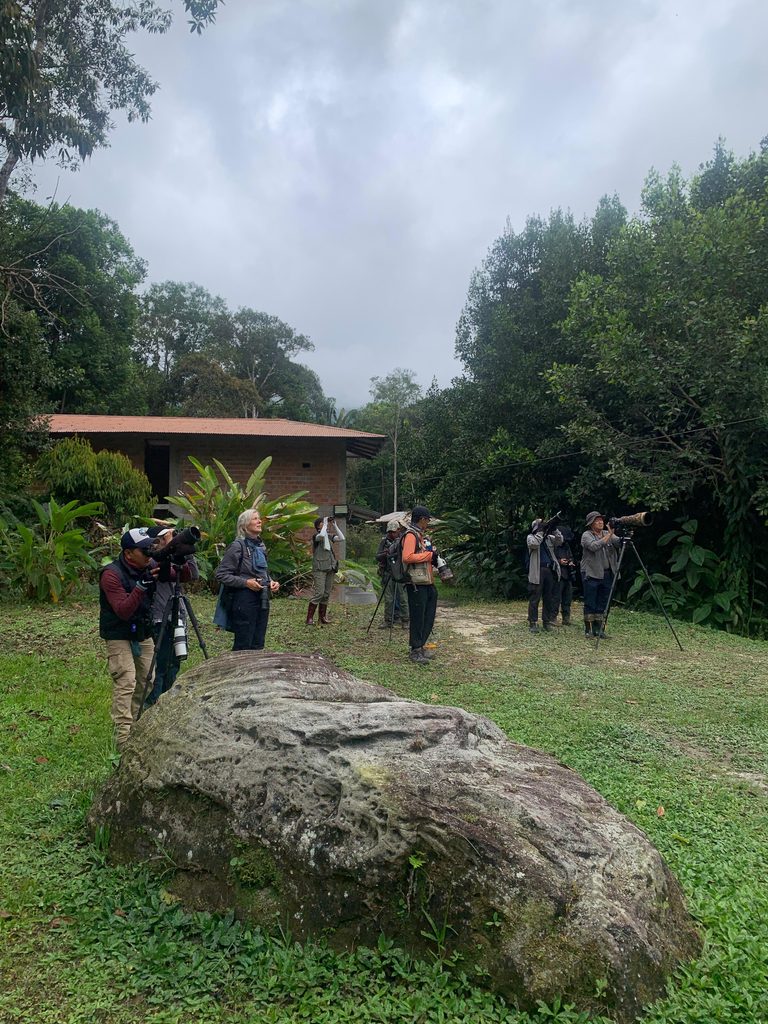
Our next major birding session was centered on Owlet Lodge, in the cloud forests of Abra Patricia.
This area is internationally recognized for its extraordinary concentrations of endemic and highly localized birds, particularly those associated with humid montane forest.
The forest here differs completely from the landscapes visited earlier in the tour.
Moss-covered trees, epiphytes, dense understory and cool, humid conditions support a bird community typical of the eastern Andean slopes.
The most important target was undoubtedly Long-whiskered Owlet (Xenoglaux loweryi).
This tiny owl is one of Peru’s most remarkable endemic birds and has become an iconic species of the Abra Patricia region.
Our checklist recorded one Long-whiskered Owlet, securing one of the expedition’s most significant targets.
The same session produced another highly localized species, Johnson’s Tody-Flycatcher (Poecilotriccus luluae), sometimes known as Lulu’s Tody-Flycatcher.
This colorful little flycatcher is associated with the montane forests of northern Peru and is one of the characteristic species of the Abra Patricia area.
Other forest birds included Green-and-black Fruiteater, Uniform Antshrike, Rufous-vented Tapaculo, Rufous-breasted Antthrush and Streaked Tuftedcheek.
A White-capped Tanager and Chestnut-breasted Chlorophonia added further interest.
The hummingbird assemblage was especially varied, including Emerald-bellied Puffleg, Collared Inca, Chestnut-breasted Coronet, Sword-billed Hummingbird, Peruvian Racket-tail, Andean Emerald and Speckled Hummingbird.
We also recorded Masked Trogon, Crimson-mantled Woodpecker, Scaly-naped Amazon, Black-capped Tyrannulet and Peruvian Tyrannulet.
White-capped Dipper was another notable addition, representing the birds associated with mountain streams.
By the end of the session, 32 species had been documented on the Owlet Lodge checklist.
The combination of Long-whiskered Owlet, Johnson’s Tody-Flycatcher and the diverse cloud-forest bird community made Abra Patricia one of the defining locations of our northern Peru expedition.

Day 8 – September 17
Alto Nieva, Llantería and Arena Blanca
This was one of the most diverse birding days of the entire journey, taking us from humid montane forest through lower cloud-forest habitats and into the Amazonian foothills.
We began at Fundo Alto Nieva, where the forest supports several exceptionally localized birds.
Among our principal targets was Royal Sunangel (Heliangelus regalis), one of the most distinctive hummingbirds of northern Peru.
The morning produced one Royal Sunangel, a particularly valuable addition to our growing collection of endemic and restricted-range species.
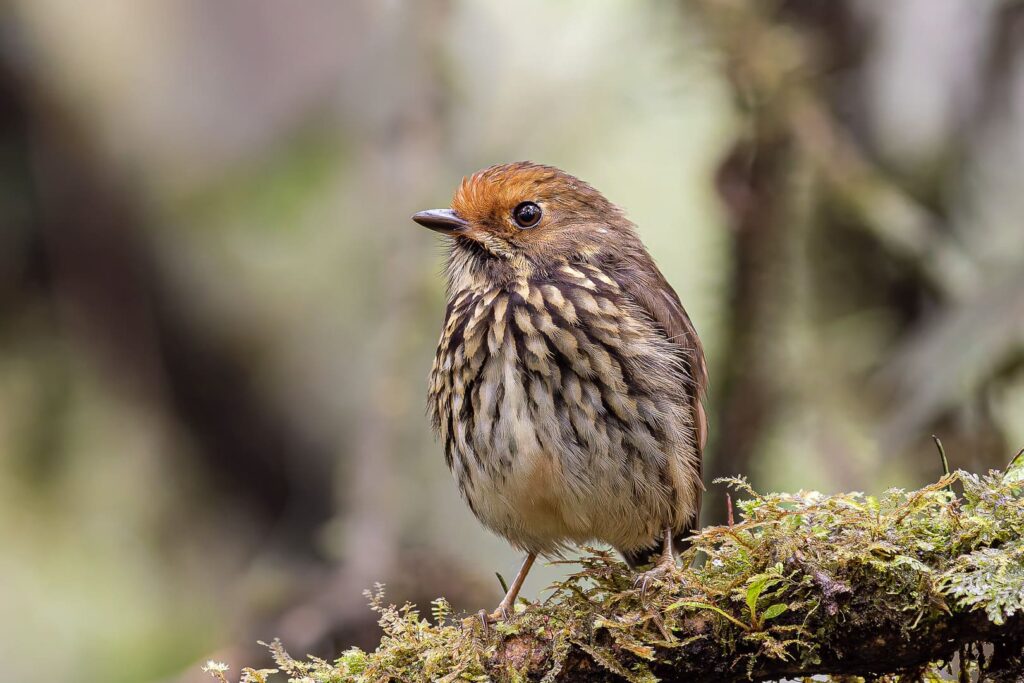
Alto Nieva is also well known for its antpittas, and our checklist included two especially important birds:
Rusty-tinged Antpitta (Grallaria przewalskii) and Ochre-fronted Antpitta (Grallaricula ochraceifrons).
Both are closely associated with the cloud forests of northern Peru, and recording them on the same morning made this a particularly successful stop.
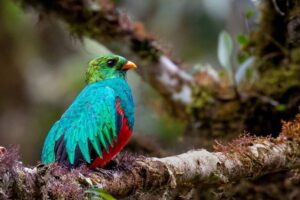
Other noteworthy forest birds included Crested Quetzal, Andean Cock-of-the-rock, Red-ruffed Fruitcrow, White-collared Jay, Bar-winged Wood-Wren and White-eared Solitaire.
The hummingbirds also included Emerald-bellied Puffleg, Bronzy Inca and Peruvian Racket-tail.
As the day progressed, we continued along the road through Alto Mayo, making a productive stop in the Llantería/Afluente area.
Here we recorded Speckle-chested Piculet, another Peruvian endemic associated with the eastern Andean foothills.
Streaked Xenops, Bronze-green Euphonia, Orange-bellied Euphonia, Flame-faced Tanager, Blue-necked Tanager and Golden Tanager were also among the afternoon observations.
We then reached Reserva Arena Blanca, where the birding changed dramatically as we entered lower-elevation foothill forest.
The reserve produced one of the largest individual checklists of the expedition, with 44 species recorded during the session.
Among the most interesting were five Rufous-breasted Wood-Quail, a normally secretive forest-floor species, together with Cinereous Tinamou.
The hummingbird diversity was impressive.
Wire-crested Thorntail, Rufous-crested Coquette, Black-throated Mango, Amethyst Woodstar, Many-spotted Hummingbird, Golden-tailed Sapphire and Blue-tailed Emerald were all recorded.
The forest also produced Gilded Barbet, Green-backed Trogon, Black-banded Woodcreeper and several manakins.
One of the principal targets was Painted Manakin (Machaeropterus eckelberryi), a localized bird associated with the Amazonian foothills of northern Peru.
Our checklist recorded one Painted Manakin, alongside Fiery-capped Manakin.
The tanager assemblage was also excellent, including Paradise Tanager, Turquoise Tanager, Masked Tanager, Black-bellied Tanager, Yellow-bellied Dacnis and Blue Dacnis.
With Royal Sunangel, two specialized antpittas, Speckle-chested Piculet, Painted Manakin and numerous hummingbirds, September 17 was one of the strongest days of the expedition.
Day 9 – September 18
Santa Elena and Waqanki – Wetlands, Forest Birds and Oilbirds
Our exploration of the Alto Mayo region continued with two contrasting birding locations.
The first was Reserva Ecológica Santa Elena, where palm-dominated wetlands, channels and open marshes support a bird community very different from that of the neighboring forests.
Among the main highlights were Spotted Rail, Purple Gallinule, Limpkin and Wattled Jacana.
The checklist recorded two Spotted Rails, making this a particularly interesting wetland observation.
Other birds included Fork-tailed Palm Swift, Chestnut-eared Aracari, Black Caracara, Plumbeous Kite and Great Antshrike.
One of the most interesting specialties was Point-tailed Palmcreeper (Berlepschia rikeri), a species closely associated with palm habitats.
The presence of this bird highlighted the importance of the region’s palm-rich wetland ecosystems.
Later, our attention shifted to the forests around Waqanki and Quebrada Mishquiyaquillo, near Moyobamba.
Waqanki is particularly attractive to birders because of its mixture of forest habitats and rich hummingbird community.
The checklist from this session contained 45 species.
The hummingbirds included White-necked Jacobin, Great-billed Hermit, Black-throated Hermit, Rufous-crested Coquette, Violet-headed Hummingbird, Golden-tailed Sapphire and Black-throated Mango.
Forest birds added further diversity, with Rufous Motmot, Broad-billed Motmot, Lafresnaye’s Piculet, Spot-backed Antbird and Ochre-throated Foliage-gleaner.
The manakins were especially notable.
We recorded both Painted Manakin and Golden-headed Manakin, together with Sulphur-bellied Tyrant-Manakin.
Additional interesting birds included Wing-barred Piprites, Black-and-white Tody-Flycatcher, White-lored Tyrannulet and Red-billed Tyrannulet.
The Waqanki checklist also documented six Oilbirds (Steatornis caripensis), one of the most unusual bird species of the Neotropics.
This nocturnal, fruit-eating bird belongs to a unique family and is an extraordinary addition to any tropical birding trip.
The same records included several nocturnal birds: Tropical Screech-Owl, Band-bellied Owl and Ferruginous Pygmy-Owl.
A Tiny Hawk was another valuable observation.
The mixture of wetland birds at Santa Elena and forest specialties around Waqanki made this an exceptionally varied day, demonstrating the ecological diversity of the Alto Mayo region.
Day 10 – September 19
Morro de Calzada – Painted Manakin and Forest Specialties
We began our documented birding at Morro de Calzada, a distinctive forested hill near Moyobamba.
This area contains specialized foothill forest habitats and is particularly interesting for localized flycatchers, manakins and other understory birds.
One of the principal targets was Painted Manakin, which had already featured in our previous observations at Arena Blanca and Waqanki.
This time the checklist recorded two individuals, providing another successful encounter with one of the region’s signature species.
Another highlight was Mishana Tyrannulet (Zimmerius villarejoi), a small flycatcher with a restricted distribution in northeastern Peru.
Morro de Calzada also produced Western Striolated-Puffbird, Golden-collared Toucanet and Crowned Slaty Flycatcher.
The checklist contained two Stygian Owls, an especially interesting record for a relatively short morning session.
Other birds included Olivaceous Woodcreeper, Plain-brown Woodcreeper, Scaly-breasted Wren and Red-crowned Ant-Tanager.
Although the documented birding session was shorter than those of the previous days, the quality of the species was excellent.
Painted Manakin, Mishana Tyrannulet, Western Striolated-Puffbird and Stygian Owl formed a particularly interesting collection of forest birds.
Day 11 – September 20
Laguna Ricuricocha – Amazonian Wetlands and Open-Country Birds
Our next documented birding session took place at Laguna Ricuricocha, in the lowlands of San Martín.
After several days concentrating on foothill forests and their specialized bird communities, this visit introduced a different combination of wetland birds, open-country species and forest-edge birds.
The lagoon supported several characteristic waterbirds, including Black-bellied Whistling-Duck, Comb Duck, Southern Lapwing, Neotropic Cormorant, Striated Heron and Cocoi Heron.
Parrots and parakeets were also well represented.
We recorded White-winged Parakeet and Dusky-headed Parakeet, adding movement and variety to the surrounding forest-edge habitat.
Among the more interesting small passerines were Stripe-chested Antwren, Pearly-vented Tody-Tyrant and Mouse-colored Tyrannulet.
The surrounding vegetation produced Spot-breasted Woodpecker, Straight-billed Woodcreeper, Ashy-headed Greenlet and Mottle-backed Elaenia.
Other species included Yellow-crowned Tyrannulet, Great Kiskadee, Boat-billed Flycatcher, Social Flycatcher and Tropical Kingbird.
The tanager and seed-eating bird community was also represented, with White-lined Tanager, Silver-beaked Tanager, Saffron Finch and Bluish-gray Saltator.
A total of 31 species was documented during the lagoon session.
Although the site did not produce the same concentration of rare endemics as Abra Patricia or the Marañón Valley, it added another ecological dimension to the expedition.
Its value lay in the diversity of wetland and open-country species, many of which had not featured prominently in the forest-focused days of the tour.
Day 12 – September 21
Koepcke’s Hermit and the Forests of San Martín
The final day of our northern Peru expedition was dedicated to the humid forests of San Martín, where one particularly important endemic remained among our documented objectives.
We began early at the conservation area associated with Koepcke’s Hermit (Phaethornis koepckeae).
This hummingbird is endemic to Peru and is associated with humid tropical forest in the eastern part of the country.
Its restricted distribution and distinctive ecology make it an important target for birders exploring the Amazonian foothills.
Our morning checklist recorded one Koepcke’s Hermit, providing a memorable final endemic for the journey.
The hummingbird diversity extended well beyond this species.
We also recorded Black-bellied Thorntail, Gould’s Jewelfront, Gray-breasted Sabrewing, Golden-tailed Sapphire, White-necked Jacobin and Sapphire-spangled Emerald.
The surrounding forest held several other interesting birds.
Red-throated Caracara was represented by two individuals, while a Channel-billed Toucan and Bluish-fronted Jacamar added further variety.
The understory produced Black-faced Antbird, Spot-winged Antbird, Black-faced Antthrush, Plain-winged Antshrike and Cinereous Antshrike.
The two Cinereous Antshrikes were specifically noted in the field records as having been seen by the entire group.
Other forest specialties included White-eyed Tody-Tyrant, Bright-rumped Attila and White-breasted Wood-Wren.
Among the more colorful birds were Golden-headed Manakin, Magpie Tanager, Masked Crimson Tanager and Paradise Tanager.
Chestnut-bellied Seedeater and Chestnut-bellied Seed-Finch completed another interesting selection of lowland birds.
The final checklist documented 30 species.
Securing Koepcke’s Hermit on the last morning brought the expedition to an appropriate conclusion, adding another localized Peruvian endemic to a journey already rich in remarkable birds.
Trip Summary
Our September 2026 birding expedition through northern Peru documented 359 species-level bird taxa across 29 eBird checklists, covering an extraordinary variety of environments.
The journey was particularly successful because of the concentration of localized birds encountered across several distinct biogeographic regions.
The first part of the route focused on the coastal lowlands and Tumbesian dry forests, producing important targets such as Peruvian Plantcutter, Peruvian Tern, White-winged Guan, Rufous Flycatcher, Elegant Crescentchest and Tumbes Swallow.
Moving inland, the Marañón Valley provided a completely different collection of specialties, including Marañón Antshrike, Marañón Crescentchest, Marañón Tyrannulet, Marañón Gnatcatcher and Little Inca-Finch.
The northern Andes and Utcubamba region then produced some of the expedition’s most memorable birds, especially Marvelous Spatuletail, Pale-billed Antpitta, Chachapoyas Antpitta and Yellow-scarfed Tanager.
At Abra Patricia and Alto Nieva, our records included Long-whiskered Owlet, Johnson’s Tody-Flycatcher, Royal Sunangel, Rusty-tinged Antpitta and Ochre-fronted Antpitta.
Finally, the Amazonian foothills of San Martín delivered Painted Manakin, Mishana Tyrannulet, Koepcke’s Hermit and an impressive variety of tropical forest birds.
Why Northern Peru Is So Special for Birdwatching
What makes northern Peru exceptional is not simply the number of species that can be recorded during a single tour.
Its greatest attraction is the extraordinary diversity of specialized birds found within comparatively small geographic areas.
Many of these species have evolved in isolation, separated by Andean ridges, deep river valleys, dry-forest barriers and major climatic differences.
The Marañón Valley, for example, supports a remarkable collection of birds adapted to dry inter-Andean habitats.
Only a few hours away, the humid forests of Abra Patricia contain entirely different bird communities, including several species restricted to the northern Andes.
Farther east, the Amazonian foothills introduce another assemblage of hummingbirds, manakins, antbirds, tanagers and other forest species.
This geographic diversity allows birders to explore several important centers of endemism within one carefully designed itinerary.
Our September 2026 journey captured this variety particularly well.
From the concentration of Peruvian Terns on the Lambayeque coast to the White-winged Guans of Chaparrí, the specialized birds of the Marañón Valley, the extraordinary Marvelous Spatuletail, the tiny Long-whiskered Owlet and the elusive Koepcke’s Hermit, the expedition provided a wonderful introduction to the natural history of northern Peru.
Just as importantly, it demonstrated the conservation value of the region’s remaining natural habitats and the protected areas, community initiatives and private reserves working to preserve them.
For birders interested in endemic species, distinctive ecosystems and some of the most remarkable birds in South America, northern Peru remains an outstanding destination.
Complete Species List – Northern Peru, September 2026
Total: 359 species | 62 families
TINAMIDAE
- Cinereous Tinamou (Crypturellus cinereus)
- Tawny-breasted Tinamou (Nothocercus julius)
ANATIDAE
- Black-bellied Whistling-Duck (Dendrocygna autumnalis)
- Comb Duck (Sarkidiornis sylvicola)
CRACIDAE
- Andean Guan (Penelope montagnii)
- Speckled Chachalaca (Ortalis guttata)
- Spix’s Guan (Penelope jacquacu)
- White-winged Guan (Penelope albipennis)
ODONTOPHORIDAE
9. Rufous-breasted Wood-Quail (Odontophorus speciosus)
COLUMBIDAE
- Band-tailed Pigeon (Patagioenas fasciata)
- Blue Ground Dove (Claravis pretiosa)
- Croaking Ground Dove (Columbina cruziana)
- Eared Dove (Zenaida auriculata)
- Ecuadorian Ground Dove (Columbina buckleyi)
- Gray-fronted Dove (Leptotila rufaxilla)
- Peruvian Pigeon (Patagioenas oenops)
- Plumbeous Pigeon (Patagioenas plumbea)
- Rock Pigeon (Columba livia)
- Ruddy Ground Dove (Columbina talpacoti)
- West Peruvian Dove (Zenaida meloda)
- White-tipped Dove (Leptotila verreauxi)
CUCULIDAE
- Common Squirrel-Cuckoo (Piaya cayana)
- Groove-billed Ani (Crotophaga sulcirostris)
- Striped Cuckoo (Tapera naevia)
CAPRIMULGIDAE
- Common Pauraque (Nyctidromus albicollis)
- Lesser Nighthawk (Chordeiles acutipennis)
- Tschudi’s Nightjar (Quechuavis decussata)
STEATORNITHIDAE
28. Oilbird (Steatornis caripensis)
APODIDAE
- Fork-tailed Palm Swift (Tachornis squamata)
- White-collared Swift (Streptoprocne zonaris)
TROCHILIDAE
- Amazilia Hummingbird (Amazilis amazilia)
- Amethyst Woodstar (Calliphlox amethystina)
- Andean Emerald (Uranomitra franciae)
- Black-bellied Thorntail (Discosura langsdorffi)
- Black-throated Hermit (Phaethornis atrimentalis)
- Black-throated Mango (Anthracothorax nigricollis)
- Blue-tailed Emerald (Chlorostilbon mellisugus)
- Bronzy Inca (Coeligena coeligena)
- Chestnut-breasted Coronet (Boissonneaua matthewsii)
- Collared Inca (Coeligena torquata)
- Coppery Metaltail (Metallura theresiae)
- Emerald-bellied Puffleg (Eriocnemis aline)
- Fork-tailed Woodnymph (Thalurania furcata)
- Golden-tailed Sapphire (Chrysuronia oenone)
- Gould’s Jewelfront (Heliodoxa aurescens)
- Gray-breasted Sabrewing (Campylopterus largipennis)
- Gray-chinned Hermit (Phaethornis griseogularis)
- Great-billed Hermit (Phaethornis malaris)
- Green Hermit (Phaethornis guy)
- Koepcke’s Hermit (Phaethornis koepckeae)
- Many-spotted Hummingbird (Taphrospilus hypostictus)
- Marvelous Spatuletail (Loddigesia mirabilis)
- Peruvian Racket-tail (Ocreatus peruanus)
- Purple-backed Thornbill (Ramphomicron microrhynchum)
- Purple-collared Woodstar (Myrtis fanny)
- Royal Sunangel (Heliangelus regalis)
- Rufous-crested Coquette (Lophornis delattrei)
- Sapphire-spangled Emerald (Chionomesa lactea)
- Short-tailed Woodstar (Myrmia micrura)
- Sparkling Violetear (Colibri coruscans)
- Speckled Hummingbird (Adelomyia melanogenys)
- Spot-throated Hummingbird (Thaumasius taczanowskii)
- Sword-billed Hummingbird (Ensifera ensifera)
- Tyrian Metaltail (Metallura tyrianthina)
- Violet-headed Hummingbird (Klais guimeti)
- White-bellied Woodstar (Chaetocercus mulsant)
- White-necked Jacobin (Florisuga mellivora)
- Wire-crested Thorntail (Discosura popelairii)
RALLIDAE
- Common Gallinule (Gallinula galeata)
- Purple Gallinule (Porphyrio martinica)
- Spotted Rail (Pardirallus maculatus)
ARAMIDAE
72. Limpkin (Aramus guarauna)
JACANIDAE
73. Wattled Jacana (Jacana jacana)
BURHINIDAE
74. Peruvian Thick-knee (Hesperoburhinus superciliaris)
RECURVIROSTRIDAE
75. Black-necked Stilt (Himantopus mexicanus)
CHARADRIIDAE
- Collared Plover (Anarhynchus collaris)
- Snowy Plover (Anarhynchus nivosus)
- Southern Lapwing (Vanellus chilensis)
SCOLOPACIDAE
- Baird’s Sandpiper (Calidris bairdii)
- Hudsonian Whimbrel (Numenius hudsonicus)
- Least Sandpiper (Calidris minutilla)
- Sanderling (Calidris alba)
- Spotted Sandpiper (Actitis macularius)
- Willet (Tringa semipalmata)
LARIDAE
- Belcher’s Gull (Larus belcheri)
- Gray Gull (Leucophaeus modestus)
- Gray-hooded Gull (Chroicocephalus cirrocephalus)
- Inca Tern (Larosterna inca)
- Kelp Gull (Larus dominicanus)
- Peruvian Tern (Sternula lorata)
- Royal Tern (Thalasseus maximus)
- South American Tern (Sterna hirundinacea)
SULIDAE
93. Peruvian Booby (Sula variegata)
PHALACROCORACIDAE
94. Neotropic Cormorant (Nannopterum brasilianum)
ARDEIDAE
- Cocoi Heron (Ardea cocoi)
- Fasciated Tiger-Heron (Tigrisoma fasciatum)
- Great Egret (Ardea alba)
- Little Blue Heron (Egretta caerulea)
- Snowy Egret (Egretta thula)
- Striated Heron (Butorides striata)
- Western Cattle-Egret (Ardea ibis)
THRESKIORNITHIDAE
102. Roseate Spoonbill (Platalea ajaja)
CATHARTIDAE
- Black Vulture (Coragyps atratus)
- Turkey Vulture (Cathartes aura)
PANDIONIDAE
105. Osprey (Pandion haliaetus)
ACCIPITRIDAE
- Black-chested Buzzard-Eagle (Geranoaetus melanoleucus)
- Cinereous Harrier (Circus cinereus)
- Harris’s Hawk (Parabuteo unicinctus)
- Pearl Kite (Gampsonyx swainsonii)
- Plumbeous Kite (Ictinia plumbea)
- Roadside Hawk (Rupornis magnirostris)
- Savanna Hawk (Buteogallus meridionalis)
- Swallow-tailed Kite (Elanoides forficatus)
- Tiny Hawk (Microspizias superciliosus)
- Zone-tailed Hawk (Buteo albonotatus)
STRIGIDAE
- Band-bellied Owl (Pulsatrix melanota)
- Burrowing Owl (Athene cunicularia)
- Ferruginous Pygmy-Owl (Glaucidium brasilianum)
- Long-whiskered Owlet (Xenoglaux loweryi)
- Peruvian Pygmy-Owl (Glaucidium peruanum)
- Peruvian Screech-Owl (Megascops roboratus)
- Stygian Owl (Asio stygius)
- Tropical Screech-Owl (Megascops choliba)
TROGONIDAE
- Crested Quetzal (Pharomachrus antisianus)
- Ecuadorian Trogon (Trogon mesurus)
- Green-backed Trogon (Trogon viridis)
- Masked Trogon (Trogon personatus)
MOMOTIDAE
- Broad-billed Motmot (Electron platyrhynchum)
- Rufous Motmot (Baryphthengus martii)
ALCEDINIDAE
130. Green Kingfisher (Chloroceryle americana)
GALBULIDAE
131. Bluish-fronted Jacamar (Galbula cyanescens)
BUCCONIDAE
132. Western Striolated-Puffbird (Nystalus obamai)
CAPITONIDAE
133. Gilded Barbet (Capito auratus)
RAMPHASTIDAE
- Channel-billed Toucan (Ramphastos vitellinus)
- Chestnut-eared Aracari (Pteroglossus castanotis)
- Golden-collared Toucanet (Selenidera reinwardtii)
PICIDAE
- Black-necked Woodpecker (Colaptes atricollis)
- Crimson-mantled Woodpecker (Colaptes rivolii)
- Ecuadorian Piculet (Picumnus sclateri)
- Golden-olive Woodpecker (Colaptes rubiginosus)
- Guayaquil Woodpecker (Campephilus gayaquilensis)
- Lafresnaye’s Piculet (Picumnus lafresnayi)
- Scarlet-backed Woodpecker (Veniliornis callonotus)
- Speckle-chested Piculet (Picumnus steindachneri)
- Spot-breasted Woodpecker (Colaptes punctigula)
FALCONIDAE
- American Kestrel (Falco sparverius)
- Black Caracara (Daptrius ater)
- Mountain Caracara (Daptrius megalopterus)
- Red-throated Caracara (Ibycter americanus)
- Yellow-headed Caracara (Daptrius chimachima)
PSITTACIDAE
- Blue-headed Parrot (Pionus menstruus)
- Dusky-headed Parakeet (Aratinga weddellii)
- Red-masked Parakeet (Psittacara erythrogenys)
- Scaly-naped Amazon (Amazona mercenarius)
- White-winged Parakeet (Brotogeris versicolurus)
THAMNOPHILIDAE
- Barred Antshrike (Thamnophilus doliatus)
- Black-faced Antbird (Myrmoborus myotherinus)
- Chapman’s Antshrike (Thamnophilus zarumae)
- Cinereous Antshrike (Thamnomanes caesius)
- Collared Antshrike (Thamnophilus bernardi)
- Fasciated Antshrike (Cymbilaimus lineatus)
- Great Antshrike (Taraba major)
- Marañon Antshrike (Thamnophilus shumbae)
- Plain-winged Antshrike (Thamnophilus schistaceus)
- Spot-backed Antbird (Hylophylax naevius)
- Spot-winged Antbird (Myrmelastes leucostigma)
- Stripe-chested Antwren (Myrmotherula longicauda)
- Uniform Antshrike (Thamnophilus unicolor)
MELANOPAREIIDAE
- Elegant Crescentchest (Melanopareia elegans)
- Marañon Crescentchest (Melanopareia maranonica)
GRALLARIIDAE
- Chachapoyas Antpitta (Grallaria gravesi)
- Chestnut-crowned Antpitta (Grallaria ruficapilla)
- Ochre-fronted Antpitta (Grallaricula ochraceifrons)
- Pale-billed Antpitta (Grallaria carrikeri)
- Rusty-tinged Antpitta (Grallaria przewalskii)
RHINOCRYPTIDAE
- Rufous-vented Tapaculo (Scytalopus femoralis)
- Utcubamba Tapaculo (Scytalopus intermedius)
- White-crowned Tapaculo (Scytalopus atratus)
FORMICARIIDAE
- Black-faced Antthrush (Formicarius analis)
- Rufous-breasted Antthrush (Formicarius rufipectus)
FURNARIIDAE
- Azara’s Spinetail (Synallaxis azarae)
- Black-banded Woodcreeper (Dendrocolaptes picumnus)
- Henna-hooded Foliage-gleaner (Clibanornis erythrocephalus)
- Line-cheeked Spinetail (Cranioleuca antisiensis)
- Marañon Spinetail (Synallaxis maranonica)
- Necklaced Spinetail (Synallaxis stictothorax)
- Ochre-throated Foliage-gleaner (Automolus ochrolaemus)
- Olivaceous Woodcreeper (Sittasomus griseicapillus)
- Pacific Hornero (Furnarius cinnamomeus)
- Plain-brown Woodcreeper (Dendrocincla fuliginosa)
- Point-tailed Palmcreeper (Berlepschia rikeri)
- Rufous Spinetail (Synallaxis unirufa)
- Rufous-fronted Thornbird (Phacellodomus rufifrons)
- Rufous-necked Foliage-gleaner (Syndactyla ruficollis)
- Straight-billed Woodcreeper (Dendroplex picus)
- Streak-headed Woodcreeper (Lepidocolaptes souleyetii)
- Streaked Tuftedcheek (Pseudocolaptes boissonneautii)
- Streaked Xenops (Xenops rutilans)
TYRANNIDAE
- Baird’s Flycatcher (Myiodynastes bairdii)
- Black-and-white Tody-Flycatcher (Poecilotriccus capitalis)
- Black-capped Tyrannulet (Tyranniscus nigrocapillus)
- Boat-billed Flycatcher (Megarynchus pitangua)
- Bright-rumped Attila (Attila spadiceus)
- Brown-crested Flycatcher (Myiarchus tyrannulus)
- Cinnamon Flycatcher (Pyrrhomyias cinnamomeus)
- Common Tody-Flycatcher (Todirostrum cinereum)
- Crowned Slaty Flycatcher (Empidonomus aurantioatrocristatus)
- Flavescent Flycatcher (Myiophobus flavicans)
- Fulvous-faced Scrub-Tyrant (Euscarthmus fulviceps)
- Gray-and-white Tyrannulet (Pseudelaenia leucospodia)
- Gray-breasted Flycatcher (Lathrotriccus griseipectus)
- Great Kiskadee (Pitangus sulphuratus)
- Highland Elaenia (Elaenia obscura)
- Johnson’s Tody-Flycatcher (Poecilotriccus luluae)
- Marañon Tyrannulet (Nesotriccus maranonicus)
- Maroon-belted Chat-Tyrant (Ochthoeca thoracica)
- Mishana Tyrannulet (Zimmerius villarejoi)
- Mottle-backed Elaenia (Elaenia gigas)
- Mouse-colored Tyrannulet (Nesotriccus murinus)
- Mouse-gray Flycatcher (Myiophobus crypterythrus)
- Ornate Flycatcher (Myiotriccus ornatus)
- Pacific Elaenia (Myiopagis subplacens)
- Pale-edged Flycatcher (Myiarchus cephalotes)
- Pearly-vented Tody-Tyrant (Hemitriccus margaritaceiventer)
- Peruvian Tyrannulet (Zimmerius viridiflavus)
- Piura Chat-Tyrant (Ochthoeca piurae)
- Red-billed Tyrannulet (Zimmerius cinereicapilla)
- Rufous Flycatcher (Myiarchus semirufus)
- Short-tailed Field Tyrant (Muscigralla brevicauda)
- Smoke-colored Pewee (Contopus fumigatus)
- Social Flycatcher (Myiozetetes similis)
- Sooty-crowned Flycatcher (Myiarchus phaeocephalus)
- Southern Beardless-Tyrannulet (Camptostoma obsoletum)
- Streak-necked Flycatcher (Mionectes striaticollis)
- Torrent Tyrannulet (Serpophaga cinerea)
- Tropical Kingbird (Tyrannus melancholicus)
- Tumbes Chat-Tyrant (Ochthoeca salvini)
- Tumbes Pewee (Contopus punensis)
- Tumbesian Tyrannulet (Nesotriccus tumbezanus)
- Vermilion Flycatcher (Pyrocephalus rubinus)
- White-crested Elaenia (Elaenia albiceps)
- White-eyed Tody-Tyrant (Hemitriccus zosterops)
- White-lored Tyrannulet (Ornithion inerme)
- Yellow-crowned Tyrannulet (Tyrannulus elatus)
PIPRIDAE
- Fiery-capped Manakin (Machaeropterus pyrocephalus)
- Golden-headed Manakin (Ceratopipra erythrocephala)
- Painted Manakin (Machaeropterus eckelberryi)
- Sulphur-bellied Tyrant-Manakin (Neopelma sulphureiventer)
COTINGIDAE
- Andean Cock-of-the-rock (Rupicola peruvianus)
- Green-and-black Fruiteater (Pipreola riefferii)
- Peruvian Plantcutter (Phytotoma raimondii)
- Red-ruffed Fruitcrow (Pyroderus scutatus)
TITYRIDAE
253. White-winged Becard (Pachyramphus polychopterus)
PIPRITIDAE
254. Wing-barred Piprites (Piprites chloris)
VIREONIDAE
- Ashy-headed Greenlet (Hylophilus pectoralis)
- Chivi Vireo (Vireo chivi)
- Rufous-browed Peppershrike (Cyclarhis gujanensis)
CORVIDAE
- Green Jay (Cyanocorax yncas)
- White-collared Jay (Cyanolyca viridicyanus)
- White-tailed Jay (Cyanocorax mystacalis)
HIRUNDINIDAE
- Blue-and-white Swallow (Pygochelidon cyanoleuca)
- Chestnut-collared Swallow (Petrochelidon rufocollaris)
- Gray-breasted Martin (Progne chalybea)
- Southern Rough-winged Swallow (Stelgidopteryx ruficollis)
- Tumbes Swallow (Tachycineta stolzmanni)
TROGLODYTIDAE
- Bar-winged Wood-Wren (Henicorhina leucoptera)
- Fasciated Wren (Campylorhynchus fasciatus)
- Gray-breasted Wood-Wren (Henicorhina leucophrys)
- Scaly-breasted Wren (Microcerculus marginatus)
- Southern House Wren (Troglodytes musculus)
- Speckle-breasted Wren (Pheugopedius sclateri)
- Superciliated Wren (Cantorchilus superciliaris)
- White-breasted Wood-Wren (Henicorhina leucosticta)
POLIOPTILIDAE
- Marañon Gnatcatcher (Polioptila maior)
- White-browed Gnatcatcher (Polioptila bilineata)
CINCLIDAE
276. White-capped Dipper (Cinclus leucocephalus)
TURDIDAE
- Black-billed Thrush (Turdus ignobilis)
- Chiguanco Thrush (Turdus chiguanco)
- Great Thrush (Turdus fuscater)
- Hauxwell’s Thrush (Turdus hauxwelli)
- Marañon Thrush (Turdus maranonicus)
- Plumbeous-backed Thrush (Turdus reevei)
- White-eared Solitaire (Entomodestes leucotis)
MIMIDAE
284. Long-tailed Mockingbird (Mimus longicaudatus)
MOTACILLIDAE
285. Peruvian Pipit (Anthus peruvianus)
FRINGILLIDAE
- Bronze-green Euphonia (Euphonia mesochrysa)
- Chestnut-breasted Chlorophonia (Chlorophonia pyrrhophrys)
- Hooded Siskin (Spinus magellanicus)
- Orange-bellied Euphonia (Euphonia xanthogaster)
- Purple-throated Euphonia (Euphonia chlorotica)
- Thick-billed Euphonia (Euphonia laniirostris)
PASSERELLIDAE
- Black-capped Sparrow (Arremon abeillei)
- Orange-billed Sparrow (Arremon aurantiirostris)
- Rufous-collared Sparrow (Zonotrichia capensis)
- Tumbes Sparrow (Rhynchospiza stolzmanni)
- White-headed Brushfinch (Atlapetes albiceps)
- White-winged Brushfinch (Atlapetes leucopterus)
- Yellow-browed Sparrow (Ammodramus aurifrons)
ICTERIDAE
- Giant Cowbird (Molothrus oryzivorus)
- Mountain Cacique (Cacicus chrysonotus)
- Peruvian Meadowlark (Leistes bellicosus)
- Scrub Blackbird (Dives warczewiczi)
- Shiny Cowbird (Molothrus bonariensis)
- White-edged Oriole (Icterus graceannae)
PARULIDAE
- Gray-and-gold Warbler (Myiothlypis fraseri)
- Slate-throated Redstart (Myioborus miniatus)
- Spectacled Redstart (Myioborus melanocephalus)
- Three-banded Warbler (Basileuterus trifasciatus)
- Tropical Parula (Setophaga pitiayumi)
CARDINALIDAE
- Golden Grosbeak (Pheucticus chrysogaster)
- Hepatic Tanager (Piranga flava)
- Red-crowned Ant-Tanager (Habia rubica)
THRAUPIDAE
- Bananaquit (Coereba flaveola)
- Black-bellied Tanager (Ramphocelus melanogaster)
- Black-cowled Saltator (Saltator nigriceps)
- Black-faced Dacnis (Dacnis lineata)
- Blue Dacnis (Dacnis cayana)
- Blue-and-black Tanager (Tangara vassorii)
- Blue-black Grassquit (Volatinia jacarina)
- Blue-gray Tanager (Thraupis episcopus)
- Blue-necked Tanager (Stilpnia cyanicollis)
- Blue-winged Mountain Tanager (Anisognathus somptuosus)
- Bluish-gray Saltator (Saltator coerulescens)
- Buff-bellied Tanager (Thlypopsis inornata)
- Burnished-buff Tanager (Stilpnia cayana)
- Chestnut-bellied Seed-Finch (Sporophila angolensis)
- Chestnut-bellied Seedeater (Sporophila castaneiventris)
- Cinereous Conebill (Conirostrum cinereum)
- Cinereous Finch (Piezorina cinerea)
- Collared Warbling Finch (Poospiza hispaniolensis)
- Deep-blue Flowerpiercer (Diglossa glauca)
- Drab Seedeater (Sporophila simplex)
- Flame-faced Tanager (Tangara parzudakii)
- Golden Tanager (Tangara arthus)
- Grass-green Tanager (Chlorornis riefferii)
- Hooded Mountain Tanager (Buthraupis montana)
- Little Inca-Finch (Incaspiza watkinsi)
- Magpie Tanager (Cissopis leverianus)
- Masked Crimson Tanager (Ramphocelus nigrogularis)
- Masked Flowerpiercer (Diglossa cyanea)
- Masked Tanager (Stilpnia nigrocincta)
- Palm Tanager (Thraupis palmarum)
- Paradise Tanager (Tangara chilensis)
- Parrot-billed Seedeater (Sporophila peruviana)
- Plain-colored Seedeater (Catamenia inornata)
- Red-crested Finch (Coryphospingus cucullatus)
- Saffron Finch (Sicalis flaveola)
- Scarlet-bellied Mountain Tanager (Anisognathus igniventris)
- Silver-beaked Tanager (Ramphocelus carbo)
- Silvery Tanager (Stilpnia viridicollis)
- Streak-crowned Mountain Tanager (Dubusia stictocephala)
- Streaked Saltator (Saltator striatipectus)
- Turquoise Tanager (Tangara mexicana)
- White-capped Tanager (Sericossypha albocristata)
- White-lined Tanager (Tachyphonus rufus)
- White-sided Flowerpiercer (Diglossa albilatera)
- Yellow-bellied Dacnis (Dacnis flaviventer)
- Yellow-crested Tanager (Loriotus rufiventer)
- Yellow-scarfed Tanager (Iridosornis reinhardti)
Explore Northern Peru with Manakin Expeditions
At Manakin Expeditions, our specialized birdwatching tours are designed to explore Peru’s most remarkable birding destinations, combining experienced local guides, carefully selected birding locations and small-group travel.
Northern Peru is one of our flagship destinations, offering opportunities to encounter many of the country’s most extraordinary endemic and range-restricted species.
Whether you’re searching for White-winged Guan in the Tumbesian dry forests, Marvelous Spatuletail in the Utcubamba Valley or Long-whiskered Owlet in the forests of Abra Patricia, this region promises an unforgettable birdwatching experience.
Manakin Expeditions – Specialized Birdwatching Tours in Peru
TOTAL PERU ENDEMICS: 27 species
If you want to know some basic tipping guideliness during Birding and Photography Tours, see here.
If you are more interested in a Birding and Cultural Trip see here.