🗓️ Trip Overview of the Expedition
- Regions visited: Tarapoto, Plataforma & Cordillera Azul, Cordillera Escalera & ACONABIKH, Moyobamba, Waqanki, Arena Blanca, Abra Patricia, Alto Nieva, Pomacochas, Jaén & the Marañón Valley, Utcubamba Valley, Gocta & Cocachimba, Huaylla Belén & Cerro de Tilla, Leymebamba & Atuen, Abra Barro Negro, Celendín, Cajamarca & Río Chonta, Abra El Gavilán, Rafán, Chiclayo coast, Chaparrí, Casupe & Peña Los Loros, Lake Tinajones, Bosque de Pómac, Túcume & Lambayeque
- Total species observed:613 bird taxa — 612 described species + 1 undescribed Yungas Long-tailed Woodcreeper form
- Endemics recorded: 46+ Peruvian endemics and highly localized range-restricted species
- Weather: Mostly dry-season conditions, with substantial variation along the route from humid Amazonian foothills and cloud forest to high Andean puna, the dry Marañón Valley and the arid Tumbesian coast
- FULL CHECKLIST:https://ebird.org/tripreport/549771
| Day / Date | Main activities | Hotel / Lodge |
|---|---|---|
| Day 1 – Jul 14 | Cusco logistics. Flight Cusco–Lima–Tarapoto | Tarapoto |
| Day 2 – Jul 15 | Tarapoto–Plataforma. Birding en route and Scarlet-banded Barbet | Plataforma – Capito hotel |
| Day 3 – Jul 16 | Full-day birding at Plataforma; Cordillera Azul Antbird and foothill specialties | Plataforma – Capito hotel |
| Day 4 – Jul 17 | Morning birding at Plataforma; descent to Tarapoto; Yurimaguas Road / Cordillera Escalera | Tarapoto – Cumbaza Hotel |
| Day 5 – Jul 18 | ACONABIKH & Cordillera Escalera; Koepcke’s Hermit; Oilbird stop; transfer to Moyobamba | Moyobamba – Waqanki Lodge |
| Day 6 – Jul 19 | Calzada feeders, Morro de Calzada for Painted Manakin, Waqanki birding | Moyobamba – Waqanki Lodge |
| Day 7 – Jul 20 | Arena Blanca; foothill birding; ascent to Abra Patricia; Long-whiskered Owlet search | Owlet Lodge |
| Day 8 – Jul 21 | Alto Nieva and Abra Patricia; antpittas, Royal Sunangel and cloud-forest birding | Owlet Lodge |
| Day 9 – Jul 22 | Morning birding at Owlet Lodge; afternoon Marvelous Spatuletail at Pomacochas | Pomacochas – Basic Lodging |
| Day 10 – Jul 23 | Pomacochas–Marañón Valley–Jaén; Marañón endemics and evening birding | Jaén – Urqu Hotel |
| Day 11 – Jul 24 | Jaén birding; Utcubamba Valley; Gocta area and hummingbird feeders | Cocachimba – Gocta Lodge |
| Day 12 – Jul 25 | Huaylla Belén & Cerro de Tilla; Pale-billed Antpitta, Chachapoyas Antpitta and montane endemics | Casona Leymebamba |
| Day 13 – Jul 26 | Atuen highlands and Upper Utcubamba Valley; Leymebamba Museum | Casona Leymebamba |
| Day 14 – Jul 27 | Abra Barro Negro, Marañón Valley and Celendín; Yellow-faced Parrotlet and Inca-finches | Celendín |
| Day 15 – Jul 28 | Cruz Conga for Cajamarca Antpitta; Río Chonta for Gray-bellied Comet | Cajamarca – Costa del Sol |
| Day 16 – Jul 29 | Jesús for Great Spinetail; Abra El Gavilán; Rafán for Peruvian Plantcutter | Chiclayo – Costa del Sol |
| Day 17 – Jul 30 | Pacific coast for Peruvian Tern; transfer to Chaparrí; dry-forest birding | Chaparrí Lodge |
| Day 18 – Jul 31 | Full-day Chaparrí birding; White-winged Guan and Tumbesian specialties | Chaparrí Lodge |
| Day 19 – Aug 1 | Casupe & Peña Los Loros; Tumbesian foothill specialties; Lake Tinajones | Chiclayo – Costa del Sol |
| Day 20 – Aug 2 | Bosque de Pómac for Tumbes Swallow; Túcume and Sipán cultural visits | OUT |
Introduction
This Northern Peru journey formed the second part of a longer birding and cultural tour that had begun in southern Peru. After exploring Cusco, the eastern Andean slopes, Manu Road, the Sacred Valley and Machu Picchu, we shifted north to a very different suite of habitats, landscapes and bird communities.
The extension began in Tarapoto and the Amazonian foothills before reaching the isolated forests of Plataforma and Cordillera Azul. From there we worked through Cordillera Escalera and the Alto Mayo Valley, climbed into the cloud forests of Abra Patricia, crossed the Utcubamba and Marañón valleys, continued through the highlands of Amazonas and Cajamarca, and finally descended into the Tumbesian dry forests and Pacific coast around Chiclayo.
The route had been designed around a particularly strong selection of localized and endemic birds, among them Scarlet-banded Barbet, Cordillera Azul Antbird, Long-whiskered Owlet, Marvelous Spatuletail, Pale-billed Antpitta, Chachapoyas Antpitta, a suite of Marañón specialties, Gray-bellied Comet, Great Spinetail, Peruvian Plantcutter, White-winged Guan, Peruvian Tern and Tumbes Swallow.
Cultural visits were incorporated naturally into the journey, particularly at Leymebamba, Túcume and the Royal Tombs of Sipán Museum.
Across the northern extension, the trip records documented 613 bird taxa: 612 formally described species plus one still-undescribed Yungas Long-tailed Woodcreeper form.
Day 1 (14 July)
Cusco to Tarapoto
After completing the southern section of the tour, the day was devoted primarily to logistics and repositioning. We spent the morning in Cusco before taking an afternoon flight via Lima to Tarapoto, the gateway to the Amazonian foothills of northern Peru.
There was effectively no organized birding, although a few incidental species were noted during the journey, including Chiguanco Thrush in Cusco and Black Vulture during the Lima transit.
By evening we were settled in Tarapoto and ready for the first full birding day of the northern extension.
Day 2 (15 July)
Tarapoto to Plataforma
We left Tarapoto early and drove eastward toward Bellavista before beginning the long climb toward Plataforma. The first part of the journey passed through open country, agricultural land and wetter lowland habitats, giving us an opportunity to begin building a very different bird list from that of southern Peru.
Among the more interesting birds encountered on the way were Mishana Tyrannulet, Plain-breasted Ground Dove and Chestnut-bellied Seedeater, together with a variety of commoner lowland species.
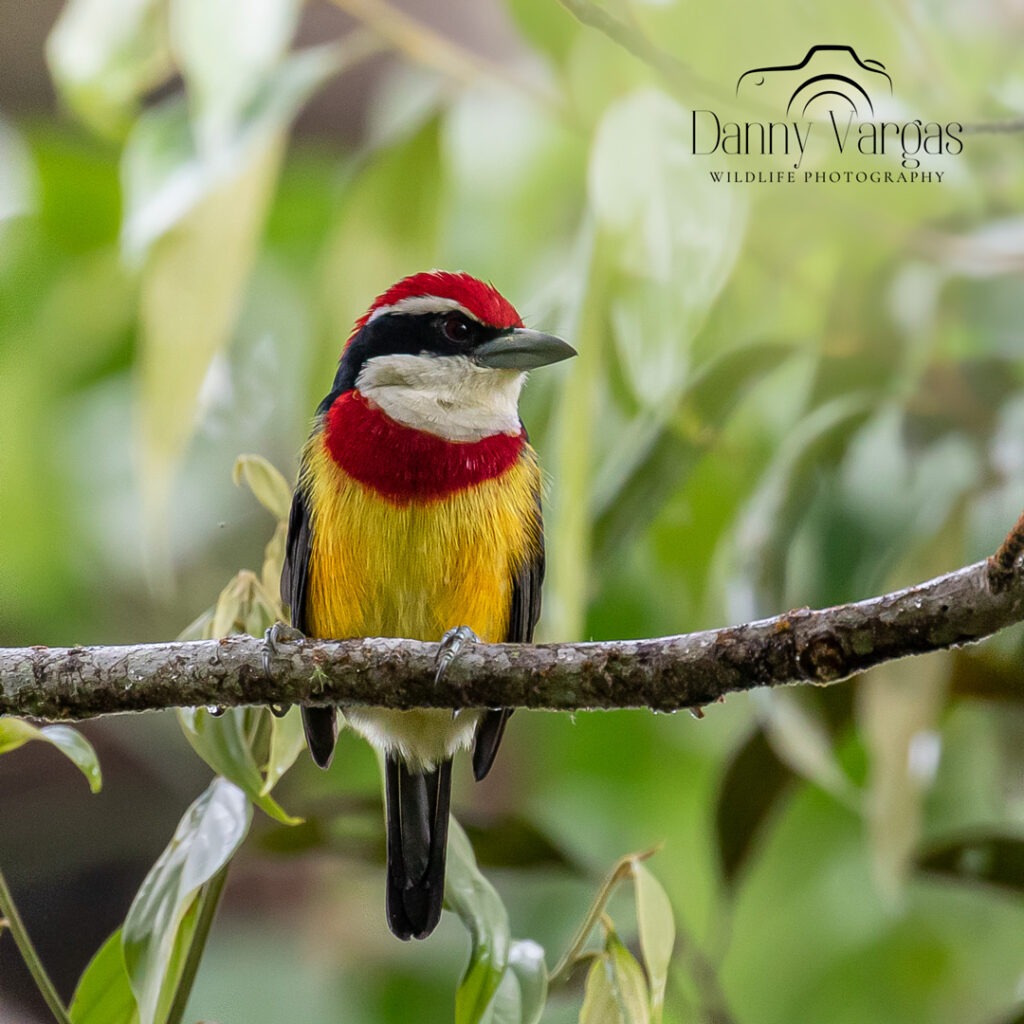
As we climbed toward Plataforma, the vegetation became progressively more forested and the birding improved markedly. By late morning we had reached the foothill forests where our main objective was one of northern Peru’s most localized birds: Scarlet-banded Barbet.
We began searching soon after arrival and were rewarded remarkably quickly when a pair was found during the afternoon. Securing such an important target on our first visit to the site was a major success and meant that we could devote more time the following day to other specialties.
The surrounding forest continued to produce excellent birds. Napo Sabrewing, Peruvian Racket-tail, Rose-fronted Parakeet, Chestnut-tipped Toucanet, Blackish Pewee, Dotted Tanager and Straw-backed Tanager were among the better species.
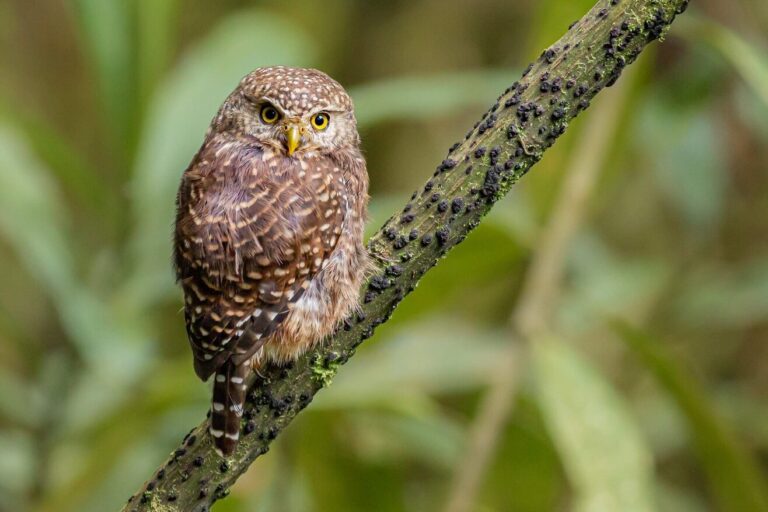
As the light began to fade, the birding continued with nocturnal species, including Foothill Screech-Owl and detections of Subtropical Pygmy-Owl and Band-bellied Owl.
It was an excellent start to the northern section of the tour.
Day 3 (16 July)
Plataforma
With Scarlet-banded Barbet already secured, we could devote the entire day to exploring the forests around Plataforma, concentrating particularly on dense understory and mixed-species flocks.
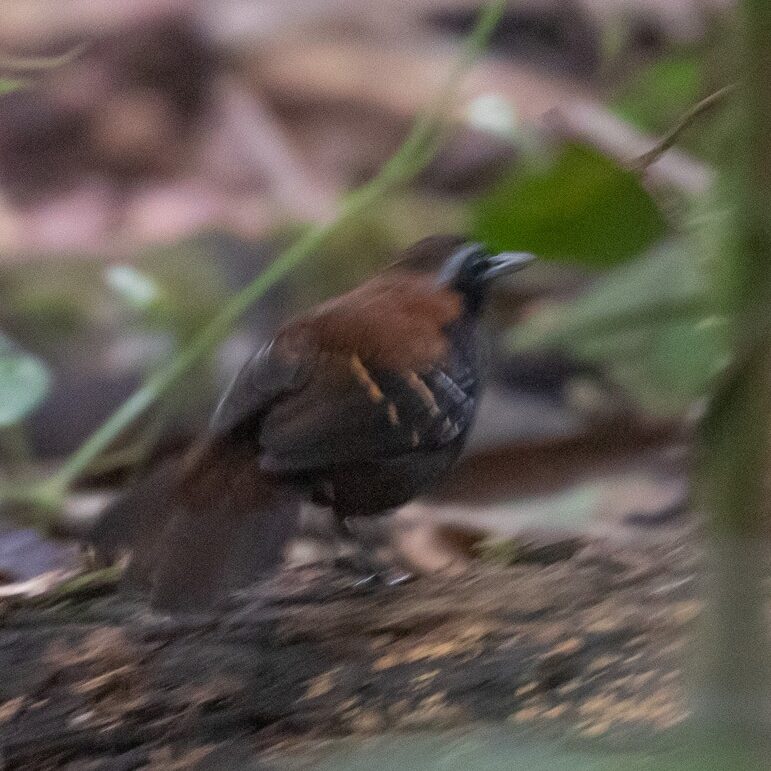
Our principal target was Cordillera Azul Antbird, a highly localized species associated with this isolated foothill region. After focused searching in suitable habitat, we eventually located the bird, securing one of the most important targets of the entire northern route.
The forest was active throughout the day. Blue-rumped Manakin was one of the standout species, while Jet Manakin, Scarlet-breasted Fruiteater and Gray-tailed Piha added further quality.
The understory produced Ochre-breasted Antpitta, Yellow-throated Spadebill, Rufescent Antshrike and Strong-billed Woodcreeper, while mixed flocks contained a wide assortment of foliage-gleaners, antwrens, tanagers and euphonias.
Another particularly interesting observation involved the Yungas Long-tailed Woodcreeper form, treated separately in the eBird records as an undescribed taxon.
This was one of the strongest forest days of the trip, both for diversity and for the quality of the birds encountered.
Day 4 (17 July)
Plataforma to Tarapoto via Cordillera Escalera
We birded briefly around Plataforma at first light before beginning the descent toward Bellavista and Tarapoto.
As we dropped in elevation, the bird community changed noticeably. Stops along the route produced Paint-billed Crake, Greater Yellow-headed Vulture, Ringed Kingfisher and White-throated Toucan.
Around wetter agricultural areas and the Huallaga River we added birds such as Limpkin, Black-bellied Whistling-Duck, Comb Duck and White-winged Swallow.
After lunch we continued to the Yurimaguas Road in Cordillera Escalera, where humid foothill forest again became the dominant habitat.
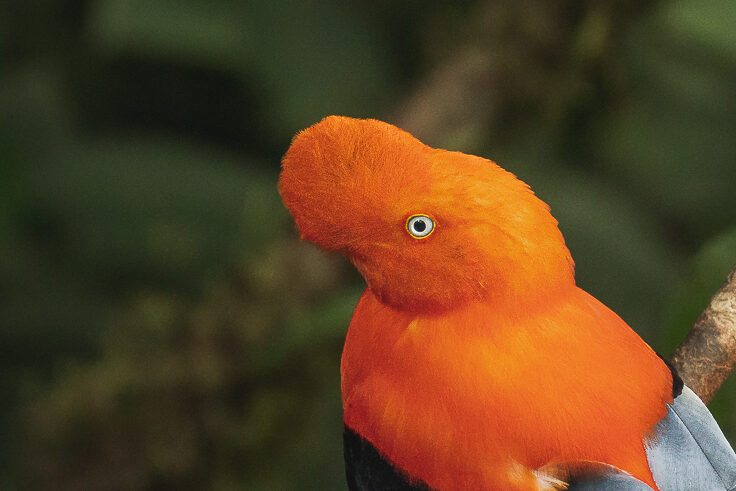
Here the afternoon produced Sickle-winged Guan, Olive-faced Flatbill, Cliff Flycatcher and Plumbeous Euphonia, while an Andean Cock-of-the-rock was heard from the forest.
By evening we were back in Tarapoto after a productive transition day that had taken us through several different habitats.
Day 5 (18 July)
Cordillera Escalera and ACONABIKH to Moyobamba
The morning was devoted to the forests of Cordillera Escalera, with most of our time spent at ACONABIKH Reserve.
One of our principal targets here was Koepcke’s Hermit, and the morning began very well when two birds were recorded. The reserve also produced an excellent selection of foothill forest species.
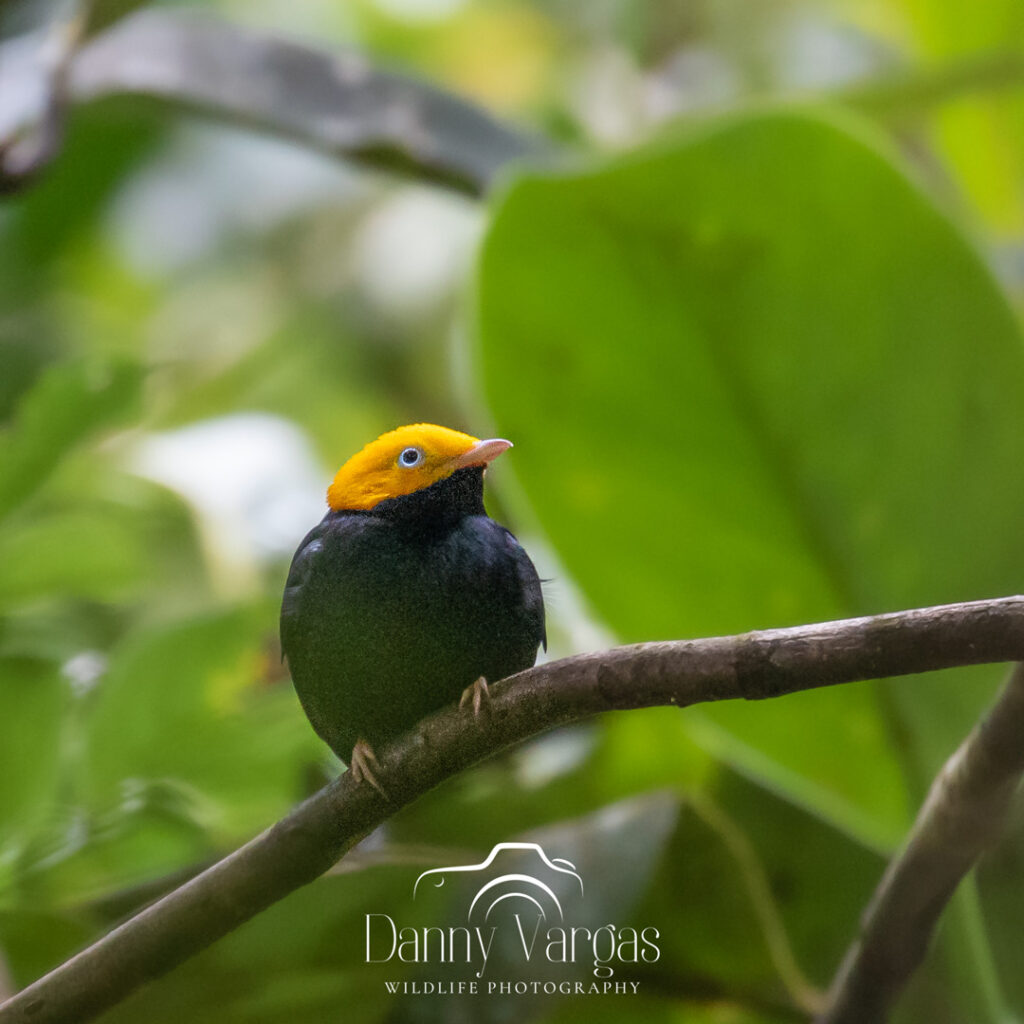
Among the highlights were Golden-headed Manakin, Blue-capped Manakin, Dusky-chested Flycatcher and Black-faced Antbird.
A particularly interesting sighting was Yellow-green Vireo, noted in the field records as an unusual out-of-season migrant. Other noteworthy birds included Black-and-white Tanager, Red-crowned Ant-Tanager and Black-billed Seed-Finch.
After lunch we began the drive toward Moyobamba. Along the way we stopped at a known roost for Oilbird, where approximately fifty birds provided a memorable encounter with one of the most unusual birds of the Neotropics.
We continued into the Alto Mayo Valley and reached the Moyobamba area later in the day, adding Huallaga Tanager and other foothill birds before evening.
Day 6 (19 July)
Calzada, Morro de Calzada and Waqanki
We began before sunrise at a feeding area near Calzada before continuing to the distinctive white-sand forest of Morro de Calzada.
Our principal objective was Painted Manakin, one of the signature birds of the Alto Mayo area. The search was successful, producing a superb adult male.
The same forest also held Green Manakin, Western Striolated Puffbird, Green-backed Trogon and Bluish-fronted Jacamar, while a Red-throated Caracara was heard nearby.
After completing our morning birding at Morro de Calzada, we returned to Waqanki, where the remainder of the day was spent around the lodge grounds, feeders and nearby forest trails.
The afternoon produced Golden-collared Toucanet, Broad-billed Motmot, Rufous Motmot, Huallaga Tanager and a good selection of hummingbirds.
It was a more relaxed afternoon after a highly successful morning, and by evening we had assembled an excellent representation of the Alto Mayo’s foothill avifauna.
Day 7 (20 July)
Arena Blanca to Abra Patricia
We left Moyobamba early and began the morning at Arena Blanca, where we concentrated initially on forest-floor birds, feeders and lowland specialties.
One of the strongest observations was Rufous-breasted Wood-Quail, normally a difficult species to see well. Around the feeders we recorded an excellent hummingbird assemblage that included Wire-crested Thorntail, Rufous-crested Coquette, Black-throated Mango and several other species.
As we began gaining elevation toward Abra Patricia, the bird community changed quickly. Stops along the route produced Speckle-chested Piculet, Johnson’s Tody-Flycatcher, Ochre-fronted Antpitta and Rufous-vented Tapaculo.
By afternoon we had reached the cooler montane forest around Owlet Lodge.
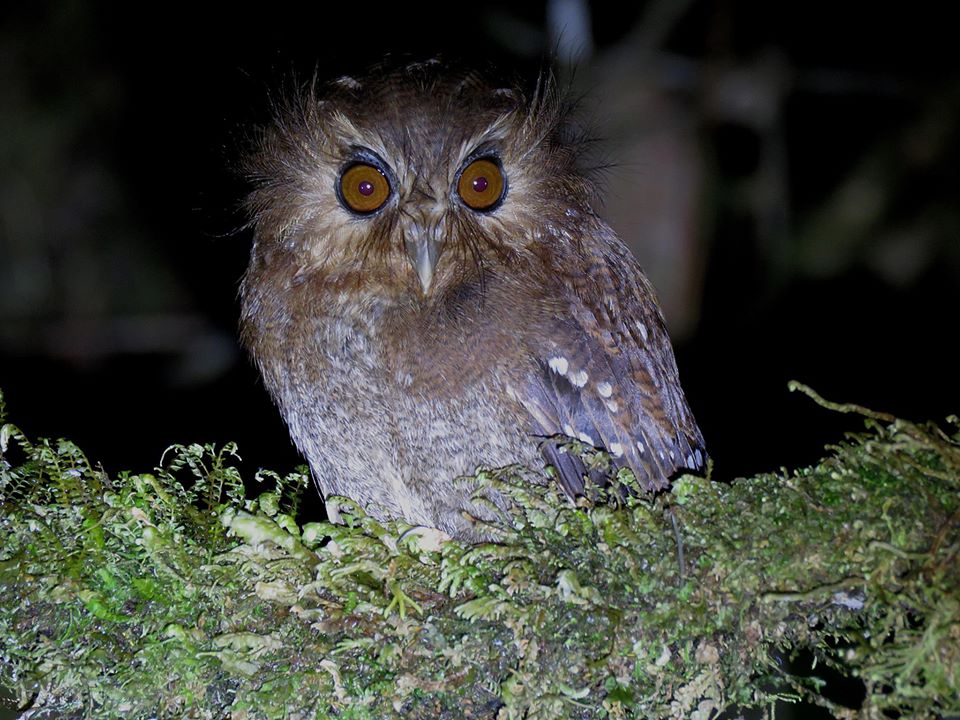
Our main objective for the evening was Long-whiskered Owlet, where one individual was recorded and photographed. This extraordinarily localized bird was one of the principal reasons for visiting the Abra Patricia region.
The nocturnal session also produced Common Potoo and Cinnamon Screech-Owl, providing an excellent finish to a long day spanning lowland forest through upper montane habitat.
Day 8 (21 July)
Alto Nieva and Abra Patricia
We descended from Owlet Lodge shortly after dawn to bird the lower cloud forest around Alto Nieva, at approximately 1,800 metres.
The change in elevation produced a noticeably different bird community, and the morning was devoted primarily to understory species, antpittas and hummingbirds.
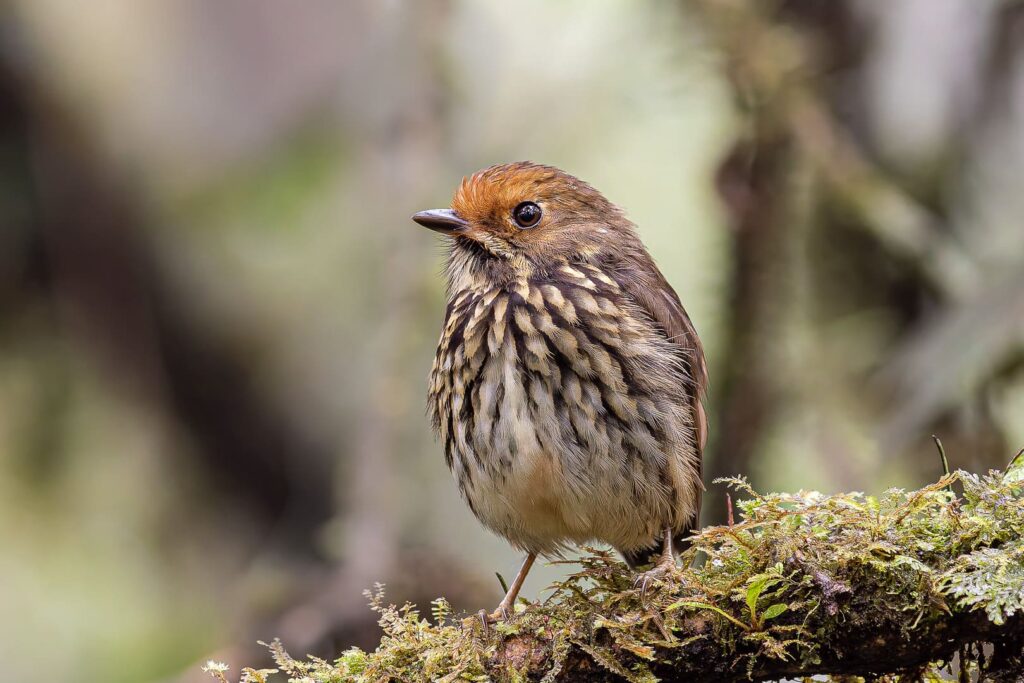
The first major success came with Rusty-tinged Antpitta, followed by Ochre-fronted Antpitta. The same forest also produced Streak-headed Antbird, Uniform Antshrike, Rusty-winged Barbtail and Bar-winged Wood-Wren, while Northern Chestnut-breasted Wren was heard from dense vegetation.
The hummingbird feeding area was particularly productive. Greenish Puffleg, Rufous-vented Whitetip, Peruvian Racket-tail, Violet-fronted Brilliant and Sapphire-spangled Emerald all appeared.
From Alto Nieva we gradually worked our way back upslope toward Abra Patricia. One of the principal objectives of this section was Royal Sunangel, and our search was rewarded at Fundo La Murella Verde with a fine male.
As we continued upward, the montane forest produced Green-and-black Fruiteater, Rufous-crested Tanager, Grass-green Tanager and Blue-and-black Tanager.
We finished the afternoon around Owlet Lodge with White-throated Screech-Owl providing an excellent final bird at dusk.
Day 9 (22 July)
Abra Patricia to Pomacochas
We spent the morning birding around Owlet Lodge, continuing to search the montane forest before leaving Abra Patricia.
The morning produced Golden-plumed Parakeet, Green-and-black Fruiteater, Sulphur-bellied Tyrannulet and a variety of mountain tanagers. Chestnut Antpitta was also detected, although it remained out of view.
After leaving Abra Patricia we continued toward Pomacochas for one of the most anticipated sessions of the entire trip.
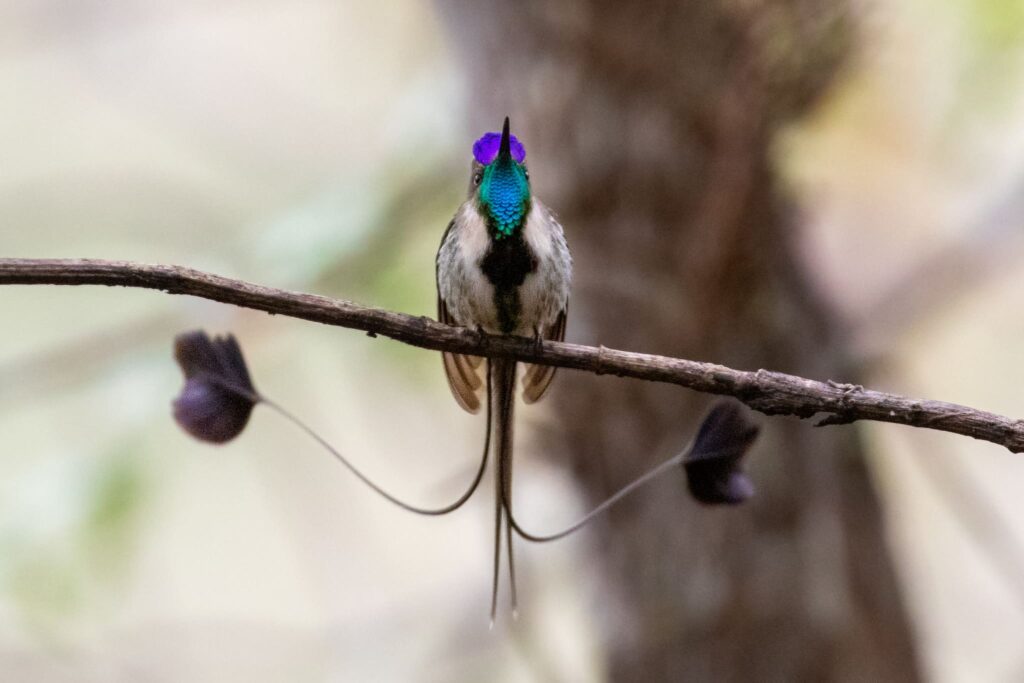
Our afternoon was devoted to Marvelous Spatuletail.
The encounter exceeded expectations. No fewer than five males and one female were recorded, giving us repeated opportunities to watch one of the world’s most extraordinary hummingbirds.
The site also produced Purple-throated Sunangel, Black-tailed Trainbearer, White-bellied Hummingbird, Line-cheeked Spinetail and Black-crested Warbler.
Rather than a brief glimpse of a single bird, we were able to spend considerable time observing several male Spatuletails—a clear highlight of the journey.
Day 10 (23 July)
Pomacochas to Jaén through the Marañón Valley
We left Pomacochas well before dawn, beginning a long descent toward one of the most distinctive biogeographic regions of the trip: the Marañón Valley.
As the road dropped in elevation, the cool montane forest gradually gave way to increasingly dry slopes, thorn scrub and open woodland. The bird community changed almost completely.
The day was dedicated to the highly localized species of this dry inter-Andean system.
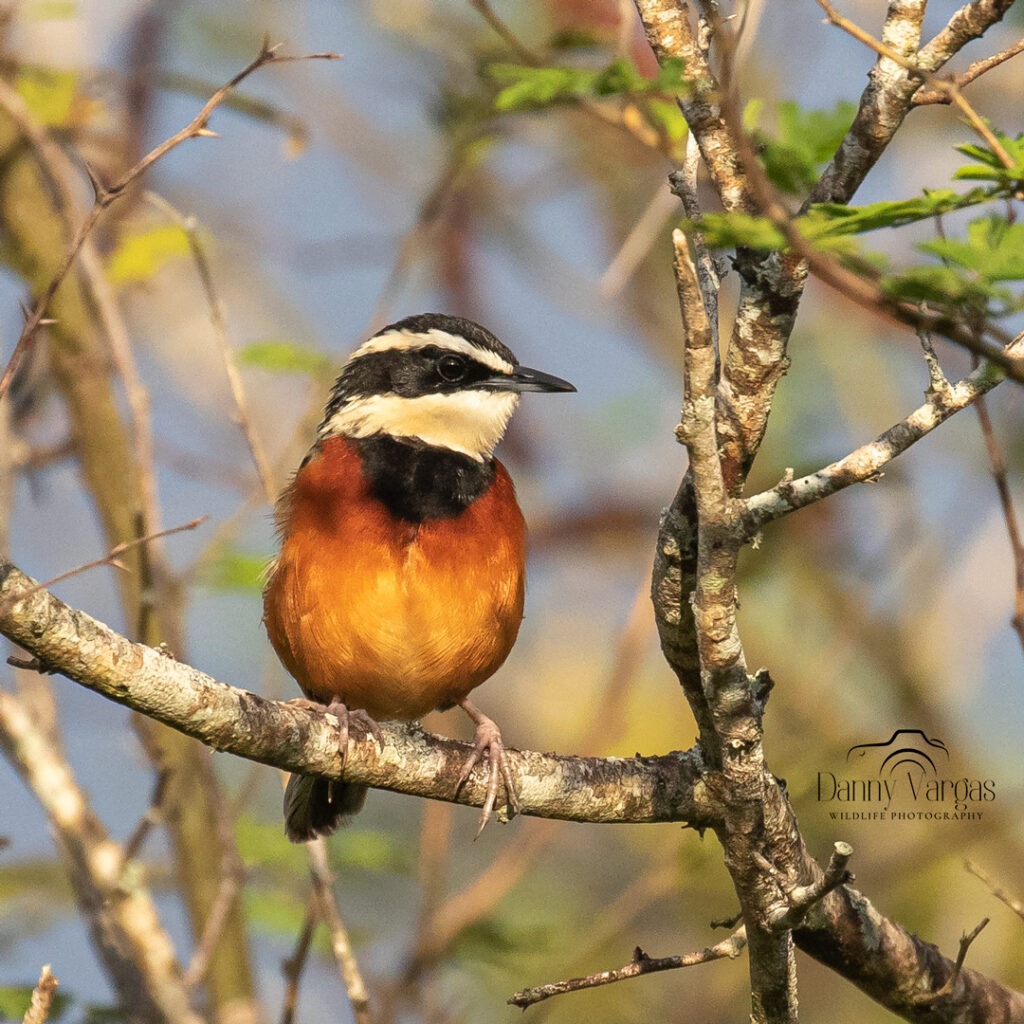
Our productive stops brought Spot-throated Hummingbird, Marañón Spinetail, Marañón Antshrike, Marañón Gnatcatcher and Little Inca-Finch.
Marañón Pigeon was another particularly important addition, while Ecuadorian Ground-Dove occurred in the more open areas.
Particular attention was given to Marañón Crescentchest, one of the characteristic species of this restricted habitat, and the bird was successfully recorded during the day. Marañón Tyrannulet provided another key specialty.
As the afternoon progressed, we continued toward Jaén, making further stops in the remaining dry forest.
We finished at Bosque Yanahuanca, where evening birding added a pair of Peruvian Screech-Owls (roboratus race) and Scrub Nightjar.
It was one of the strongest endemic-focused days of the trip and marked a complete transition from the humid northern Andes into the dry Marañón basin.
Day 11 (24 July)
Jaén to Cocachimba and the Utcubamba Valley
We began the morning birding near Jaén before a late breakfast, giving ourselves another opportunity to work the dry Marañón habitats.
From Jaén we continued toward the Utcubamba Valley, where the landscape gradually became greener again as we climbed toward Cocachimba and Gocta.
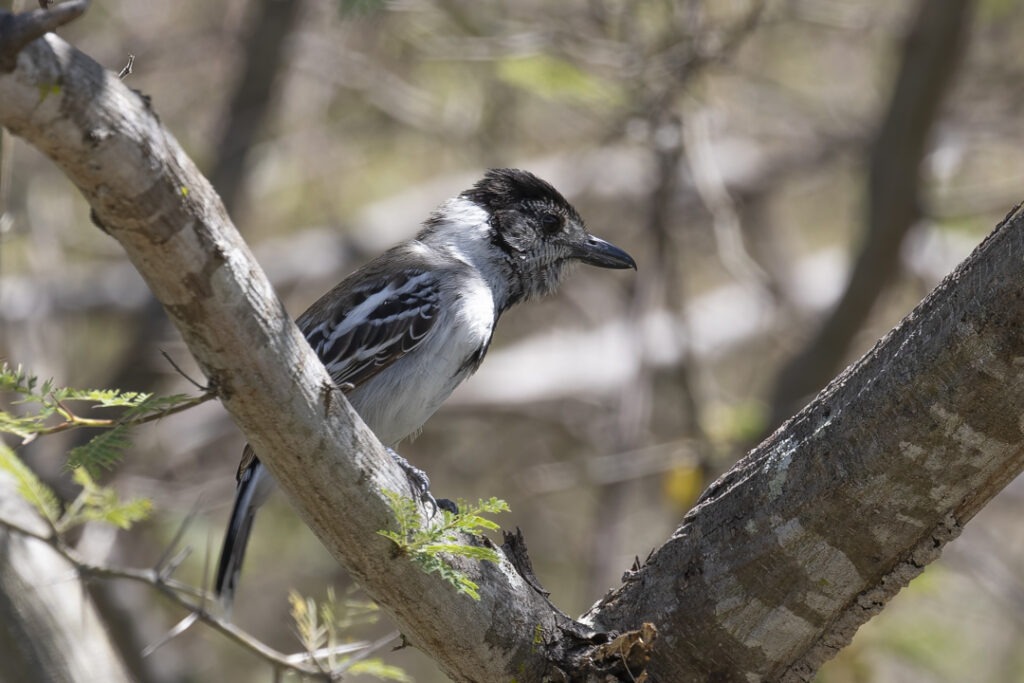
Several roadside stops proved worthwhile. Black-necked Woodpecker was one of the strongest observations, while Marañón Gnatcatcher, Marañón Thrush, Spot-throated Hummingbird and a calling Marañón Crescentchest added further localized birds.
Later in the afternoon we visited a hummingbird feeding station near Cocachimba.
Here we encountered another adult male Marvelous Spatuletail, this individual showing active molt. Little Woodstar, Andean Emerald and Gray-chinned Hermit were also present around the feeders.
We finished the day at Gocta Andes Lodge, where an impressive flock of roughly eighty Speckle-faced Parrots moved toward the waterfall at dusk.
Day 12 (25 July)
Huaylla Belén and Cerro de Tilla
We left Cocachimba very early and climbed into the high-elevation forests around Cerro de Tilla and Huaylla Belén.
This area proved particularly important because it allowed us to recover several montane targets that had originally been associated with the planned San Lorenzo section of the tour.
The morning concentrated on elfin forest and upper montane habitats and quickly developed into one of the most endemic-rich sessions of the entire journey.
Pale-billed Antpitta was a major objective. Two pairs were recorded at Huaylla Belén, with additional birds heard in the area, while another individual was later heard around Cerro de Tilla.
We also found Chachapoyas Antpitta, with two birds recorded and one giving a visual encounter.
The same forest produced Russet-mantled Softtail, Chestnut-crowned Antpitta, Peruvian Wren, Gray-browed Wren, White-collared Jay, Mountain Velvetbreast and Amethyst-throated Sunangel.
It was an exceptional morning for restricted-range northern Peruvian species.
After a late lunch we descended and continued toward Leymebamba.
Day 13 (26 July)
Atuen and Leymebamba
We headed into the high country above Leymebamba and spent the morning birding the puna and upper Utcubamba Valley around Atuen, at approximately 3,600 metres.
The open landscape was completely different from the dense forest of the previous morning.
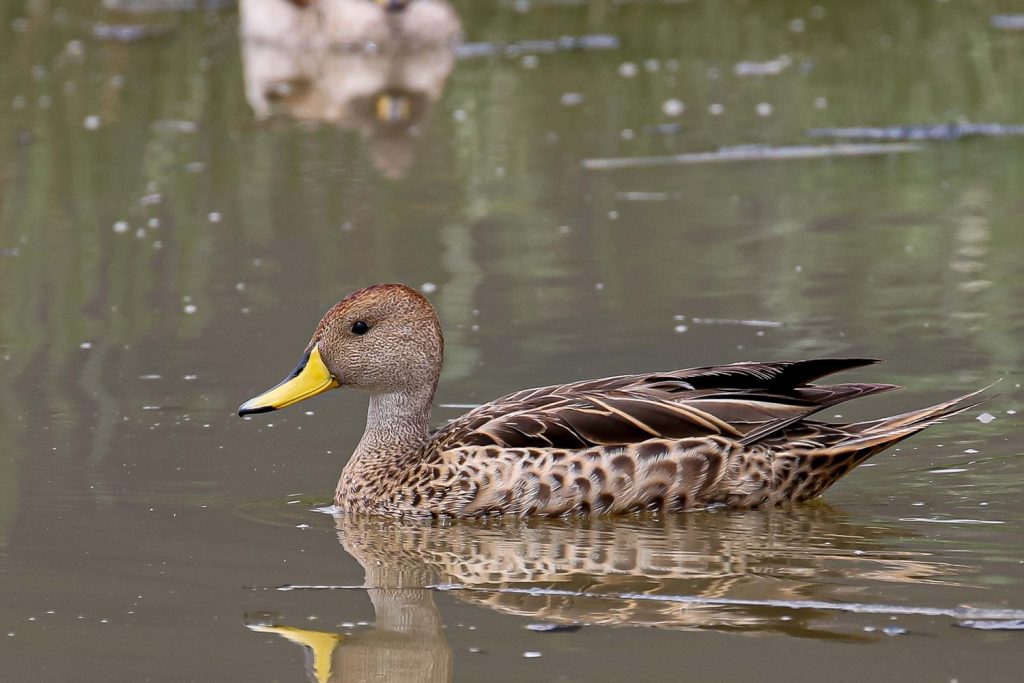
High-Andean wetlands and grasslands produced Andean Goose, Yellow-billed Pintail, Yellow-billed Teal, Mountain Caracara and Brown-bellied Swallow.
More localized birds included Many-striped Canastero and Rufous-webbed Bush-Tyrant.
Both Stripe-headed Antpitta and Atuen Antpitta were detected by voice, adding two important high-elevation species despite neither giving a visual encounter.
After lunch we returned toward Leymebamba and spent the afternoon around the excellent Leymebamba Museum, combining the cultural component of the trip with relaxed birding in the surrounding gardens.
Here we recorded Green-tailed Trainbearer, Chestnut-breasted Coronet and other montane species.
After dark, a Koepcke’s Screech-Owl near the museum provided an excellent conclusion to the day.
Day 14 (27 July)
Abra Barro Negro, Marañón Valley and Celendín
The journey from Leymebamba to Celendín was relatively short in distance but difficult in practice, with poor road conditions turning approximately 140 kilometres into a six-hour drive.
Fortunately, several of the most important birding sites of the route lay directly along the way.
We first concentrated on the high-elevation forest and scrub around Abra Barro Negro.
The area produced Yellow-scarfed Tanager, Neblina Tapaculo, Coppery Metaltail and Buff-bridled Inca-Finch, together with a variety of high-Andean birds.
From there we began the dramatic descent toward the Marañón River.
Near Balsas, the dry valley habitat produced one of the day’s principal targets: a small group of Yellow-faced Parrotlets.
Continuing toward Celendín, we added Chestnut-backed Thornbird, Marañón Thrush, Spot-throated Hummingbird and Black-backed Grosbeak.
Before reaching Celendín we also secured Gray-winged Inca-Finch, another highly localized species associated with the dry inter-Andean valleys of northern Peru.
Despite the difficult road, this was another outstanding day for restricted-range species.
Day 15 (28 July)
Cruz Conga and Río Chonta
We travelled from Celendín toward Cajamarca, with our first major birding stop at Cruz Conga.
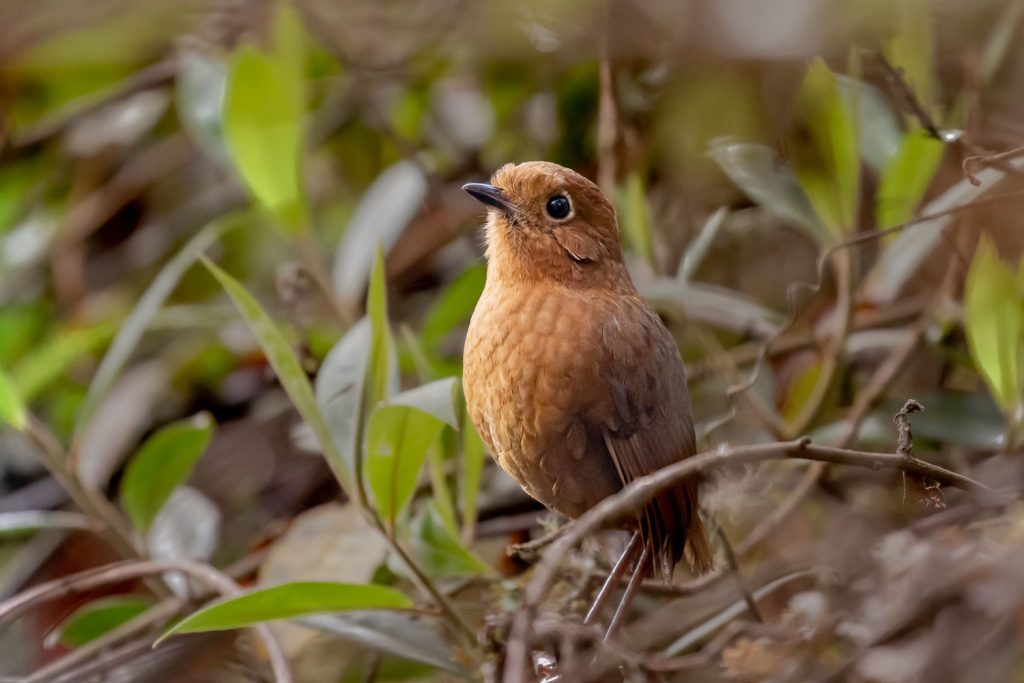
The principal objective here was Cajamarca Antpitta, a species restricted to the highlands of this region.
Our search was successful, with three individuals recorded.
The surrounding highland habitat also produced Black-crested Tit-Tyrant, Plain-tailed Warbling-Finch, Shining Sunbeam and Tyrian Metaltail, together with several other species typical of the Cajamarca Andes.
After continuing toward Cajamarca, we spent the afternoon in the Río Chonta–Sangal area.
Here our attention shifted to another extremely localized endemic: Gray-bellied Comet.
After working the valley carefully, we located a single bird, completing one of the principal objectives of the Cajamarca section.
The area also produced Black Metaltail, Andean Flicker, Andean Swift and Black-chested Buzzard-Eagle.
Obtaining both Cajamarca Antpitta and Gray-bellied Comet made this a particularly successful day.
Day 16 (29 July)
Jesús, Abra El Gavilán and Rafán
We left Cajamarca early and began southeast of Jesús, where one of the principal targets was Great Spinetail.
The morning produced an excellent result with two pairs found.
The surrounding dry Andean scrub also held Marañón Gnatcatcher, Buff-bridled Inca-Finch and Peruvian Meadowlark.
We then climbed toward Abra El Gavilán at around 3,000 metres, where additional high-elevation species included Rufous-backed Inca-Finch, Rusty-crowned Tit-Spinetail and Unicolored Tapaculo.
From there we began the long descent toward the Pacific lowlands.
By mid-afternoon we had reached the dry forest at Rafán, where the habitat and birdlife were once again completely different.
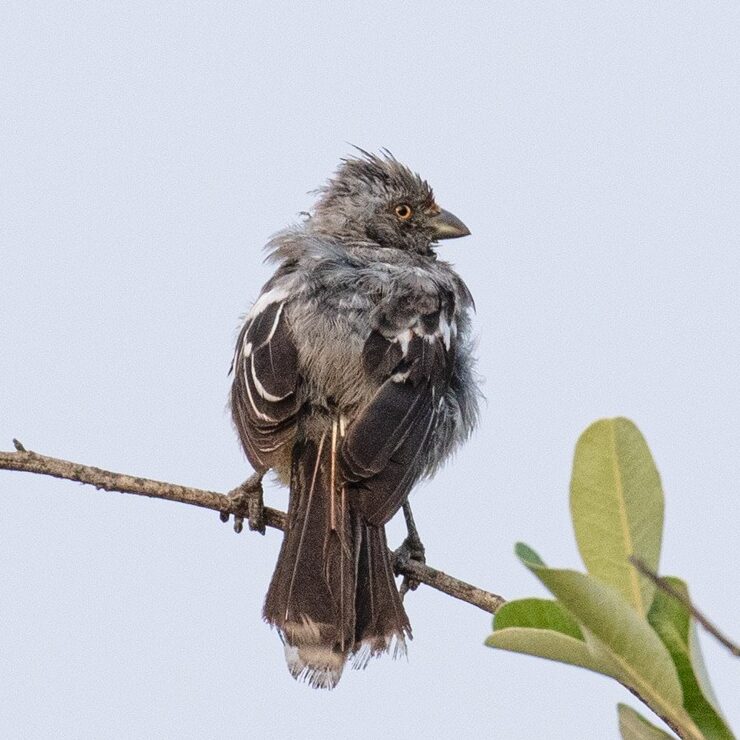
Our principal target was Peruvian Plantcutter, and four birds were located successfully.
Other dry-forest specialties included Peruvian Sheartail, Tumbesian Tyrannulet, Necklaced Spinetail, Superciliated Wren, Pacific Parrotlet and Amazilia Hummingbird.
Few days demonstrated the ecological diversity of northern Peru more clearly: high Andean scrub in the morning and Tumbesian dry forest before sunset.
Day 17 (30 July)
Pacific Coast to Chaparrí
After several days in the Andes and Marañón interior, the morning brought another major ecological shift as we reached the Pacific coast near Chiclayo.
Our principal objective was Peruvian Tern, and we concentrated first on the coastal habitats around Playa La Cruz del Faro where this very rare Tern was successfully located.
The shoreline and nearshore waters also produced Peruvian Booby, Black Skimmer, Gray Gull, Belcher’s Gull, Kelp Gull and Willet.
In the more open coastal desert we recorded Peruvian Pipit, Peruvian Thick-knee and Coastal Miner, giving us an entirely different set of species from those seen in the Andes.
From the coast we turned inland toward Chaparrí.
By the time we reached the reserve, the barren shoreline had given way to dry Tumbesian forest.
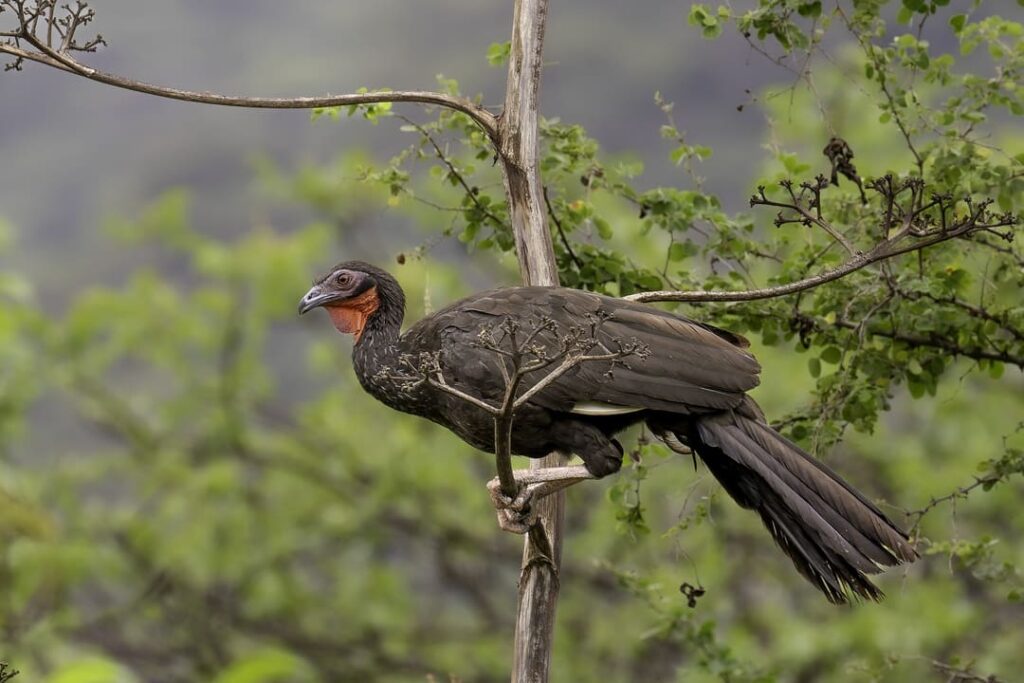
The afternoon was devoted to birding around the lodge, where our main target was White-winged Guan. Two birds were encountered, providing one of the most important conservation highlights of the trip.
Other specialties included Tumbes Tyrant, Baird’s Flycatcher, Tumbes Sparrow, Pacific Hornero, White-tailed Jay, Short-tailed Woodstar and Plumbeous-backed Thrush.
As darkness fell, a great view of West Peruvian Screech-Owl (pacificus race) rounded off an exceptionally varied day.
Day 18 – 31 July
Chaparrí
We devoted the full day to the forests and entrance road around Chaparrí, allowing us to work the Tumbesian habitat carefully without the pressure of a long transfer.
White-winged Guan was seen again, providing further opportunities with one of the most important birds of northwestern Peru.
The dry forest produced a strong selection of regional specialties.
Among the highlights were Tumbes Hummingbird, Scarlet-backed Woodpecker, Tumbes Pewee, Elegant Crescentchest, Rufous Flycatcher, White-headed Brushfinch, Black-capped Sparrow, White-edged Oriole and Plumbeous-backed Thrush.
Compared with the humid forests around Plataforma and Abra Patricia, Chaparrí supported an almost completely different bird community.
Spending a full day in this habitat allowed us not only to add new species but also to appreciate the distinctiveness of the Tumbesian region.
Day 19 – 1 August
Casupe, Peña Los Loros and Lake Tinajones
We left Chaparrí very early.
Even before sunrise the birding was memorable, with numerous Tschudi’s Nightjars visible along the reserve road together with Lesser Nighthawks.
We then climbed toward Casupe and Peña Los Loros, where the vegetation became noticeably greener and more montane.
At Casupe one of our main targets was Ochre-bellied Dove. Two birds were recorded, with one seen inside the forest and another heard from the road.
The same area produced Chapman’s Antshrike, Gray-breasted Flycatcher, Rufous-necked Foliage-gleaner, White-winged Brushfinch, Gray-and-gold Warbler, Three-banded Warbler and Black-cowled Saltator.
At Peña Los Loros, Ecuadorian Piculet provided another valuable regional specialty.
After descending toward Chiclayo we stopped at Lake Tinajones, where the habitat changed once again to open wetland.
The lake produced Roseate Spoonbill, Little Blue Heron, Pectoral Sandpiper, Comb Duck, White-cheeked Pintail and numerous other waterbirds.
One small flycatcher provided the day’s most personal moment: Short-tailed Field Tyrant became Mikael’s 5,000th world lifer.
Day 20 – 2 August
Bosque de Pómac, Túcume and Sipán
Our final birding morning was spent at Bosque de Pómac, one of the most important remaining tracts of dry Prosopis forest in coastal northern Peru.
The principal objective was Tumbes Swallow.
The search was successful, with approximately twenty birds recorded, giving us an excellent final major target for the trip.
The dry forest also produced Coastal Miner, Cinereous Finch, Pacific Pygmy-Owl, Pacific Hornero, Pacific Parrotlet, White-tailed Jay and Tumbesian Tyrannulet.
Large numbers of West Peruvian Dove were also present throughout the area.
With the main birding objectives completed, the remainder of the day returned to the cultural side of the journey.
We visited the archaeological complex at Túcume and later the Royal Tombs of Sipán Museum in Lambayeque, bringing the tour to an appropriate conclusion: an exceptional birding journey combined with some of the most important cultural heritage of northern Peru.

Trip Summary
The Northern Peru extension ultimately documented 613 bird taxa, including 612 described species plus one still-undescribed Yungas Long-tailed Woodcreeper form.
The value of the journey, however, was not simply numerical.
The route linked several of Peru’s most distinctive centers of endemism and produced an exceptional concentration of localized species.
Among the defining encounters were Scarlet-banded Barbet, Cordillera Azul Antbird, Koepcke’s Hermit, Painted Manakin, Long-whiskered Owlet, Royal Sunangel, Marvelous Spatuletail, Pale-billed Antpitta, Chachapoyas Antpitta, Russet-mantled Softtail, Marañón Spinetail, Marañón Crescentchest, Yellow-faced Parrotlet, Gray-winged Inca-Finch, Cajamarca Antpitta, Gray-bellied Comet, Great Spinetail, Peruvian Plantcutter, Peruvian Tern, White-winged Guan, Ochre-bellied Dove and Tumbes Swallow.
Just as important was the progression of the journey itself. Bird communities changed constantly as we crossed major ecological boundaries—from Amazonian foothills and cloud forest to high Andean puna, dry inter-Andean valleys, Tumbesian woodland and the Pacific coast.
Some of the strongest days were not necessarily those with the highest species totals, but those in which a small area held several birds found almost nowhere else.
The trip also reflected the reality of intensive field birding. Some targets required considerable persistence, some were detected only briefly, and route changes occasionally required adapting the plan and recovering key species elsewhere. The highly successful morning at Huaylla Belén after bypassing San Lorenzo was an excellent example of that flexibility.
From Scarlet-banded Barbet in the Cordillera Azul foothills on our first full birding day to Tumbes Swallow at Bosque de Pómac on the final morning, the northern extension provided an extraordinary cross-section of the specialized birdlife of northern Peru.
Unified Annotated Species Checklist
Checklist basis: 613 reconciled taxa
Tinamous
- Andean Tinamou — Nothoprocta pentlandii — Cajamarca highlands — one bird feeding in a ploughed field.
- Hooded Tinamou — Nothocercus nigrocapillus
HEARD ONLY— Owlet Lodge - Cinereous Tinamou — Crypturellus cinereus
- Tataupa Tinamou — Crypturellus tataupa
HEARD ONLY - Little Tinamou — Crypturellus soui
Ducks & Geese
- Black-bellied Whistling Duck — Dendrocygna autumnalis
- Comb Duck — Sarkidiornis sylvicola
- White-cheeked Pintail — Anas bahamensis
- Sickle-winged Guan — Chamaepetes goudotii
- Andean Goose — Chloephaga melanoptera
- Yellow-billed Pintail — Anas georgica
- Yellow-billed Teal — Anas flavirostris
Guans & New World Quail
- White-winged Guan — Penelope albipennis
ENDEMICTARGET— Chaparrí — two birds, with further views the following day. - Andean Guan — Penelope montagnii
- Speckled Chachalaca — Ortalis guttata
- Rufous-breasted Wood Quail — Odontophorus speciosus — Arena Blanca
- Rock Dove — Columba livia
Pigeons & Doves
- Scaled Pigeon — Patagioenas speciosa
- Band-tailed Pigeon — Patagioenas fasciata
- Peruvian Pigeon — Patagioenas oenops NEAR ENDEMIC — Bosque Yanahuanca — good numbers in the Marañón dry forest.
- Plumbeous Pigeon — Patagioenas plumbea
- Ruddy Pigeon — Patagioenas subvinacea
HEARD ONLY - Plain-breasted Ground Dove — Columbina minuta
- Ruddy Ground Dove — Columbina talpacoti
- Ecuadorian Ground Dove — Columbina buckleyi — Bosque Yanahuanca
- Croaking Ground Dove — Columbina cruziana
- Blue Ground Dove — Claravis pretiosa
- White-tipped Dove — Leptotila verreauxi
- Ochre-bellied Dove — Leptotila ochraceiventris
NEAR ENDEMICTARGET— Casupe — one seen inside the forest and another heard from the road. - Grey-fronted Dove — Leptotila rufaxilla
- West Peruvian Dove — Zenaida meloda
- Eared Dove — Zenaida auriculata
- Smooth-billed Ani — Crotophaga ani
- Pale-vented Pigeon — Patagioenas cayennensis
Cuckoos
- Groove-billed Ani — Crotophaga sulcirostris
- Striped Cuckoo — Tapera naevia
- Common Squirrel Cuckoo — Piaya cayana
- Lesser Nighthawk — Chordeiles acutipennis
Nightjars & Potoos
- Rufous-bellied Nighthawk — Lurocalis rufiventris
- Pauraque — Nyctidromus albicollis
- Scrub Nightjar — Nyctidromus anthonyi
- Tschudi’s Nightjar — Quechuavis decussata — Chaparrí — numerous birds along the road before sunrise.
- Common Potoo — Nyctibius griseus
- Oilbird — Steatornis caripensis
TARGET— El Triunfo — approximately fifty birds at the roost.
Swifts
- Chestnut-collared Swift — Streptoprocne rutila
- White-collared Swift — Streptoprocne zonaris
- Grey-rumped Swift — Chaetura cinereiventris
- Short-tailed Swift — Chaetura brachyura
- White-tipped Swift — Aeronautes montivagus
- Andean Swift — Aeronautes andecolus
- Fork-tailed Palm Swift — Tachornis squamata
- White-necked Jacobin — Florisuga mellivora
- Buff-tailed Sicklebill — Eutoxeres condamini
- White-bearded Hermit — Phaethornis hispidus
Hummingbirds
- Green Hermit — Phaethornis guy
- Koepcke’s Hermit — Phaethornis koepckeae
ENDEMICTARGET— ACONABIKH — two birds. - Great-billed Hermit — Phaethornis malaris
- Black-throated Hermit — Phaethornis atrimentalis
- Grey-chinned Hermit (Porculla) — Phaethornis griseogularis
ENDEMIC— Seen at Casupe - Reddish Hermit — Phaethornis ruber
- Blue-fronted Lancebill — Doryfera johannae
- Sparkling Violetear — Colibri coruscans
- Brown Violetear — Colibri delphinae
- Lesser Violetear — Colibri cyanotus
- Black-throated Mango — Anthracothorax nigricollis
- Amethyst-throated Sunangel — Heliangelus amethysticollis — Huaylla Belen
- Purple-throated Sunangel — Heliangelus viola
- Royal Sunangel — Heliangelus regalis
ENDEMICTARGET— Fundo La Murella Verde — adult male. - Wire-crested Thorntail — Discosura popelairii
- Rufous-crested Coquette — Lophornis delattrei
- Speckled Hummingbird — Adelomyia melanogenys
- Long-tailed Sylph — Aglaiocercus kingii
- Grey-bellied Comet — Taphrolesbia griseiventris
ENDEMICTARGET— Río Chonta (Sangal) — one bird after a dedicated afternoon search. - Mountain Avocetbill — Opisthoprora euryptera
- Tyrian Metaltail — Metallura tyrianthina — Owlet Lodge; Atuen
- Coppery Metaltail — Metallura theresiae
ENDEMIC— Cero de Tilla; Road to Abra Barro Negro - Black Metaltail — Metallura phoebe
ENDEMIC— Rio Chonta (Sangal); Abra El Gavilan - Greenish Puffleg — Haplophaedia aureliae
- Emerald-bellied Puffleg — Eriocnemis aline — Owlet Lodge
- Marvelous Spatuletail — Loddigesia mirabilis
ENDEMICTARGET— Laguna Pomacochas — five males and one female; another adult male near Cocachimba was in active molt. - Shining Sunbeam — Aglaeactis cupripennis
- Bronzy Inca — Coeligena coeligena
- Collared Inca — Coeligena torquata — Owlet Lodge; Huaylla Belen
- Rainbow Starfrontlet — Coeligena iris NEAR
ENDEMIC— Atuen - Mountain Velvetbreast — Lafresnaya lafresnayi — Cero de Tilla; Huaylla Belen
- Sword-billed Hummingbird — Ensifera ensifera
- Chestnut-breasted Coronet — Boissonneaua matthewsii
- Peruvian Racket-tail — Ocreatus peruanus
- Rufous-vented Whitetip — Urosticte ruficrissa
- Gould’s Jewelfront — Heliodoxa aurescens
- Fawn-breasted Brilliant — Heliodoxa rubinoides
- Violet-fronted Brilliant — Heliodoxa leadbeateri
- Giant Hummingbird — Patagona gigas
- Long-billed Starthroat — Heliomaster longirostris
- Amethyst Woodstar — Calliphlox amethystina
- Peruvian Sheartail — Thaumastura cora
- Short-tailed Woodstar — Myrmia micrura
- Purple-collared Woodstar — Myrtis fanny
- White-bellied Woodstar — Chaetocercus mulsant
- Little Woodstar — Chaetocercus bombus
- Violet-headed Hummingbird — Klais guimeti
- Grey-breasted Sabrewing — Campylopterus largipennis
- Napo Sabrewing — Campylopterus villaviscensio
- Fork-tailed Woodnymph — Thalurania furcata
- Tumbes Hummingbird — Thaumasius baeri
NEAR ENDEMICTARGET— Chaparrí — an important Tumbesian hummingbird. - Spot-throated Hummingbird — Thaumasius taczanowskii NEAR
ENDEMICTARGET— Marañón Valley — encountered repeatedly in the dry inter-Andean section. - Many-spotted Hummingbird — Taphrospilus hypostictus
- Amazilia Hummingbird — Amazilis amazilia — Rafan; Reserva Ecologica Chaparri
- Andean Emerald — Uranomitra franciae
- Golden-tailed Sapphire — Chrysuronia oenone
- Sapphire-spangled Emerald — Chionomesa lactea
- White-bellied Hummingbird — Elliotomyia chionogaster — Laguna Pomacochas
- White-chinned Sapphire — Chlorestes cyanus
- Black-tailed Trainbearer — Lesbia victoriae
- Great Sapphirewing — Pterophanes cyanopterus
- Green-fronted Lancebill — Doryfera ludovicae
- Green-tailed Trainbearer — Lesbia nuna — Leymebamba Museum
Rails & Limpkin
- Paint-billed Crake — Mustelirallus erythrops
- Common Gallinule — Gallinula galeata
- Purple Gallinule — Porphyrio martinica
- Russet-crowned Crake — Rufirallus viridis
- Limpkin — Aramus guarauna
Shorebirds
- Peruvian Thick-knee — Hesperoburhinus superciliaris
- Black-necked Stilt — Himantopus mexicanus
- American Oystercatcher — Haematopus palliatus
- Killdeer — Charadrius vociferus
- Andean Lapwing — Vanellus resplendens
- Collared Plover — Anarhynchus collaris
- Hudsonian Whimbrel — Numenius hudsonicus
- Pectoral Sandpiper — Calidris melanotos
- Grey Plover — Pluvialis squatarola
- Lesser Yellowlegs — Tringa flavipes
- Willet — Tringa semipalmata
Gulls, Skimmers & Terns
- Andean Gull — Chroicocephalus serranus
- Grey-headed Gull — Chroicocephalus cirrocephalus
- Grey Gull — Leucophaeus modestus
- Belcher’s Gull — Larus belcheri
- Kelp Gull — Larus dominicanus
- Black Skimmer — Rynchops niger
- Peruvian Tern — Sternula lorata
TARGET— Playa La Cruz del Faro — single bird. - Gull-billed Tern — Gelochelidon nilotica
Grebes
- Pied-billed Grebe — Podilymbus podiceps
Seabirds, Cormorants, Ibises & Herons
- Peruvian Booby — Sula variegata
- Neotropic Cormorant — Nannopterum brasilianum
- Puna Ibis — Plegadis ridgwayi
- Black-crowned Night Heron — Nycticorax nycticorax
- Little Blue Heron — Egretta caerulea
- Snowy Egret — Egretta thula
- Striated Heron — Butorides striata
- Western Cattle Egret — Ardea ibis
- Great Egret — Ardea alba
- Cocoi Heron — Ardea cocoi
- Peruvian Pelican — Pelecanus thagus
- Fasciated Tiger Heron — Tigrisoma fasciatum
- Roseate Spoonbill — Platalea ajaja
Vultures, Kites & Hawks
- Black Vulture — Coragyps atratus
- Turkey Vulture — Cathartes aura
- Pearl Kite — Gampsonyx swainsonii
- Hook-billed Kite — Chondrohierax uncinatus
- Swallow-tailed Kite — Elanoides forficatus
- Plumbeous Kite — Ictinia plumbea
- Snail Kite — Rostrhamus sociabilis — Lake Tinajones area — a long-staying vagrant noted during the trip.
- Savanna Hawk — Buteogallus meridionalis
- Roadside Hawk — Rupornis magnirostris
- Harris’s Hawk — Parabuteo unicinctus
- Variable Hawk — Geranoaetus polyosoma
- Black-chested Buzzard-Eagle — Geranoaetus melanoleucus
- Greater Yellow-headed Vulture — Cathartes melambrotus
Owls
- White-throated Screech Owl — Megascops albogularis
- Koepcke’s Screech Owl — Megascops koepckeae
- Cinnamon Screech Owl — Megascops petersoni
HEARD ONLY— Progreso vicinity — heard despite considerable effort to obtain views. - Foothill Screech Owl — Megascops roraimae
- West Peruvian Screech Owl — Megascops roboratus
NEAR ENDEMIC– both races were seen, roboratus near Jaen and pacificus in Chaparri lodge - Band-bellied Owl — Pulsatrix melanota
- Subtropical Pygmy Owl — Glaucidium parkeri
- Pacific Pygmy Owl — Glaucidium peruanum
- Long-whiskered Owlet — Xenoglaux loweryi
ENDEMICTARGET— Progreso vicinity — one individual during the evening search. - Rufous-banded Owl — Strix albitarsis
- Burrowing Owl — Athene cunicularia
Trogons & Quetzals
- Crested Quetzal — Pharomachrus antisianus
HEARD ONLY - Ecuadorian Trogon — Trogon mesurus
- Green-backed Trogon — Trogon viridis
- Blue-crowned Trogon — Trogon curucui
HEARD ONLY - Collared Trogon — Trogon collaris
- Masked Trogon — Trogon personatus — Llanteria; Owlet Lodge
Motmots
- Rufous Motmot — Baryphthengus martii
HEARD ONLY - Broad-billed Motmot — Electron platyrhynchum
Puffbirds, Nunbirds, Jacamars, Barbets & Toucans
- Western Striolated Puffbird — Nystalus obamai
- White-fronted Nunbird — Monasa morphoeus
- Bluish-fronted Jacamar — Galbula cyanescens
- Scarlet-banded Barbet — Capito wallacei
ENDEMICTARGET— Plataforma — a pair on our first afternoon. - Gilded Barbet — Capito auratus
- Versicolored Barbet — Eubucco versicolor
- Southern Emerald-Toucanet — Aulacorhynchus albivitta
- Chestnut-tipped Toucanet — Aulacorhynchus derbianus
- Grey-breasted Mountain Toucan — Andigena hypoglauca
- Chestnut-eared Aracari — Pteroglossus castanotis
- Golden-collared Toucanet — Selenidera reinwardtii
- Ringed Kingfisher — Megaceryle torquata
- White-throated Toucan — Ramphastos tucanus
Woodpeckers
- Lafresnaye’s Piculet — Picumnus lafresnayi
- Ecuadorian Piculet — Picumnus sclateri — Peña los loros pass
- Speckle-chested Piculet — Picumnus steindachneri
ENDEMIC— Venceremos - Yellow-tufted Woodpecker — Melanerpes cruentatus
- Smoky-brown Woodpecker — Leuconotopicus fumigatus
- Little Woodpecker — Veniliornis passerinus
- Scarlet-backed Woodpecker — Veniliornis callonotus
- Red-necked Woodpecker — Campephilus rubricollis
- Lineated Woodpecker — Dryocopus lineatus
- White-throated Woodpecker — Piculus leucolaemus
- Golden-olive Woodpecker — Colaptes rubiginosus
- Crimson-mantled Woodpecker — Colaptes rivolii
- Black-necked Woodpecker — Colaptes atricollis
ENDEMIC— Utcubamba valley – Gocta entrance road; Hornopampa - Andean Flicker — Colaptes rupicola
Falcons & Caracaras
- Crested Caracara — Caracara plancus
- Mountain Caracara — Daptrius megalopterus
- American Kestrel — Falco sparverius
- Red-throated Caracara — Ibycter americanus
HEARD ONLY
Parrots & Parakeets
- Cobalt-winged Parakeet — Brotogeris cyanoptera — Plataforma; Aconabikh
- Speckle-faced Parrot — Pionus tumultuosus — Gocta Andes Lodge — about eighty birds moving toward the waterfall at dusk.
- Blue-headed Parrot — Pionus menstruus
- Scaly-naped Amazon — Amazona mercenarius
- Pacific Parrotlet — Forpus coelestis
- Yellow-faced Parrotlet — Forpus xanthops
ENDEMICTARGET— Balsas area — a small group in the dry Marañón Valley. - Rose-fronted Parakeet — Pyrrhura roseifrons — Plataforma
- Dusky-headed Parakeet — Aratinga weddellii
- Cordilleran Parakeet — Psittacara frontatus — Yerbabuena; Balsas
- Mitred Parakeet — Psittacara mitratus
- Red-masked Parakeet — Psittacara erythrogenys
- White-eyed Parakeet — Psittacara leucophthalmus
- Golden-plumed Parakeet — Leptosittaca branickii
Antshrikes, Antwrens & Antbirds
- Fasciated Antshrike — Cymbilaimus lineatus
- Rufous-capped Antshrike (Huallaga) — Thamnophilus ruficapillus
ENDEMIC— Laguna Pomacochas - Chapman’s Antshrike — Thamnophilus zarumae
ENDEMIC— Casupe - Lined Antshrike — Thamnophilus tenuepunctatus
- Collared Antshrike — Thamnophilus bernardi
- Maranon Antshrike — Thamnophilus shumbae
ENDEMIC— Bagua - Plain-winged Antshrike — Thamnophilus schistaceus
HEARD ONLY - Mouse-colored Antshrike — Thamnophilus murinus
- Northern Slaty Antshrike (Marañon) — Thamnophilus punctatus ENDEMIC
- Variable Antshrike — Thamnophilus caerulescens
- Uniform Antshrike — Thamnophilus unicolor
- Rufescent Antshrike — Thamnistes rufescens
- Plain Antvireo — Dysithamnus mentalis
- Pygmy Antwren — Myrmotherula brachyura
- Yellow-breasted Antwren — Herpsilochmus axillaris — Plataforma
- Streak-headed Antbird — Drymophila striaticeps
- Peruvian Warbling Antbird — Hypocnemis peruviana
- Black Antbird — Cercomacroides serva
- Blackish Antbird — Cercomacroides nigrescens
- Riparian Antbird — Cercomacroides fuscicauda
- Black-faced Antbird — Myrmoborus myotherinus
- Cordillera Azul Antbird — Myrmoderus eowilsoni
ENDEMICTARGET— Plataforma — one bird in the forest understory. - Maranon Crescentchest — Melanopareia maranonica ENDEMIC
TARGET— Marañón Valley and Utcubamba corridor — one of the signature dry-valley specialties. - Elegant Crescentchest — Melanopareia elegans — Reserva Ecologica Chaparri; Casupe
- Dusky-throated Antshrike — Thamnomanes ardesiacus. Nuclear species of lowland mixed flocks
Antpittas
- Scaled Antpitta — Grallaria guatimalensis — Plataforma — one seen and heard; another heard.
- Chestnut-crowned Antpitta — Grallaria ruficapilla — Huaylla Belén/Cerro de Tilla — one seen; another individual was on the road at dawn later in the route.
- Pale-billed Antpitta — Grallaria carrikeri
ENDEMICTARGET— Huaylla Belén — two pairs, with additional birds heard; another bird at Cerro de Tilla. - Rusty-tinged Antpitta — Grallaria przewalskii
ENDEMIC— Fundo Alto Nieva - Cajamarca Antpitta — Grallaria cajamarcae
ENDEMICTARGET— Cruz Conga — three birds. - Chestnut Antpitta — Grallaria blakei
ENDEMICHEARD ONLY— Owlet Lodge - Chachapoyas Antpitta — Grallaria gravesi
ENDEMICTARGET— Huaylla Belén — two birds, one seen. - Atuen Antpitta — Grallaria atuensis
ENDEMICHEARD ONLY— Atuen - Thrush-like Antpitta — Myrmothera campanisona
HEARD ONLY - Ochre-breasted Antpitta — Grallaricula flavirostris
ENDEMIC— Plataforma — a quiet bird perched in the understory. - Ochre-fronted Antpitta — Grallaricula ochraceifrons
ENDEMIC— Abra Patricia region — seen and heard. - Stripe-headed Antpitta — Grallaria andicolus
HEARD ONLY— Atuen
Tapaculos
- White-crowned Tapaculo — Scytalopus atratus — One seen and another heard during the cloud-forest section.
- Rufous-vented Tapaculo — Scytalopus femoralis
ENDEMIC— Owlet Lodge - Utcubamba Tapaculo — Scytalopus intermedius
ENDEMIC— Huaylla Belen - Large-footed Tapaculo — Scytalopus macropus
ENDEMIC— Road to Abra Barro Negro - Unicolored Tapaculo — Scytalopus unicolor
ENDEMIC— Abra El Gavilan - Neblina Tapaculo — Scytalopus altirostris
ENDEMIC— Road to Abra Barro Negro
Antthrushes
- Rufous-breasted Antthrush — Formicarius rufipectus — Plataforma — brief views in dense forest while calling.
- Short-tailed Antthrush — Chamaeza campanisona
HEARD ONLY
Woodcreepers, Ovenbirds & Allies
- Coastal Miner — Geositta peruviana
ENDEMIC— Puerto Eten; Bosque de Pomac - Olivaceous Woodcreeper — Sittasomus griseicapillus
- Strong-billed Woodcreeper — Xiphocolaptes promeropirhynchus — Plataforma — the birds here were noted as vocally distinctive in the field.
- Olive-backed Woodcreeper — Xiphorhynchus triangularis
- Red-billed Scythebill — Campylorhamphus trochilirostris
- Streak-headed Woodcreeper — Lepidocolaptes souleyetii
- Montane Woodcreeper — Lepidocolaptes lacrymiger
- Inambari Woodcreeper — Lepidocolaptes fatimalimae
HEARD ONLY - Amazonian Plain Xenops — Xenops genibarbis
- Streaked Xenops — Xenops rutilans
- Streaked Tuftedcheek — Pseudocolaptes boissonneautii — Owlet Lodge; Huaylla Belen
- Pacific Hornero — Furnarius cinnamomeus
- Wren-like Rushbird — Phleocryptes melanops
- Cream-winged Cinclodes — Cinclodes albiventris
- Rufous-rumped Foliage-gleaner — Neophilydor erythrocercum
- Montane Foliage-gleaner — Anabacerthia striaticollis
- Buff-browed Foliage-gleaner — Syndactyla rufosuperciliata
- Rufous-necked Foliage-gleaner — Syndactyla ruficollis
- Buff-fronted Foliage-gleaner — Dendroma rufa
- Henna-hooded Foliage-gleaner — Clibanornis erythrocephalus
- Ochre-throated Foliage-gleaner — Automolus ochrolaemus
- Spotted Barbtail — Premnoplex brunnescens
- Pearled Treerunner — Margarornis squamiger
- Rusty-crowned Tit-Spinetail — Leptasthenura pileata
ENDEMIC— Abra El Gavilan - Rufous-fronted Thornbird — Phacellodomus rufifrons
- Chestnut-backed Thornbird — Phacellodomus dorsalis
ENDEMIC— Marañón Valley — two birds seen at separate roadside sites. - Speckled Spinetail — Thripophaga gutturata
- Russet-mantled Softtail — Cranioleuca berlepschi
ENDEMICTARGET— Huaylla Belén — two birds. - Ash-browed Spinetail — Cranioleuca curtata
- Line-cheeked Spinetail — Cranioleuca antisiensis NEAR
ENDEMIC— Laguna Pomacochas; Leymebamba Museum - Maranon Spinetail — Synallaxis maranonica ENDEMIC
- Great Spinetail — Synallaxis hypochondriaca
ENDEMICTARGET— Southeast of Jesús — two pairs. - Necklaced Spinetail — Synallaxis stictothorax
- Dark-breasted Spinetail — Synallaxis albigularis
- Azara’s Spinetail — Synallaxis azarae
ENDEMIC— Cruz Conga - Rufous Spinetail — Synallaxis unirufa
ENDEMIC— Owlet Lodge - Many-striped Canastero — Asthenes flammulata
ENDEMIC— Atuen - Rufous-tailed Foliage-gleaner — Anabacerthia ruficaudata
- Rusty-winged Barbtail — Premnornis guttuliger
- Striped Treehunter — Thripadectes holostictus
Manakins
- Jet Manakin — Chloropipo unicolor
- Yungas Manakin — Chiroxiphia boliviana
- Blue-capped Manakin — Lepidothrix coronata
- Blue-rumped Manakin — Lepidothrix isidorei
ENDEMIC— Plataforma - Painted Manakin — Machaeropterus eckelberryi
ENDEMICTARGET— Morro de Calzada — superb adult male. - Golden-headed Manakin — Ceratopipra erythrocephala
- Fiery-capped Manakin — Machaeropterus pyrocephalus
- Green Manakin — Cryptopipo holochlora
Cotingas & Allies
- Green-and-black Fruiteater — Pipreola riefferii
- Scarlet-breasted Fruiteater — Pipreola frontalis
- Peruvian Plantcutter — Phytotoma raimondii
ENDEMICTARGET— Rafán — four birds in the coastal dry forest. - Red-crested Cotinga — Ampelion rubrocristatus
- Andean Cock-of-the-rock — Rupicola peruvianus
HEARD ONLY— Yurimaguas Road - Grey-tailed Piha — Snowornis subalaris
- Amazonian Umbrellabird — Cephalopterus ornatus
HEARD ONLY
Tityras, Schiffornis & Becards
- Masked Tityra — Tityra semifasciata
- Foothill Schiffornis — Schiffornis aenea
- White-browed Purpletuft — Iodopleura isabellae
- Green-backed Becard — Pachyramphus viridis
- Barred Becard — Pachyramphus versicolor
- White-winged Becard — Pachyramphus polychopterus
- Black-and-white Becard — Pachyramphus albogriseus
Tyrant Flycatchers & Allies
- Ruddy-tailed Flycatcher — Terenotriccus erythrurus
- Wing-barred Piprites — Piprites chloris
- White-throated Spadebill — Platyrinchus mystaceus
- Yellow-throated Spadebill — Platyrinchus flavigularis
- Streak-necked Flycatcher — Mionectes striaticollis — Fundo La Murella Verde
- Olive-striped Flycatcher — Mionectes galbinus — Eastern foothills — Olive-striped Flycatcher; treated here as a single taxon despite differing nomenclature in the source lists.
- Ochre-bellied Flycatcher — Mionectes oleagineus
- Slaty-capped Flycatcher — Leptopogon superciliaris
- Inca Flycatcher — Leptopogon taczanowskii
ENDEMIC— Fundo La Murella Verde - Marble-faced Bristle Tyrant — Pogonotriccus ophthalmicus
- Variegated Bristle Tyrant — Pogonotriccus poecilotis
- Mottle-cheeked Tyrannulet — Phylloscartes ventralis
- Ecuadorian Tyrannulet — Phylloscartes gualaquizae
- Rufous-headed Pygmy Tyrant — Pseudotriccus ruficeps
- Double-banded Pygmy-Tyrant — Lophotriccus vitiosus
- Black-throated Tody-Tyrant — Hemitriccus granadensis
- Cinnamon-breasted Tody-Tyrant — Hemitriccus cinnamomeipectus
- Buff-throated Tody-Tyrant — Hemitriccus rufigularis
- Johnson´s Tody-Flycatcher — Poecilotriccus luluae
ENDEMIC— Abra Patricia region — also known in older trip literature as Lulu’s Tody-Flycatcher. - Common Tody-Flycatcher — Todirostrum cinereum
- Yellow-browed Tody-Flycatcher — Todirostrum chrysocrotaphum
- Fulvous-breasted Flatbill — Rhynchocyclus fulvipectus
- Yellow-olive Flatbill — Tolmomyias sulphurescens
- Yellow-margined Flatbill — Tolmomyias assimilis — Arena Blanca
- Olive-faced Flatbill — Tolmomyias viridiceps — Yurimaguas Road; Aconabikh
- Cinnamon Flycatcher — Pyrrhomyias cinnamomeus
- Cliff Flycatcher — Hirundinea ferruginea
- Ornate Flycatcher — Myiotriccus ornatus
- White-lored Tyrannulet — Ornithion inerme
- Southern Beardless Tyrannulet — Camptostoma obsoletum — Laguna Pomacochas; La Cascada, NW Pedro Ruiz Gallo
- White-tailed Tyrannulet — Mecocerculus poecilocercus
- White-banded Tyrannulet — Mecocerculus stictopterus
- White-throated Tyrannulet — Mecocerculus leucophrys
- Sulphur-bellied Tyrannulet — Mecocerculus minor
- Black-crested Tit-Tyrant — Anairetes nigrocristatus NEAR ENDEMIC
- Tufted Tit-Tyrant — Anairetes parulus
- Tumbesian Tyrannulet — Nesotriccus tumbezanus
ENDEMIC— Rafan; Tierras Blancas - Maranon Tyrannulet — Nesotriccus maranonicus
ENDEMIC - Mouse-colored Tyrannulet — Nesotriccus murinus
- Yellow-crowned Tyrannulet — Tyrannulus elatus
- Forest Elaenia — Myiopagis gaimardii
- Pacific Elaenia — Myiopagis subplacens
- Yellow-bellied Elaenia — Elaenia flavogaster
- Small-billed Elaenia — Elaenia parvirostris
- Sierran Elaenia — Elaenia pallatangae
ENDEMIC— Casupe - Torrent Tyrannulet — Serpophaga cinerea
- Plumbeous-crowned Tyrannulet — Phyllomyias plumbeiceps
- Black-capped Tyrannulet — Tyranniscus nigrocapillus
- Red-billed Tyrannulet — Zimmerius cinereicapilla
- Mishana Tyrannulet — Zimmerius villarejoi
ENDEMIC— En route to Plataforma - Peruvian Tyrannulet — Zimmerius viridiflavus — Amazonas — the local form was noted in the field as taxonomically distinctive.
- Fulvous-faced Scrub Tyrant — Euscarthmus fulviceps
- Grey-and-white Tyrannulet — Pseudelaenia leucospodia
- Olive-chested Flycatcher — Myiophobus cryptoxanthus
- Mouse-grey Flycatcher — Myiophobus crypterythrus
- Grey-breasted Flycatcher — Lathrotriccus griseipectus
- Smoke-colored Pewee — Contopus fumigatus
- Tumbes Pewee — Contopus punensis
NEAR ENDEMIC - Blackish Pewee — Contopus nigrescens
- Black Phoebe — Sayornis nigricans
- Vermilion Flycatcher — Pyrocephalus rubinus — Bagua; Bosque Yanahuanca
- Streak-throated Bush-Tyrant — Myiotheretes striaticollis
- Tumbes Tyrant — Ochthoeca salvini NEAR ENDEMIC
- Rufous-breasted Chat-Tyrant — Ochthoeca rufipectoralis
- Brown-backed Chat-Tyrant — Ochthoeca fumicolor
- Long-tailed Tyrant — Colonia colonus
- Short-tailed Field Tyrant — Muscigralla brevicauda
TARGET— Lake Tinajones — Mikael’s 5,000th world lifer. - Rufous Flycatcher — Myiarchus semirufus
ENDEMIC— Chaparrí — near a dry river bed. - Dusky-capped Flycatcher — Myiarchus tuberculifer
- Short-crested Flycatcher — Myiarchus ferox
- Pale-edged Flycatcher — Myiarchus cephalotes
- Brown-crested Flycatcher — Myiarchus tyrannulus
- Great Kiskadee — Pitangus sulphuratus
- Boat-billed Flycatcher — Megarynchus pitangua
- Social Flycatcher — Myiozetetes similis
- Grey-capped Flycatcher — Myiozetetes granadensis
- Lemon-browed Flycatcher — Conopias cinchoneti
- Baird’s Flycatcher — Myiodynastes bairdii
NEAR ENDEMIC - Streaked Flycatcher — Myiodynastes maculatus
- Piratic Flycatcher — Legatus leucophaius
- Variegated Flycatcher — Empidonomus varius
- Tropical Kingbird — Tyrannus melancholicus
- Black-and-white Tody-Flycatcher — Poecilotriccus capitalis — Morro de Calzada/Waqanki section — one male and two female/immature birds.
- Dusky-chested Flycatcher — Myiozetetes luteiventris
- Rufous-webbed Bush Tyrant — Cnemarchus rufipennis
- Sulphur-bellied Flycatcher — Myiodynastes luteiventris
Vireos & Jays
- Rufous-browed Peppershrike — Cyclarhis gujanensis — Owlet Lodge; Bosque Yanahuanca
- Olivaceous Greenlet — Hylophilus olivaceus
- Slaty-capped Shrike-Vireo — Vireolanius leucotis
- Brown-capped Vireo — Vireo leucophrys
- Chivi Vireo — Vireo chivi
- White-collared Jay — Cyanolyca viridicyanus — Huaylla Belen
- Violaceous Jay — Cyanocorax violaceus
- Green Jay — Cyanocorax yncas
- White-tailed Jay — Cyanocorax mystacalis
- Tumbes Swallow — Tachycineta stolzmanni
NEAR ENDEMICTARGET— Bosque de Pómac — around twenty birds on the final morning. - Yellow-green Vireo — Vireo flavoviridis — ACONABIKH — an unusual out-of-season migrant.
Swallows
- White-winged Swallow — Tachycineta albiventer
- Gray-breasted Martin — Progne chalybea
- Southern Rough-winged Swallow — Stelgidopteryx ruficollis
- Blue-and-white Swallow — Pygochelidon cyanoleuca
- Brown-bellied Swallow — Orochelidon murina
- Chestnut-collared Swallow — Petrochelidon rufocollaris NEAR
ENDEMIC— Punters Tulipe - White-banded Swallow — Atticora fasciata
Wrens & Gnatcatchers
- Maranon Gnatcatcher — Polioptila maior
ENDEMIC— Marañón and Utcubamba valleys — seen at several dry-forest stops. - White-browed Gnatcatcher — Polioptila bilineata
- Southern Nightingale-Wren — Microcerculus marginatus
HEARD ONLY - Grey-mantled Wren — Odontorchilus branickii
- Southern House Wren — Troglodytes musculus
- Mountain Wren — Troglodytes solstitialis — Upper Utcumbamba Valley
- Fasciated Wren — Campylorhynchus fasciatus — Bosque Yanahuanca; Celendin-Balzas
- Thrush-like Wren — Campylorhynchus turdinus
- Grey-browed Wren — Pheugopedius schulenbergi
ENDEMIC— Cero de Tilla; Huaylla Belen - Coraya Wren — Pheugopedius coraya NEAR
ENDEMIC— Waqanki Lodge - Speckle-breasted Wren — Pheugopedius sclateri
- Superciliated Wren — Cantorchilus superciliaris
- Peruvian Wren — Cinnycerthia peruana
ENDEMIC— Huaylla Belen - White-breasted Wood Wren — Henicorhina leucosticta
- Bar-winged Wood Wren — Henicorhina leucoptera
- Grey-breasted Wood Wren — Henicorhina leucophrys
HEARD ONLY - Southern Chestnut-breasted Wren — Cyphorhinus thoracicus
- Long-tailed Mockingbird — Mimus longicaudatus — Bagua Grande area (to W); Bagua
- Andean Solitaire — Myadestes ralloides
- Plumbeous-backed Thrush — Turdus reevei
NEAR ENDEMIC - Northern Chestnut-breasted Wren — Cyphorhinus dichrous
HEARD ONLY
Thrushes & Dippers
- Glossy-black Thrush — Turdus serranus
- Great Thrush — Turdus fuscater
- Chiguanco Thrush — Turdus chiguanco
- Black-billed Thrush — Turdus ignobilis
- Maranon Thrush — Turdus maranonicus
- Varzea Thrush — Turdus sanchezorum
- House Sparrow — Passer domesticus
- Peruvian Pipit — Anthus peruvianus
- Blue-naped Chlorophonia — Chlorophonia cyanea
- Plumbeous Euphonia — Euphonia plumbea
- White-capped Dipper — Cinclus leucocephalus
Finches & Euphonias
- Purple-throated Euphonia — Euphonia chlorotica
- White-lored Euphonia — Euphonia chrysopasta
- Thick-billed Euphonia — Euphonia laniirostris
- Orange-bellied Euphonia — Euphonia xanthogaster
- Bronze-green Euphonia — Euphonia mesochrysa — Plataforma
- Rufous-bellied Euphonia — Euphonia rufiventris
- Hooded Siskin — Spinus magellanicus
- Yellow-throated Chlorospingus — Chlorospingus flavigularis
- Ashy-throated Chlorospingus — Chlorospingus canigularis
- Common Chlorospingus — Chlorospingus flavopectus
- Lesser Goldfinch — Spinus psaltria
Sparrows & Brushfinches
- Tumbes Sparrow — Rhynchospiza stolzmanni
NEAR ENDEMIC - Yellow-browed Sparrow — Ammodramus aurifrons
- Gray-browed Brushfinch — Arremon assimilis
- Orange-billed Sparrow — Arremon aurantiirostris
- Black-capped Sparrow — Arremon abeillei
- Maranon Sparrow — Arremon nigriceps
ENDEMIC— La Cascada, NW Pedro Ruiz Gallo - Chestnut-capped Brushfinch — Arremon brunneinucha
- Rufous-collared Sparrow — Zonotrichia capensis — Mayobamba; Arena Blanca
- White-headed Brushfinch — Atlapetes albiceps
NEAR ENDEMIC - Yellow-breasted Brushfinch — Atlapetes latinuchus — Owlet Lodge; Huaylla Belen
- White-winged Brushfinch — Atlapetes leucopterus
- Peruvian Meadowlark — Leistes bellicosus
- Russet-backed Oropendola — Psarocolius angustifrons
- Crested Oropendola — Psarocolius decumanus
- Scarlet-rumped Cacique — Cacicus uropygialis
- Black-backed Grosbeak — Pheucticus aureoventris — Celendin-Balzas
- Red-crowned Ant Tanager — Habia rubica
Blackbirds & Oropendolas
- Yellow-rumped Cacique — Cacicus cela
- Mountain Cacique — Cacicus chrysonotus — Huaylla Belen
- White-edged Oriole — Icterus graceannae
- Yellow-tailed Oriole — Icterus mesomelas
- Shiny Cowbird — Molothrus bonariensis
- Scrub Blackbird — Dives warczewiczi — Bosque Yanahuanca; Chiclayo
- Black-lored Yellowthroat — Geothlypis auricularis
- Tropical Parula — Setophaga pitiayumi
- Three-striped Warbler — Basileuterus tristriatus
- Three-banded Warbler — Basileuterus trifasciatus — Casupe; Peña los loros pass
Warblers & Redstarts
- Citrine Warbler — Myiothlypis luteoviridis — Huaylla Belen; Road to Abra Barro Negro
- Black-crested Warbler — Myiothlypis nigrocristata
- Grey-and-gold Warbler — Myiothlypis fraseri
NEAR ENDEMIC - Russet-crowned Warbler — Myiothlypis coronata — Owlet Lodge; Upper Utcumbamba Valley
- Slate-throated Whitestart — Myioborus miniatus
- Spectacled Whitestart — Myioborus melanocephalus — Huaylla Belen; Upper Utcumbamba Valley
- Hepatic Tanager — Piranga flava
- White-winged Tanager — Piranga leucoptera
- Yellow-lored Tanager — Chlorothraupis frenata
- Golden Grosbeak — Pheucticus chrysogaster
Tanagers, Seedeaters & Allies
- Magpie Tanager — Cissopis leverianus
- White-capped Tanager — Sericossypha albocristata
- Rufous-crested Tanager — Creurgops verticalis
- Black-capped Hemispingus — Kleinothraupis atropileus — Cero de Tilla
- Buff-bellied Tanager — Thlypopsis inornata
- Superciliaried Hemispingus — Thlypopsis superciliaris — Huaylla Belen; Road to Abra Barro Negro
- Rufous-chested Tanager — Thlypopsis ornata
- Plain-tailed Warbling Finch — Microspingus alticola
ENDEMIC— Cruz Conga - Fulvous-crested Tanager — Tachyphonus surinamus
- White-lined Tanager — Tachyphonus rufus
- Fulvous Shrike-Tanager — Lanio fulvus
- White-winged Shrike-Tanager — Lanio versicolor
- Black-bellied Tanager — Ramphocelus melanogaster
ENDEMIC— Waqanki Lodge; Calzada - Silver-beaked Tanager — Ramphocelus carbo
- Masked Crimson Tanager — Ramphocelus nigrogularis
- Hooded Mountain Tanager — Buthraupis montana — Owlet Lodge; Cero de Tilla
- Blue-capped Tanager — Sporathraupis cyanocephala
- Grass-green Tanager — Chlorornis riefferii — Owlet Lodge
- Scarlet-bellied Mountain Tanager — Anisognathus igniventris — Huaylla Belen; Road to Abra Barro Negro
- Blue-winged Mountain Tanager — Anisognathus somptuosus
- Yellow-throated Tanager — Iridosornis analis
- Blue-and-yellow Tanager — Rauenia bonariensis
- Orange-eared Tanager — Chlorochrysa calliparaea
- Blue-grey Tanager — Thraupis episcopus
- Palm Tanager — Thraupis palmarum
- Dotted Tanager — Ixothraupis varia
- Yellow-bellied Tanager — Ixothraupis xanthogastra
- Spotted Tanager — Ixothraupis punctata
- Silver-backed Tanager — Stilpnia viridicollis
- Straw-backed Tanager — Stilpnia argyrofenges
- Burnished-buff Tanager — Stilpnia cayana
- Masked Tanager — Stilpnia nigrocincta
- Blue-necked Tanager — Stilpnia cyanicollis
- Blue-and-black Tanager — Tangara vassorii — Owlet Lodge
- Beryl-spangled Tanager — Tangara nigroviridis
- Metallic-green Tanager — Tangara labradorides
- Blue-browed Tanager — Tangara cyanotis
- Turquoise Tanager — Tangara mexicana
- Paradise Tanager — Tangara chilensis — Aconabikh; Arena Blanca
- Bay-headed Tanager — Tangara gyrola
- Saffron-crowned Tanager — Tangara xanthocephala
- Flame-faced Tanager — Tangara parzudakii
- Green-and-gold Tanager — Tangara schrankii
- Golden Tanager — Tangara arthus
- Black-faced Dacnis — Dacnis lineata
- Blue Dacnis — Dacnis cayana
- Purple Honeycreeper — Cyanerpes caeruleus
- Green Honeycreeper — Chlorophanes spiza
- Golden-collared Honeycreeper — Iridophanes pulcherrimus
- Blue-backed Conebill — Conirostrum sitticolor
- Capped Conebill — Conirostrum albifrons
- Cinereous Conebill — Conirostrum cinereum
- Moustached Flowerpiercer — Diglossa mystacalis — Huaylla Belen
- Black-throated Flowerpiercer — Diglossa brunneiventris
- White-sided Flowerpiercer — Diglossa albilatera
- Golden-eyed Flowerpiercer — Diglossa glauca
- Bluish Flowerpiercer — Diglossa caerulescens
- Masked Flowerpiercer — Diglossa cyanea
- Peruvian Sierra Finch — Phrygilus punensis
- Ash-breasted Sierra Finch — Geospizopsis plebejus
- Cinereous Finch — Piezorina cinerea
ENDEMIC— Entrance track to Chappari; Bosque de Pomac - Rufous-backed Inca Finch — Incaspiza personata
ENDEMIC— Abra El Gavilan - Grey-winged Inca Finch — Incaspiza ortizi
ENDEMICTARGET— Near Celendín — one of the key dry-valley targets. - Buff-bridled Inca Finch — Incaspiza laeta
ENDEMIC— Hornopampa; SE of Jesús - Little Inca Finch — Incaspiza watkinsi
ENDEMICTARGET— Bagua - Drab Hemispingus — Pseudospingus xanthophthalmus
- Black-billed Cnemoscopus — Cnemoscopus chrysogaster
- Collared Warbling Finch — Poospiza hispaniolensis
- Saffron Finch — Sicalis flaveola
- Sulphur-throated Finch — Sicalis taczanowskii
- Blue-black Grassquit — Volatinia jacarina
- Parrot-billed Seedeater — Sporophila peruviana — Tierras Blancas; Entrance track to Chappari
- Chestnut-throated Seedeater — Sporophila telasco
- Drab Seedeater — Sporophila simplex
- Chestnut-bellied Seed-Finch — Sporophila angolensis
- Yellow-bellied Seedeater — Sporophila nigricollis — Laguna Pomacochas
- Band-tailed Seedeater — Catamenia analis — Abra El Gavilan
- Red Pileated Finch — Coryphospingus cucullatus
- Bananaquit — Coereba flaveola — Arena Blanca; Bosque Yanahuanca
- Dull-colored Grassquit — Asemospiza obscura
- Buff-throated Saltator — Saltator maximus
- Bluish-grey Saltator — Saltator coerulescens
- Streaked Saltator — Saltator striatipectus
- Golden-billed Saltator — Saltator aurantiirostris — Abra El Gavilan
- Yungas Woodcreeper — Deconychura [undescribed form]
UNDESCRIBED FORM— Plataforma — undescribed Yungas Long-tailed Woodcreeper form. - Black-and-white Tanager — Conothraupis speculigera
- Black-billed Seed Finch — Sporophila atrirostris
- Black-cowled Saltator — Saltator nigriceps
NEAR ENDEMIC - Chestnut-bellied Seedeater — Sporophila castaneiventris
- Plain-colored Seedeater — Catamenia inornata
- Yellow-scarfed Tanager — Iridosornis reinhardti
ENDEMICTARGET— Abra Barro Negro — one of the standout high-elevation birds of the crossing.
Checklist Total
613 taxa
Final Note
This report follows the actual field route and daily observations rather than simply reproducing the pre-trip itinerary. Where the route changed—most notably the decision to bypass San Lorenzo and continue toward Jaén—the account follows what was actually done in the field. Huaylla Belén was subsequently used to recover several of the important montane targets originally associated with that part of the itinerary.
The final checklist combines both trip datasets into a single reconciled list. Obvious taxonomic duplicates are counted once, resulting in a combined total of 613 bird taxa: 612 described species and one undescribed Yungas Long-tailed Woodcreeper form.
See the full checklist here: https://ebird.org/tripreport/549771
If you want to know some basic tipping guideliness during Birding and Photography Tours, see here.
If you are more interested in a Birding and Cultural Trip see here.